Who Helps You Write?

Since I’m still slowly reading a couple of long novels, I don’t have a book review ready so I thought I’d take a minute to revisit some topics on writing. For this post, I wanted to spend a moment thinking about how writing can change from lonely hours spent sitting at a keyboard or scribbling in a notebook to something that involves the help of other writers, friends, felines, or other beings.
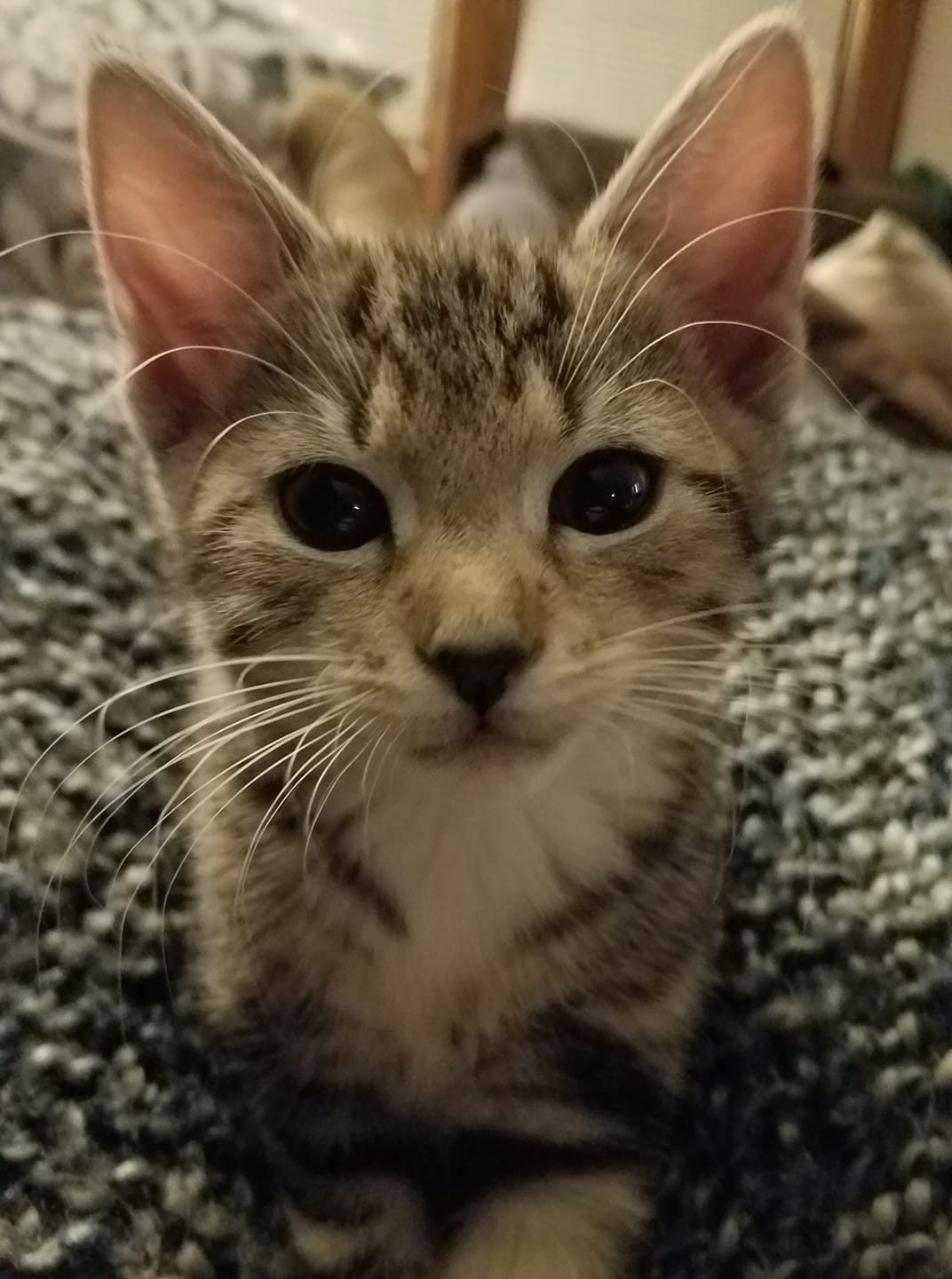
Marcus as a kitten.

While most of my writing work is done solo, the most common helper that I have is a cat. My desk is generally off-limits to my cats, but I occasionally let one in to visit. The most curious of my clowder is Marcus, a 4-year-old who I adopted through work at the beginning of the pandemic. I might have one of the other cats visit, but they are also more nervous to be in the forbidden room.

Marcus last week.

At home, my husband also may weigh in on what I’ve written. I recently asked for his input on a short fiction piece that I’m starting to revise and I’ll show him the finished version once I get it done. We have also toyed with the idea of collaborating on a story, but haven’t seriously worked on this yet.

The other input that is helpful with my writing is to seek out critiques from other writers. I am active in two groups right now. One is exclusively online – Other Worlds Writers’ Workshop (OWWW). The acronym is close to OWW – but that is a different group. Other Worlds is a small but dedicated collection of writers who strive to give honest and helpful critiques of anything in the realm of science fiction and fantasy. We work on both short stories and novels, and the group is run through groups.io. Several members have gone on to be successful in publishing – winning awards and becoming bestselling authors.
The second group where I both submit and critique writing is the Writers of the Weird, part of the Science Fiction Association of Bergen County. This group is local to me and has specific critique sessions. We often meet on Zoom since the pandemic, but some of the sessions are in person. The SFABC offers a lot of activities and information for all fans of science fiction and fantasy, not just writers.

For other writers out there, who helps you write? Are there other groups you think I should check out? Let me know in the comments (above).


Book Review – Never Say You Can’t Survive

This was a book that I had picked up at New York Comic-Con in… probably 2021. The full title of this how-to book on writing by Charlie Jane Anders is Never Say You Can’t Survive: How to Get Through Hard Times by Making Up Stories. It has been some time since I’ve read this type of book, so I thought that this would be a good time to delve back in to learning how to improve my writing process.

This book also won the 2022 Hugo Award for Best Related Work.

Paid links help to support this blog.

Here is the blurb:

Things are scary right now. We’re all being swept along by a tidal wave of history, and it’s easy to feel helpless. But we’re not helpless: we have minds, and imaginations, and the ability to visualize other worlds and valiant struggles. And writing can be an act of resistance that reminds us that other futures and other ways of living are possible.

Full of memoir, personal anecdote, and insight about how to flourish during the present emergency, Never Say You Can’t Survive is the perfect manual for creativity in unprecedented times.


I did enjoy this book and I felt like I learned some useful tips. It has found a space on the back portion of my desk where I keep books about writing for easy reference. I have also read two of this author’s novels, so I was able to understand the given examples when she references those stories. One of them (All the Birds in the Sky), was one of my favorite books I read in 2019, review here.

Never Say You Can’t Survive is divided into 5 sections, roughly on these topics:

  1. Getting Started – this deals with creating characters.
  2. What’s a Story and How Do You Find One? – this is about how to take a premise and turn it into a story.
  3. Your Feelings Are Valid – And Powerful – this is about using emotions to write effectively.
  4. What We Write About When We Write About Spaceships – this section tackles using your political and social outlook to say something in your writing.
  5. How to Use Writerly Tricks to Gain Unstoppable Powers – this contains some specific tips on the mechanics of writing: point-of-view, structure, tone, etc.

If you are just getting started as a writer, this book isn’t the place to start, as it doesn’t deal with the basics. But if you have some writing experience already and want to look at some finer points in how to craft stories, I think this volume may be helpful.

Have you read this book? Do you think it will be helpful to your writing? Let me know in the comments (above).

Find more of my reviews here.

Follow Blog via Email

Enter your email address to follow this blog and receive notifications of new posts by email.

Join 415 other subscribers