Book Review – The Faraway Inn

I reviewed The Spellshop by Sarah Beth Durst in my previous post and I wanted to follow that up with a review of the new YA cozy fantasy novel by the same author, The Faraway Inn (paid links). Thank you to NetGalley and the publisher for providing me with a copy of this book in exchange for an honest review. The Faraway Inn was just published on March 31, 2026.

Book cover for 'The Faraway Inn' by Sarah Beth Durst, featuring a whimsical, illuminated inn surrounded by flowers and greenery, with elegant text at the top.
I read the e-book edition.

Here is the blurb:

After a devastating heartbreak, a teen girl decides to spend her summer helping her eccentric great aunt manage her quaint Vermont inn–but this fixer-upper is hiding a magical secret–in this cozy and irresistable new fantasy from the New York Times bestselling author of The Spellshop.

Sixteen-year-old Calisa is desperate for a change of scenery after her lying ex ruins her perfect Brooklyn summer. When her parents suggest she head to rural Vermont to help her great-aunt run her cozy bed and breakfast for a few months, she jumps at the chance.

But when Calisa arrives at the B&B, she’s shocked to find a rundown inn with only a handful of guests. And to make matters worse, upon meeting with her great-aunt it quickly becomes clear that Calisa was not invited. Auntie Zee is determined to keep anyone from messing with her beloved inn…even if it is clear she needs the help.

To earn her keep, Calisa sets to work fixing up the inn, enlisting extra help from the groundskeeper’s (handsome) son. But the longer she stays, the more it becomes evident that there is something strange about the B&B—and its residents. Something almost…otherworldly.

The inn is keeping a magical secret—but to protect the place she’s come to love, Calisa must unravel the truth of it, and her aunt, before it’s too late.


I believe that this book is being presented as a YA novel, and I think it does fit that description. Calisa, the protagonist, is a sixteen-year-old who is having some common problems for a teenager. Following the author’s recent trend in her writing, this is also a cozy fantasy story, or one in which the stakes are generally low. That doesn’t mean that nothing important happens to the characters in such a story, but rather that the world isn’t going to end (or similar catastrophe) if the protagonist fails to meet their goal.

This book was easy to read as long as I didn’t stop to think about the details of the story very much. Calisa finds herself at a magical inn that is run by her reclusive aunt, with the help of a teenage handyman, Jack. Jack’s dad is missing, only a few guests are booking rooms, and the inn is in a state of serious disrepair. In an attempt to ingratiate herself with her aunt and because she genuinely wants to help, Calisa starts to clean and cook for the guests.

As Calisa takes a more active role at the inn, I had to wonder how the place functioned at all before her arrival. Auntie Zee was too much of an enigma and was not present enough for me to believe that she had even managed to provide for the minimal guests who were present. She was the one character that I didn’t find believable in this book. However I did enjoy the secondary characters, particularly one guest who had an odd affinity for trees and shrubs.

This book is also a light romance, and while it follows a predictable pattern for that genre, it wasn’t the main plot of the book. The level of spiciness was low, for those who rank that kind of thing (fitting with this being a YA book). I found the small magical items around the inn to be creative and engaging. My favorites were the firebird who lit the fireplaces and helped with communication, and the tea set that always seemed to know when it was needed.

The Faraway Inn is a stand-alone novel and can be read quickly. I’m planning to read a couple more of this author’s books throughout this year.

Have you read other cozy fantasy novels? Which were your favorites? Let me know in the comments.

You can find more of my reviews here.

Book Review – The Spellshop

I listened to the audiobook edition of The Spellshop by Sarah Beth Durst last summer without knowing much about it going in (paid link). This book that is considered part of the new trend of “cozy fantasy” novels. I’ve enjoyed a few books like this already so read on below to see what I thought of this one.

A whimsical and colorful illustration of a magical cottage surrounded by lush greenery and flowers, with sunlight filtering through the trees, featuring the title 'the Spellshop' by Sarah Beth Durst.
I listened to the audiobook edition.

Here is the blurb:

Kiela has always had trouble dealing with people. Thankfully, as a librarian at the Great Library of Alyssium, she and her assistant, Caz—a magically sentient spider plant—have spent the last decade sequestered among the empire’s most precious spellbooks, preserving their magic for the city’s elite.

When a revolution begins and the library goes up in flames, she and Caz flee with all the spellbooks they can carry and head to a remote island Kiela never thought she’d see again: her childhood home. Taking refuge there, Kiela discovers, much to her dismay, a nosy—and very handsome—neighbor who can’t take a hint and keeps showing up day after day to make sure she’s fed and to help fix up her new home.

In need of income, Kiela identifies something that even the bakery in town doesn’t have: jam. With the help of an old recipe book her parents left her and a bit of illegal magic, her cottage garden is soon covered in ripe berries.

But magic can do more than make life a little sweeter, so Kiela risks the consequences of using unsanctioned spells and opens the island’s first-ever and much needed secret spellshop.

Like a Hallmark rom-com full of mythical creatures and fueled by cinnamon rolls and magic, The Spellshop will heal your heart and feed your soul.


I enjoyed this book a lot and finished it quickly. The protagonist instantly inspires sympathy as she flees from an empire under attack and steals saves several spellbooks to keep them safe. Who wouldn’t try to save the library books they’ve been caring for under such dire circumstances?

It is clear early on that this book is also a light romance, with a single and handsome merhorse wrangler appearing frequently to offer help to the new inhabitant of the island. Besides the romance aspect, this story also features found family, and a small community that stands up for its own people. The writing style was easy to read, although I did listen to the audiobook, and that format often makes for an easier experience for many books for me.

I also loved the sidekicks and humor in this story. Caz the sentient spider plant provides a way for Kiela to have someone else to speak with as she fights to stay isolated in her new home. This allows the author to minimize inner monologues but many still slip through and Kiela’s voice is a bit annoying at times.

Kiela’s baking and spellcraft overlapped and made for a fun combination that made me wish that I had some of her creations to snack on. Of course magic never quite works the way the user anticipates and this provides some intriguing effects that moved the plot forward.

This is the type of fantasy story that perhaps would not stand up to close inspection. The way that magic works is more arbitrary than in other genre series, and the politics that are crucial in driving Kiela to flee with her books initially don’t have a huge impact on her new home. Yet this novel fills a niche for someone looking for an escapist tale that is easy to follow and finds a happy ending. I also loved the cover — yes, there are winged cats.

The Spellshop is a stand-alone novel, although there are more books set in the same world that I have yet to read.

Have you read any cozy fantasy books? Which would you recommend? Let me know in the comments.

You can find more of my book reviews here.

Book Review – Katabasis

I loved the two other books by R.F. Kuang that I read, so when I heard that she had a dark academia book coming out, I pre-ordered it. Then I received a prettier copy of Katabasis through the monthly subscription service Fairy Loot (paid link). Did the book live up to the hype I’d built in my head for it? Read on below to find out.

Here are my reviews of the other two books by R.F. Kuang that I’ve read:

  • Babel – review here / purchase here
  • Yellowface – review here / purchase here
I read the Fairy Loot special edition.

Here is the blurb:

Two graduate students must set aside their rivalry and journey to Hell to save their professor’s soul, perhaps at the cost of their own.

Alice Law has only ever had one goal: to become one of the brightest minds in the field of Magick. She has sacrificed everything to make that a reality—her pride, her health, her love life, and most definitely her sanity. All to work with Professor Jacob Grimes at Cambridge, the greatest magician in the world—that is, until he dies in a magical accident that could possibly be her fault.

Grimes is now in Hell, and she’s going in after him. Because his recommendation could hold her very future in his now incorporeal hands, and even death is not going to stop the pursuit of her dreams. Nor will the fact that her rival, Peter Murdoch, has come to the same conclusion.


Rating: ★★★☆☆

The beginning of Katabasis delves immediately into Alice Law’s attempt to transport herself into Hell in the pursuit of her advisor whom she believes she accidentally killed. The magic in this world is build upon the concepts of logic and mathematical paradoxes, with each use requiring the drawing of mystical figures with special chalk. Like in Babel, the story takes place in our world but with a minor change. The magic in Katabasis is used for mostly scholarly purposes and an occasional show and has neither influenced great events nor been a fixture in mainstream society.

Unfortunately this novel didn’t draw me in as much as the author’s other works. The structure reminded me heavily of Dante’s Inferno, and there are certainly references to that classic work. However there are also tons of other scholarly literary references that I didn’t understand that presumably added to the depth of this story. For myself, I could follow the main thrust of the plot and Alice’s interactions with fellow student Peter, but any deeper themes that the novel was trying to convey were lost on me. I suspect that much of this book was influenced by the author’s own graduate school studies, so perhaps someone more knowledgeable in that arena may get more from this book.

The structure of the novel uses flashbacks heavily to explain Alice and Peter’s reasons for traveling to Hell, as well as their past relationship and their interactions with Professor Grimes. This worked well and gave me a nice reprieve from the depressing monotony of journey in the underworld.

This is a stand-alone novel and I’m glad that I read it, but it will sit on my list as my least favorite of R.F. Kuang’s books so far. I also thought it odd that the title is never explained within the text. I had to look it up – katabasis is a term for a descent into the underworld in classic mythology and literature, so that’s appropriate.

Have you read any of R.F. Kuang’s other books? Which one was your favorite? Let me know in the comments.

You can find more of my book reviews here.

Book Review – Slow Gods

I had never read anything by author Claire North, but I saw Slow Gods offered on Net Galley and thought that the premise of this new science fiction book sounded terrific (paid link). The cover was great too. Fortunately, I received a copy, so you can read on below to see what I thought.

If you enjoy my book review posts, please sign up to receive new posts via email by hitting the follow button on the right side of this page. Or you can share links to any reviews you think might be helpful to your book-loving friends.

I read the e-book edition.

Here is the blurb:

From one of the most original and dazzling voices in speculative fiction comes an intergalactic tale of conspiracy, war and the fall of empires.

My name is Mawukana na-Vdnaze, and I am a very poor copy of myself.

In telling my story, there are certain things I should perhaps lie about. I should make myself a hero. Pretend I was not used by strangers and gods, did not leave people behind.

Here is one out there in deep-space, in the pilot’s chair, I died. And then, I was reborn. I became something not quite human, something that could speak to the infinite dark. And I vowed to become the scourge of the world that wronged me.

This is the story of the supernova event that burned planets and felled civilizations. This is also the story of the many lives I’ve lived since I died for the first time.

Are you listening?


Rating: ★★★☆☆

When I read this book, I found that the most interesting aspect of the premise was something that was not included in the blurb above. An enigmatic alien god-like race called the Slow are known for making accurate predictions about events in the galaxy. When they send out an alarm that a specific star will go supernova and destroy dozens of inhabited worlds, you would think that all the planets would take them seriously. However, the disaster is over a hundred years away, and the repressive government of the Shine doesn’t even want their people to know about the prediction and tries to erase the message from the Slow. Other worlds make plans for evacuation, but it’s tough to relocate the entire population of a world and some will inevitably be left behind. This entire situation and the dilemmas involved created the best parts of this book.

The main character, Mawukana na-Vdnaze (Maw), has undergone a strange transformation after being forced to pilot a ship as a form of punishment by the Shine. He is killed yet somehow reformed into someone who is not quite human and can harness the power of a sort of darkness that exists in arc space. He can no longer die and does not age, and he also never suffers from the inevitable psychosis that affects arc space pilots.

Despite these interesting ideas, the story in Slow Gods dragged and it was tough to figure out what the main thrust of the plot was supposed to be. Maw becomes involved in the evacuation of the planet of Adjumir where he tries to rescue someone he met briefly on an earlier excursion. He unconvincingly fell in love with this antiquarian after a brief tryst decades earlier. The Adjumiri also use a variety of odd pronouns which I stumbled over every time one came up. I never understood the differences between them and I thought that the author could have gotten their point across in a more concise way in this respect.

Maw does provide an interesting character study. He is someone who is happy to have escaped one of the worlds of the Shine and a person who becomes inexplicably violent when the Dark takes him. He has some fascinating interactions with one antagonist in the story near the end of the book. However, I felt like this novel suffered from focusing too much on his character and not enough on the events around him. I think that some readers will love this book, but overall it wasn’t for me.

I also felt like this book was only the beginning of a larger series and didn’t wrap up anything like a stand alone novel should. However, it is noted to be a single volume with no sequels planned that I can find.

Thanks again to Net Galley and the publisher, Orbit, for providing me with a copy of this book for review.

Have you read anything by Claire North? I’d try something else by this author. Which other book would you recommend? Let me know in the comments.

You can find more of my book reviews here.
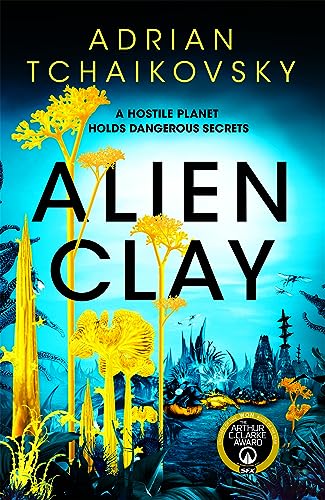
Book Review – Detour

Detour is a science fiction novel by co-authors Jeff Rake and Rob Hart. I received a copy courtesy of Net Galley and the publisher (Random House Worlds) in return for an honest review (paid link). You can read what I thought below.

I read the e-book edition.

Here is the blurb:

Ryan Crane wasn’t looking for trouble—just a cup of coffee. But when this cop spots a gunman emerging from an unmarked van, he leaps into action and unknowingly saves John Ward, a billionaire with presidential aspirations, from an assassination attempt.

As thanks for Ryan’s quick thinking, Ward offers him the chance of a lifetime: to join a group of lucky civilians chosen to accompany three veteran astronauts on the first manned mission to Saturn’s moon Titan.

A devoted family man, Ryan is reluctant to leave on this two-year expedition, yet with the encouragement of his loving wife—and an exorbitant paycheck guaranteeing lifetime care for their disabled son—he crews up and ventures into a new frontier.

But as the ship is circling Titan, it is rocked by an unexplained series of explosions. The crew works together to get back on course, and they return to Earth as heroes.

When the fanfare dies down, Ryan and his fellow astronauts notice that things are different. Some changes are good, such as lavish upgrades to their homes, but others are more disconcerting. Before the group can connect, mysterious figures start tailing them, and their communications are scrambled.

Separated and suspicious, the crew must uncover the truth and decide how far they’re willing to go to return to their normal lives. Just when their space adventure seemingly ends, it shockingly begins.


Rating: ★★☆☆☆

This book initially caught my attention because it featured a crew of astronauts as the main characters. However, this was a large part of why this story didn’t work for me. The professional NASA astronauts on the crew had previous spaceflight experience, but their training for the mission to fly around Titan on a new spacecraft was minimal to non-existent. Three civilians were also selected, but no screening for medical conditions or psychiatric testing was shown. These would have been particularly important aspects to consider for a mission that was expected to last two years.

The commander of the mission turns out to be a known alcoholic, and his colleagues at NASA cover for him constantly, even when he tries to distill alcohol from mouthwash in the middle of the mission after drinking all the alcohol that NASA sent along with them (LOL). One of the civilians is socially awkward and claustrophobic, which is also not a great combination aboard a spacecraft. Another one gets into a fistfight with another crewmember before they even leave Earth.

I found the pacing odd, with roughly the first half of the book being taken up by introductions of the characters. Once they finally arrive near Titan, the ship circles the moon and then comes home. No direct input from any of the astronauts was performed, bringing up the question of why a manned mission was even necessary. Of course there is a strange explosion on the ship when they are at Titan and they lose most (but not all) of their communication ability after that point. Unfortunately the nature of that explosion isn’t really investigated and by the end of the book it is clear that this is going to be the first of a series. The book ends on a cliffhanger and gives no answers to their situation.

The action that opened the novel was exciting and hooked me on the book enough to finish it despite the flaws in characterization and mission logic. The best part of the book occurs in the last third, when more action happens. The prose was also easy to read and I liked the cover.

While the premise of this book held potential for an exciting and intriguing story, I don’t plan to be reading more in this series.

Have you read any books lately that were disappointing? Let me know in the comments.

You can find more of my book reviews here.
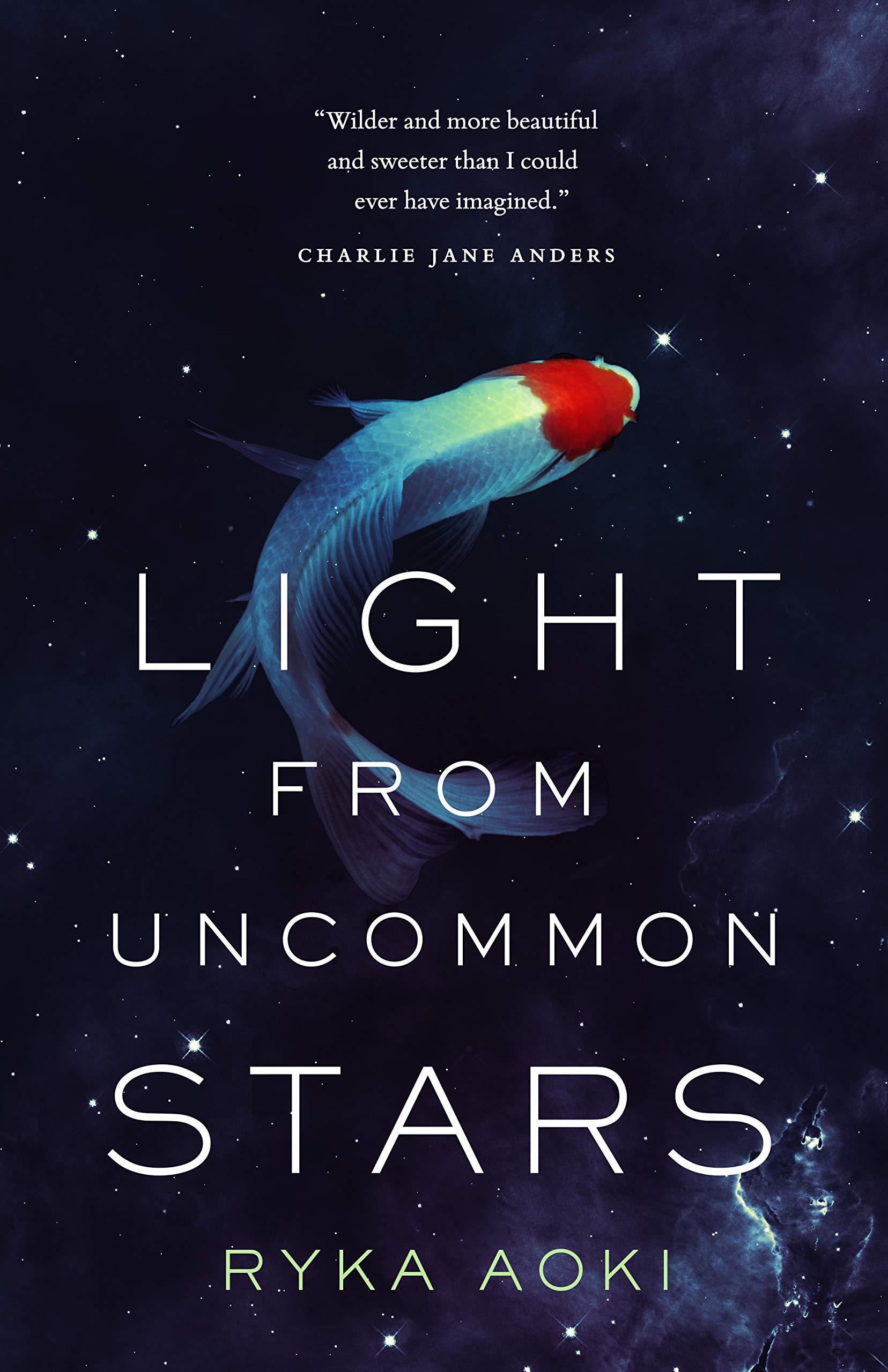
Book Review – Lessons in Magic and Disaster

I didn’t realize that Charlie Jane Anders had a new book out until I came across it while browsing NetGalley. I’d really enjoyed three of her earlier books, and you can find my reviews as well as purchase links below. Lessons in Magic and Disaster is her newest book and my review follows.

  • All the Birds in the Sky (review here / purchase here)
  • The City in the Middle of the Night (review here / purchase here)
  • Never Say You Can’t Survive (review here / purchase here)

Thank you to NetGalley and Tor Books for a copy in exchange for an honest review.

I read the e-book edition.

Here is the blurb:

In the vein of Alice Hoffman and Charlie Jane Anders’s own All the Birds in the Sky comes a novel full of love, disaster, and magic.

A young witch teaches her mother how to do magic–with very unexpected results–in this relatable, resonant novel about family, identity, and the power of love.

Jamie is basically your average New England academic in-training–she has a strong queer relationship, an esoteric dissertation proposal, and inherited generational trauma. But she has one extraordinary secret: she’s also a powerful witch.

Serena, Jamie’s mother, has been hiding from the world in an old one-room schoolhouse for several years, grieving the death of her wife and the simultaneous explosion in her professional life. All she has left are memories.

Jamie’s busy digging into a three-hundred-year-old magical book, but she still finds time to teach Serena to cast spells and help her come out of her shell. But Jamie doesn’t know the whole story of what happened to her mom years ago, and those secrets are leading Serena down a destructive path.

Now it’s up to this grad student and literature nerd to understand the secrets behind this mysterious novel from 1749, unearth a long-buried scandal hinted therein, and learn the true nature of magic, before her mother ruins both of their lives.


This book was one of a few unfortunate DNFs (did-not-finish) for me in 2025. I made it about a third of the way before I gave up. It wasn’t that it was bad, it just wasn’t for me, and I think there are probably people out there that will love this novel. Let me see if I can explain my reaction.

Jamie is the protagonist and discovers that she can perform rites that cause favorable events to happen for her. This magic has no instructions or teacher, but she has fumbled her way to a rudimentary functional understanding that allows her to produce vaguely predictable results. I found the initial descriptions of the magic to be inventive and in a way, earnest. I could truly believe that this magic worked for Jamie and her mother, and that drew me in at the beginning of this book.

However, the story became less about the magic and more about Jamie’s relationships and her thesis struggles. By itself, those ideas could make for a decent story, but I never liked Jamie and couldn’t get invested in her struggles. Much of the novel is taken over by her obsessive research into a mid-18th century novel that feels like it should exist, but doesn’t. I felt like I was not enough of a literature nerd to understand what was going on, and this aspect of the story bored me.

I think that the concept (for as far as I got) would have worked better in a shorter format. Despite not enjoying this book, I loved the author’s earlier books and would still pick up a future novel by her.

Have you read anything by Charlie Jane Anders? Which book was your favorite? Let me know in the comments.

You can find more of my book reviews here.

Book Review – The Keeper of Magical Things

I previously read and loved Julie Leong’s debut novel, The Teller of Small Fortunes, and you can find my review of it here (with a purchase link here). When I came across her newest novel offered for review on NetGalley, I requested it and was fortunate enough to receive it from the publisher. The Keeper of Magical Things is set in the same world as The Teller of Small Fortunes, but each could be read separately as there is no direct overlap in the characters or events (paid link). Read on below to see what I thought.

I read the e-book edition.

Here is the blurb:

Certainty Bulrush wants to be useful—to the Guild of Mages that took her in as a novice, to the little brother who depends on her, and to anyone else she can help. Unfortunately, her tepid magic hasn’t proven much use to anyone. When Certainty has the chance to earn her magehood via a seemingly straightforward assignment, she takes it. Nevermind that she’ll have to work with Mage Aurelia, the brilliant, unfairly attractive overachiever who’s managed to alienate everyone around her.

The two must transport minorly magical artifacts somewhere safe: Shpelling, the dullest, least magical village around. There, they must fix up an old warehouse, separate the gossipy teapots from the kind-of-flaming swords, corral an unruly little catdragon who has tagged along, and above all: avoid complications. The Guild’s uneasy relationship with citizens is at a tipping point, and the last thing needed is a magical incident.

Still, as mage and novice come to know Shpelling’s residents—and each other—they realize the Guild’s hoarded magic might do more good being shared. Friendships blossom while Certainty and Aurelia work to make Shpelling the haven it could be. But magic is fickle—add attraction and it might spell trouble.


This novel was easy to read and featured an immediately sympathetic character in Certainty. While the author’s first book took characters along a journey through different towns, this book leaves Certainty and Mage Aurelia stuck in the village of Shpelling.

A classic quest story takes characters on a journey that is often a literary device used to introduce them to new places and adversaries. In a novel like The Keeper of Magical Things, the story could stagnate by being set in a single locale, but instead, this book moves the plot along by having Certainty explore the village, greet its inhabitants, and grow her relationship with Mage Aurelia.

This novel does feature a romance, and it isn’t hard to figure out who is involved. The author adds several fun quirks to the story, like winged cats and a talking teapot, and the “useless” magical artifacts provide a way for Certainty’s creativity to shine. I also loved the cover on this one!

Overall this was a nice read that shows the importance of community and finding your niche when it seems like you’ll never fit in. I think I did like the author’s previous book a little better, but this was a quick and easy book to fall into and I’ll be looking out for more by Julie Leong in the future.

Have you read either of Julie Leong’s novels? Have you tried a cozy fantasy novel yet? Let me know in the comments.

You can find more of my reviews here.

Book Review – Twelve Months

I have been a fan of The Dresden Files series by Jim Butcher for quite a while, so I was excited to receive an advance copy of his new book, Twelve Months (#18), courtesy of the publisher and NetGalley. I also had the privilege to hear the author speak and answer questions at a small club meeting this weekend. While we didn’t discuss the new book much, I might throw in some insights from the discussion below.

Twelve Months will be out on January 20th. You can pre-order your own copy here (paid link).

WARNING – While my review will be as spoiler-free as I can manage, it is impossible to not include spoilers from previous books in the series. If you have not read Peace Talks and Battle Ground yet, you have been warned.

I read the e-book edition.

Here is the blurb:

Harry Dresden, Chicago’s only professional wizard, has always managed to save the day—but, in this powerful entry in the Dresden Files, can he save himself?

One year. 365 days. Twelve months.

Harry Dresden has been through a lot, and so has his city. After Harry and his allies narrowly managed to save Chicago from being razed, everything is different—and it’s not just the current lack of electricity.

Harry lost people he cared about in the battle, and that’s the kind of loss that takes a toll. Harry being Harry, he’s doing his best to help the city and his friends recover and rebuild, but it’s a heavy load. He needs time.

Time is one thing Harry doesn’t have, however. Ghouls are prowling Chicago and killing innocent civilians. Harry’s brother is dying, and Harry doesn’t know how to help him. And last but certainly not least, the Winter Queen of the Fae has allied with the White Court of vampires—and Harry’s been betrothed to the seductive, deadly vampire Lara Raith to seal the deal.

It’s been a tough year. More than ever, the city needs Harry Dresden the wizard—but after loss and grief, is there enough left of him to rise to the challenge?


This was a tough book for me to start. The opening pages see Harry dealing with the personal aftermath of the events of Peace Talks and Battle Ground. His guilt and despair made for some emotionally heavy reading. I didn’t want to relive the trauma of that previous book either! That being said, I have it on good authority that Karrin’s story isn’t over (spoiler).

Once I buckled down and set aside some time, I was drawn into the story. This book introduced a couple of new characters, my favorite of which was Bear the Valkyrie. She brings a no-nonsense attitude and some humor to what is otherwise a grim opening in this book.

Most of this book deals with how Harry and the rest of Chicago picks themselves up and goes on. Each person or group deals with their tragedies in a different way, and when their coping mechanisms overflow into violence or magic that hurts people, Harry must get involved. At the same time, he has to balance his deepening relationship with Lara Raith, and his desperate need to save his brother.

Butcher said that this was a hard book for him to write, one reason being that the timeline of the events occur over an entire year, in contrast to most of Harry Dresden’s adventures, where each book happens over a few days. This did stretch out the story and slowed down the pacing, but after the frenetic pace of Battle Ground, I think this was a necessary change in the structure of the books.

The action still ramps up and Harry faces some powerful entities and magic in this book. Many of Harry’s scenes are with Lara Raith, and we learn more about the White Court. I actually like Lara and I feel like Harry can trust her, but I also worry that I’m being tricked by her as much as he might be. I felt like Harry only understood half of the politics going on around him.

While Twelve Months doesn’t have Harry working to solve a case or quest for something at the behest of elder gods, this was still an enjoyable read for me. It was a necessary change of pace to let everyone reset before whatever comes next. Overall this was not my favorite in the series, but was much better than Ghost Story.

The Dresden Files series is intended to have four more “case” books, followed by a large trilogy to end the series, according to the author. Have you been a fan of the series? Which book is your favorite and why isn’t it Changes? Let me know in the comments.

You can find more of my book reviews here.
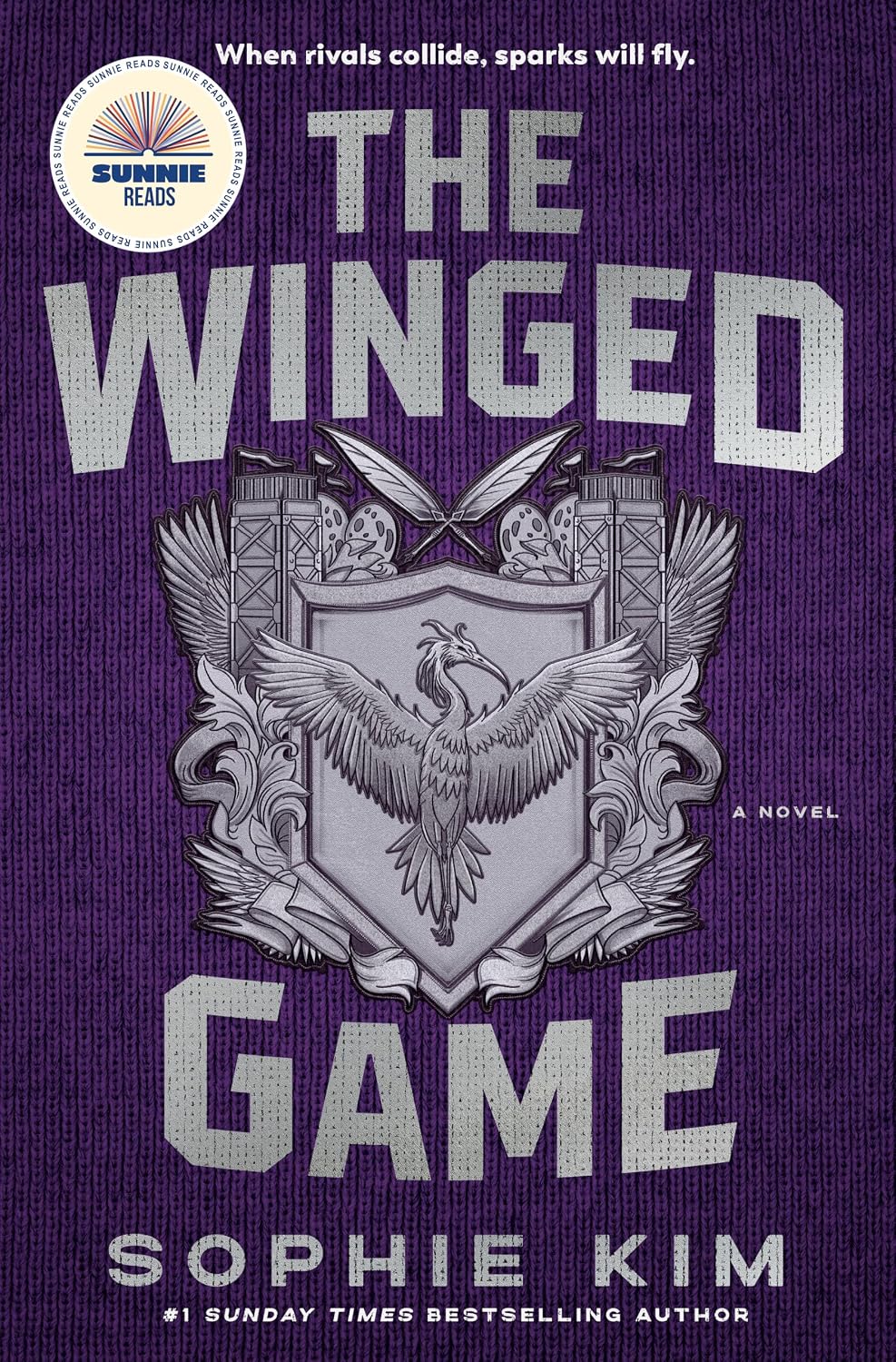
Book Review – The Invisible Life of Addie LaRue

I received The Invisible Life of Addie LaRue by V.E. Schwab as a gift, although I had already been aware of the book (paid link). This is the first novel by this author that I’ve read. Read on below to see what I thought.

I read the hardcover edition of this.

Here is the blurb:

A Life No One Will Remember. A Story You Will Never Forget.

France, 1714: in a moment of desperation, a young woman makes a Faustian bargain to live forever and is cursed to be forgotten by everyone she meets.

Thus begins the extraordinary life of Addie LaRue, and a dazzling adventure that will play out across centuries and continents, across history and art, as a young woman learns how far she will go to leave her mark on the world.

But everything changes when, after nearly 300 years, Addie stumbles across a young man in a hidden bookstore and he remembers her name.


This story was hard for me to get into initially. I really liked the author’s writing style, and that was what drew me in the most and kept me reading. I also enjoyed the character of Addie LaRue and wanted to learn more about the events of her life over three centuries. By the halfway point of the book (when the other main character has viewpoint chapters), I was more invested in the outcomes for both of them and loved the story from there on.

This novel is structured with chapters that jump between Addie’s past in early 18th century France and modern day New York (2013-2014), with other times and cities in between. It was important to pay attention to the dates, to help follow Addie’s story.

No one remember Addie, and thus she has no lasting impact on anyone else’s lives. This is her curse throughout the book, but I loved how she found ways around that as an artistic muse, even if it wasn’t the human connection that she truly craved.

This is much more of a character-driven story than a plot-driven one, which is why I think it didn’t grab my interest as strongly at the beginning, given that I generally like more action in my plots. In some ways, I think that the entire story could have been told in a much shorter format because of the scarcity of specific plot events that needed a number of pages to show. However, writing this story as a novel served the tale well because ultimately I think that spending more time with the characters increased the emotional impact of it.

Overall, I did truly enjoy this book and my comments above are intended to show my reactions rather than to criticize. I don’t know how I feel about the ending and would love to discuss it with someone since I think it is the type of conclusion that may give readers polarized reactions.

Have you read any other books by V.E. Schwab? Which one should I read next? Or — if you’ve read this book, let’s chat about the ending in the comments.

You can find more of my book reviews here.

Book Review – What Fury Brings

I picked up one of author Tricia Levenseller’s YA fantasy / romance books on a whim several years ago and have since found her novels to be comfortable and satisfying. When her debut adult romantasy novel, What Fury Brings, was announced, I had this on my to-be-read list and was fortunate to receive a copy courtesy of NetGalley (paid link).

I have reviewed two of the author’s other books (a duology) on this blog:

  • Blade of Secrets (The Bladesmith #1) – review here / purchase link here
  • Master of Iron (The Bladesmith #2) – review here / purchase link here
I read the e-book edition.

Here is the blurb:

There’s a shortage of men in the kingdom of Amarra. After a failed rebellion against the matriarchy, most noblemen in the country are dead. Now the women of Amarra must obtain their husbands (should they want one) by kidnapping them from other kingdoms.

Olerra, a warrior princess vying for the throne, is determined to prove her worth by kidnapping a husband. And not just any husband. To outmaneuver her treacherous cousin, she needs the best. Fortunately, the second-born prince of their greatest enemy is widely known for both his looks and his sweet, docile temperament. He’s the perfect choice to secure her claim to the throne.

Sanos, heir to the Kingdom of Brutus, has nothing but contempt for the idea of a society run by women. Trained from birth to fight, lead, and follow in his father’s overbearing footsteps, his path has always been set. Until he takes his younger brother’s place in a drunken prank and finds himself kidnapped, carted off to the Amarran Palace, and informed that he is to become the husband of Queen Potential Olerra. Sanos needs to escape before anyone learns his real identity, but the more he gets to know his captor, the less sure he is of what he truly wants.


This novel opens with a note from the author that serves as both a warning for sexual and violent content (18+), as well as an explanation of her motivation in writing this book, coming as a reaction to her own experiences with sexism and misogyny both in her career and in the wider sense.

The world that the protagonist, Olerra, inhabits is “a reflection of our own but reversed,” with women holding all of the positions of power in the government, the military, and in trade and anything else in daily life that matters to society. Men must remain meek and submissive, and a little bit of fantasy goddess-powered magic helps to ensure that this system stays in place.

When politics drives Olerra to capture a husband from a rival nation, the story shows how foreign it feels to Crown Prince Sanos to be placed into a role based solely on his sex and not his abilities. Of course, this is also a romance story, so the conflict between Olerra and Sanos cannot be all insults and abuse in the name of training him to be a proper Amarran husband. Fortunately Sanos is more enlightened and open-minded that many in his country. His reputation for being identical to his tyrannical father is a farce that he has kept up to protect his mother and sister from his father’s violence.

The main source of tension comes from Sanos’ hidden identity and the ramifications of its inevitable discovery. This kept me interested in the plot for its own sake, because I found the message exhibited by the female-dominated society to be more heavy-handed than it always needed to be.

In terms of the spiciness of the romance, this book is vastly more descriptive and takes everything further than the author’s YA work (as I would have expected). I think that the opening note from the author gives an adequate warning of the types of things to expect.

This is a stand-alone novel and the story concludes in a satisfying fashion, bringing the character arcs together for a dramatic final scene. While the ending leaves open the possibility of more books set in this world, it doesn’t require a sequel. Overall I found this to be a solid novel that moved quickly and provided characters to cheer for as they fought for their nations and families. Thank you again to NetGalley for the opportunity to read and review it.

Have you read any of Tricia Levenseller’s other books? Which one is your favorite? Let me know in the comments!

You can find more of my reviews here.

Previous Older Entries

Follow Blog via Email

Enter your email address to follow this blog and receive notifications of new posts by email.

Join 415 other subscribers