Book Review – Not Like Us

Not Like Us is a stand-alond science fiction novel by Doc Honour, an author who I know through an online critique group (paid link). While I wasn’t one of the participants who reviewed an earlier version of this book, we have given mutual feedback on each other’s shorter works. It is the first book in the Empathic Humanity series, but this first book wraps up a single story.
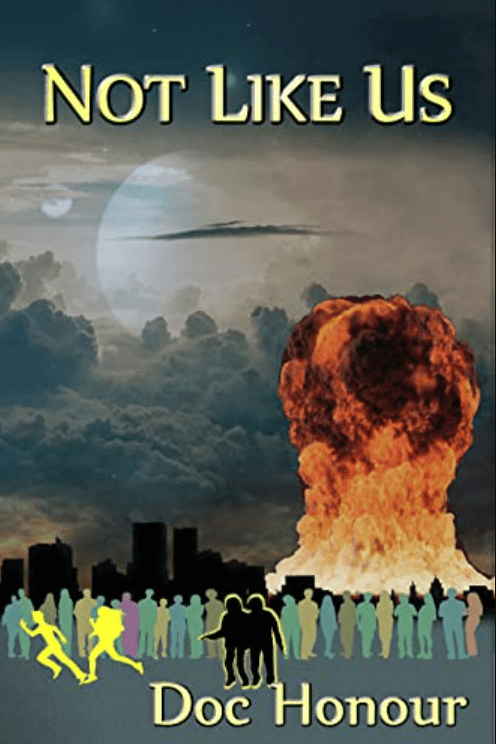
I read this as an e-book.

Here is the blurb:

How do you escape from total socialism? Jake Palatin is forced to develop an antimatter bomb on the planet Verdant, where global war using his technology is terrifyingly close. Zofia, a woman with a secret, tempts him to resist. She also has a solution, a new technology to save humanity.

Fleeing in desperation, they confront a powerful foe who holds everything in totalitarian control. They must learn to trust each other while facing oppressive police, devious leaders, and a war that could break out at any instant. Danger looms at every step, while love threatens to derail all their plans.

Success is crucial. One mistake, and Verdant will go the way of a dozen other worlds, including old dead to everything.

Humanity destroys every world it touches, because those other people are “Not Like Us.” Jake and Zofia discover the key.


It took me a little while to get into this book, but that was mostly because I tend to read too many books at once. After I finished some of my other commitments, I was able to dedicate more attention to this novel. The story is mainly told through Jake’s point-of-view, but we do get to see the world through the perspective of a few other characters.

The set up is compelling–Jake’s attraction to Zofia gives her an opportunity to get him to question why the society established in Solity functions as it does. Once he discovers these problems with the current system, his thoughts spiral into rebellion and soon he is all in, leading to a thrilling sequence of events.

This book kept me engaged and I particularly liked how Jake’s recent work project becomes a direct conflict to his new goals. As an engineer, he had never given serious thought to the goals of the Solity government, but simply does his job. When tasked with the creation of an anti-matter bomb and then taught to think about the consequences of his government’s project, he realizes that he cannot follow through with this work.

While the ending doesn’t resolve the larger conflict between the nations of the planet Verdant, it does wrap up the immediate conflict and the story for these characters, making this a reasonable read as a stand-alone novel. I believe that Doc Honour is at work on the next book, and I’m planning to read that when it is done.

Have you read any books with a similar theme? Let me know in the comments (above).

Find more of my reviews here.

Books to Read in 2024

It is a little after midnight on New Year’s Day as I’m starting to write this post. I have been cramming books onto my 2024 to-be-read list in a mad rush, like there is some sort of rule that once the ball drops in Times Square, I won’t be allowed to add any more for the year. I mean, that’s not true at all, but part of me feels like I have to have a plan for the year finalized by January 1. Well, here is my (once again) very unrealistic list of 113 books I plan to read for 2024:


How did I come up with this list? There are several considerations that go into this (paid links below):

What else goes into my choices? Well, I am trying not to start any new series. But on the list above, I also have several new series… what can I say? I am inconsistent. To be fair, some of the series on here are ones where I read the first book many, many years ago but was unable to finish the series (because it hadn’t all been published yet or because I got distracted by other books).

In that vein, I’m going to continue on my read-through of Robert Jordan’s Wheel of Time series. I’m also going to read Dune #4-6, which I had put aside after reading #1-3 in 2022 (paid links).

As the year goes on, I’ll add even more books to this list, perpetuating my never-ending pile and pushing more of these off to 2025. I need more hours in the day.

Of all these books, which ones are up first for the year? Well right now, I’m already reading the first of Diana Gabaldon’s Outlander series in audiobook format. I’m also about a third of the way through Not Like Us by Doc Honour, a writing critique partner (paid links). After that, here is what I have planned:


Let me go back to the numbers now. I have 113 books on my list for 2024. Even given that some are shorter novellas or graphic novels, that still comes out to about 9.5 books per month, or more than 2 books per week. And some of these books aren’t short, so what is realistically going to happen?

I usually end up reading somewhere between 40 and 50 books each year. I tend to read several books at once, so one goal I’m making for this year is to try to minimize how often I start a new book without finishing others. I feel like I’ll be more engaged in a book if I’m not splitting my attention between several of them. (However, I will still have an audiobook going while reading something in print).

Off to do some reading now…

How do you choose which books you’re going to read? What books are you most excited about reading in 2024? Let me know in the comments (above)!

Book Review – Planetfall

I’ve had Planetfall by Emma Newman on my shelf for a few years and kept meaning to start it (the story of my reading life, but that’s a separate topic). It is the first book of four in the Planetfall series, which was nominated for the Hugo Award for Best Series in 2020 (paid links). Read on below to see what I thought.

I read this in trade paperback format.

Here is the blurb:

Renata Ghali believed in Lee Suh-Mi’s vision of a world far beyond Earth, calling to humanity. A planet promising to reveal the truth about our place in the cosmos, untainted by overpopulation, pollution, and war. Ren believed in that vision enough to give up everything to follow Suh-Mi into the unknown.

More than twenty-two years have passed since Ren and the rest of the faithful braved the starry abyss and established a colony at the base of an enigmatic alien structure where Suh-Mi has since resided, alone. All that time, Ren has worked hard as the colony’s 3-D printer engineer, creating the tools necessary for human survival in an alien environment, and harboring a devastating secret.

Ren continues to perpetuate the lie forming the foundation of the colony for the good of her fellow colonists, despite the personal cost. Then a stranger appears, far too young to have been part of the first planetfall, a man who bears a remarkable resemblance to Suh-Mi.

The truth Ren has concealed since planetfall can no longer be hidden. And its revelation might tear the colony apart…


While this book is part of a series, it looks like the other books are only set in the same universe and do not involve any characters from this volume, so it could be read as a stand-alone. Planetfall set up a mystery involving a religious-like calling, a troubled colony, and an alien city but then failed to give me enough of an explanation or resolution at the end. Even so, most of the book was great and other readers may enjoy the ending.

Renata is one of those guilty characters who has been hiding a secret for so long that by this point it is impossible to think of revealing it to others. The stable life of the colony on this alien world is uprooted when a descendant of another group of colonists thought to be long-lost arrives on scene. This visitor causes some colonists to rethink an annual tradition tied to one of Ren’s secrets, propelling the main plot of the novel. Ren’s other secret is that she never lets anyone see her home because she is a hoarder. This created a situation that was unique in the science fiction that I’ve read, and ultimately ties together with the rest of the conflict as the book progresses.

The action and stakes increased toward the conclusion of the book, and while I don’t want to give any spoilers here, the ending was one in which I had expected a greater reveal and explanation and was left sort of scratching my head.

Have you read any of the Planetfall books? Have you read any of Emma Newman’s other books? Let me know in the comments (above).

Find more of my reviews here.

Book Review – The Quantum Curators and the Faberge Egg

This is another book that was suggested for one of my book clubs and it sounded intriguing. The Quantum Curators and the Faberge Egg by Eva St. John is the first book by this author that I have read. It is also the first book (of five) in The Quantum Curators series (paid links).

I read this as an e-book.

Here is the blurb:

When a priceless Fabergé egg comes to light everyone is after it. Neith Salah is a quantum curator. It’s her mission to get the egg; she doesn’t know what it looks like, or where it is, but she knows it’s not on her earth.

Julius Strathclyde lives on a parallel earth. He’s a Cambridge professor and an archivist; he loves tea, research and a quiet life. It’s a pity then, that he’s the only person alive who knows where the egg is.

She has guns and attitude, he has a fountain pen. Together they are going to have to race against time to save the egg, before a hidden enemy gets there first.


This book was the start of a series, but could be read as a stand-alone novel because it does wrap up the main events of the Faberge egg plot by the end. Not every detail is resolved though which leaves something for the next book to presumably explore. I did enjoy this book, but I’m not sure if I’ll read the rest of the series. I didn’t identify with the characters enough to put this on my must-read-more list.

The story is mainly set on our Earth, but the characters that are seeking the Faberge egg are from a parallel Earth, so the book felt a lot like a time travel novel. Of course these technologically advanced treasure hunters meet up with the professor, Julius, on our Earth and he is swept up into the search with them as different factions compete to find the egg.

I liked the plot twists and the action scenes were well-done. The idea of the parallel Earth where relics from our world are saved from destruction and stored for everyone to be able to enjoy and cherish them was something unique in this story. I’m curious to know more about how that world developed.

Have you read any of the Quantum Curator books? Let me know in the comments (above).

Find more of my reviews here.

Book Review – The Many-Colored Land

The Many-Colored Land is the first book in the Saga of Pliocene Exile by Julian May (paid links). I had never read anything by this author, but this book was proposed as a selection for one of my book clubs, so I picked it up. This book was nominated for a Hugo and a Nebula Award and won a Locus Award.

I read this in e-book format.

Here is the blurb:

In the year 2034, Theo Quderian, a French physicist, made an amusing but impractical the means to use a one-way, fixed-focus time warp that opened into a place in the Rhone River valley during the idyllic Pliocene Epoch, six million years ago. But, as time went on, a certain usefulness developed. The misfits and mavericks of the future—many of them brilliant people—began to seek this exit door to a mysterious past. In 2110, a particularly strange and interesting group was preparing to make the journey—a starship captain, a girl athlete, a paleontologist, a woman priest, and others who had reason to flee the technological perfection of twenty-second-century life.

The group that passes through the time-portal finds an unforeseen strangeness on the other side. Far from being uninhabited, Pliocene Europe is the home of two warring races from another planet. There is the knightly race of the Tanu—handsome, arrogant, and possessing vast powers of psychokinesis and telepathy. And there is the outcast race of Firvulag—dwarfish, malev-o olent, and gifted with their own supernormal skills.

Taken captive by the Tanu and transported through the primordial European landscape, the humans manage to break free, join in an uneasy alliance with the forest-dwelling Firvulag, and, finally, launch an attack against the Tanu city of light on the banks of a river that, eons later, would be called the Rhine. Myth and legend, wit and violence, speculative science and breathtaking imagination mingle in this romantic fantasy, which is the first volume in a series about the exile world. The sequel, titled The Golden Torc, will follow soon.


While the concept of this novel was quite intriguing, this book was challenging for me to enjoy. The story is told through numerous points of view, and at the beginning of the book I struggled to keep each character straight and to understand how they related to a coherent story. Eventually it is clear that these are the characters that are going to travel back in time to the Pliocene, but I think it would have been easier to follow this opening if the story had started closer to the point at which they begin their journey.

Once they arrive in Pliocene Europe, the book was better, but I still found it hard to identify with the characters. They encountered some difficult conditions there and each character’s personality created different responses to this unique world state, but I also found that I struggled to like or care about any of the characters.

Some positive aspects of this book were that the idea of traveling back in time on a one-way journey is always fun to explore. Part of me does want to discover what happened to this Pliocene land and how the alien Tanu and Firvulag arrived and made it their home. I’m not sure that’s enough to convince me to invest the time to read the next book (The Golden Torc), but I’d consider a different series by the author (paid link).

Have you read any books by Julian May? Which ones do you recommend? Let me know in the comments (above).

Find more of my reviews here.

10 Authors I Haven’t Read Yet

I had the idea for this post from another book blog that I follow and I thought it would be an interesting topic in regard to my own reading. My goal in creating this list was to think of ten authors that I am dying to read, but haven’t had time to get to yet. I started with a longer list and then pared it down to just these ten:

  1. Iain M. Banks – I have read the blurb for the first book in this author’s Culture series (paid link) and I honestly can’t tell what it’s about other than something with a sprawling intergalactic story which is something I generally love. This is a series with 9 books so far.
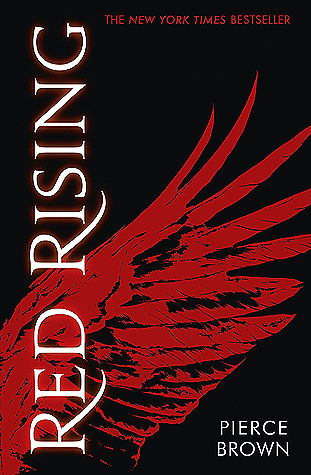
  1. Pierce Brown – this author is best known for the Red Rising Saga (paid link) which started out as a trilogy and has now grown to six books. Caste warfare on a dystopian Mars????? Yes, please!
  1. P. Djeli Clark is an author that I was not terribly aware of until I listened to him talk in a writing class sponsored by Orbit Books. He spoke about scene structure and sounds like an author who writes diverse and compelling stories (paid link).
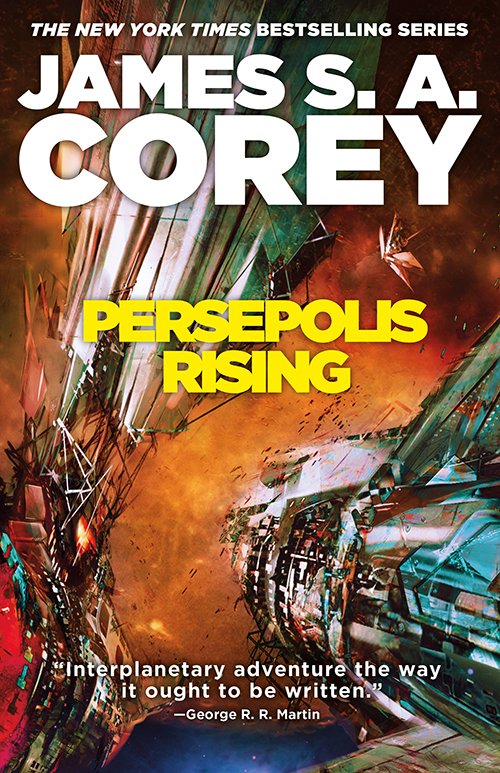
  1. James S. A. Corey is a pen name for authors Daniel Abraham and Ty Franck who are best known for The Expanse series (paid link). This science fiction epic was the basis for the television series on Amazon Prime of the same name which is currently in my queue to finish. I plan to read the books once I’ve finished the show.
  1. Diana Gabaldon is best known for writing the Outlander series of historical time-travel romance novels (paid link). I watched the first season of the television show and loved it (but then got distracted – I don’t stick with tv very well). My mother is a huge fan of both the books and the show and if I don’t read this series soon she’ll probably disown me. It currently sits at nine books and is supposed to be complete with the tenth volume.
  1. Ann Leckie wrote the Imperial Radch trilogy of science fiction novels (paid link) that won the Hugo, Nebula, and Arthur C. Clarke Awards and was also recommended to me by friends. I picked up the first book but haven’t had the time to start it yet. So many books, so little time…
  1. Sarah J. Maas – I’m torn on this one because I’ve heard mixed reviews of her writing. I first heard of her Throne of Glass series, and now the author’s more recent series (A Court of Thorns and Roses) (paid links) has been added to the list of banned books in some conservative parts of the country – which makes it crucial to read it, right?!?! These are fantasy romance with faeries and probably some magic and swords. As long as the writing isn’t too painful, I’ll probably at least have fun with these.
  1. Seanan McGuire has written a ton of books. Her series include the October Daye, Wayward Children, and Alchemical Journeys books (paid links). The good news is that I’m planning to read Every Heart a Doorway for a book club discussion in the next few months. This series involves children and portals.
  1. Silvia Moreno-Garcia has written several stand-alone novels. Many appear to have a more gothic flavor to them, which is something that I have not read a lot of. I don’t know if I’d like these, but she has received awards and acclaim, so I’m open to taking a look. I already picked up Gods of Jade and Shadow a few years ago and haven’t had time to read it (paid link).
  1. V.E. Schwab is the last author on my list. She has written the Shades of Magic trilogy which explores parallel Londons in a threatened multiverse. Her more recent book, The Invisible Life of Addie LaRue looks like a stand-alone novel about a woman who wins immortality but, in exchange, is forgotten by everyone she meets (paid links).

Have you read any of the authors on my list? Which one should I read first? What authors would be on your list? Let me know in the comments (above).

What to Read Next?

As the year approaches its end, I find myself looking back at the books I’ve read in 2023 and wondering how I became so distracted from my plan for the year.

Actually–this happens every year.

I start out with a shiny perfect to-be-read list that, while it might be overly ambitious, is orderly and logical. Then sometime around February I add books to the list. These might be a novel for one of my book clubs, a new release by a favorite author, or a book that was gifted to me. Other times I might read a description of a book that really grabs me and–wham! That’s another addition to the list.

A portion of the books I had planned to read for 2023.

Thinking about my book chaos made me wonder how I decide which book I’m going to read next. Sometimes it’s a deadline – like for book club or a review that I want to coincide with a particular date. Often I’m just excited about delving into a particular story. Or I’ve been staring at a book that I left out on a table or desk.

I also have a dilemma when it comes to what format to read. I’m usually reading a physical book, an e-book, and an audiobook all at once. If I finish the audiobook, then I need another audiobook after that. And if I already have that book in another format, I’m not going to also buy it as an audiobook. Or for books that are part of a series, I try to keep with the same format for the whole thing, especially if I started it as an audiobook and really liked the narrator.

Books on my October to-be-read list.

I will try to control the chaos by breaking my gigantic to-be-read list down into smaller pieces by each month. Above is an example of those books sitting on my October list, none of which I have started and it is nearly the end of October. I do have to start On Fragile Waves for a book club meeting so that one will have priority over the others. Oh – and I should go back to look at the four books from my September list that I didn’t start yet.

As an aside, I did some work updating this blog last week and now you can see what I’m currently reading in the Goodreads widget in the sidebar on the right (scroll up from here).

How do you decide what to read next? Do you have an organized list? Do you stick to that? Let me know in the comments (above).

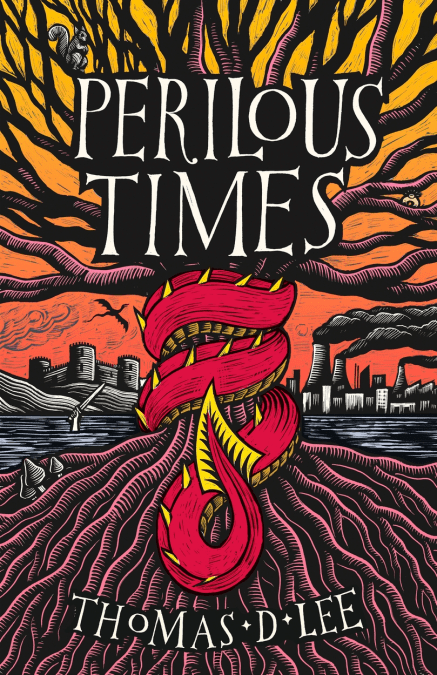
Book Review – Perilous Times

First up for my revived blog of book reviews is Perilous Times, the debut novel by Thomas D. Lee. I was given a copy of this book from Net Galley in exchange for an honest review. Read on for my thoughts on this mash-up of climate fiction and Arthurian legend.

Paid links help to support this blog.

Here is the blurb:

An immortal Knight of the Round Table faces his greatest challenge yet—saving the politically polarized, rapidly warming world from itself—in this slyly funny contemporary take on Arthurian legend.

Being reborn as an immortal defender of the realm gets awfully damn tiring over the years—or at least that’s what Sir Kay’s thinking as he claws his way up from beneath the earth, yet again.

Kay fought at Hastings, and at Waterloo, and in both World Wars. After a thousand years, he thought he was used to dealing with a crisis. But now he finds himself in a strange new world where oceans have risen, armies have been privatized, and half of Britain’s been sold to the Chinese. The dragon that’s running amok, that he can handle. The rest? He’s not so sure.

Mariam’s devoted her life to fighting what’s wrong with her country. But she’s just one ordinary person, up against a hopelessly broken system. So when she meets Kay, a figure straight out of legend, she dares to hope that the world’s finally found the savior it needs.

As the two quest through this strange land swarming with gangs, mercenaries, and talking squirrels, they realize that other ancient evils are afoot. Lancelot is back too–at the beck and call of immortal beings with a sinister agenda. And if their plans can’t be stopped, a dragon will be the least of the planet’s worries.

In perilous times like these, the realm doesn’t just need a knight. It needs a true leader.

Luckily, Excalibur lies within reach–and Kay’s starting to suspect that the hero fit to carry it is close at hand.


I had a hard time initially getting into this book because I think I was distracted by reading too many books at once, and not through any fault of the story or the writing. Once I made a commitment to this book, it was actually quite good, with a unique premise and themes of feminism, environmentalism, capitalism, and murky scientific ethics.

The two main characters, Kay and Mariam, cover most of the viewpoint chapters, and both are interesting. Kay is out of place, but is very self-aware of this, since he has woken up in different times every time England is in “peril”. Mariam takes all of the bizarre events in and accepts them pretty quickly (although it is hard to deny a dragon). They play off each other well and I was worried when they were separated at one point. But in the end, some secrets are revealed and this stand-alone novel wraps up with a satisfactory conclusion.

One other theme that I enjoyed that was woven into this book was that of what defines a hero. Kay is the “hero” from legend, but has tired of that role, while the true hero in the tale doesn’t see themself as doing anything beyond what any reasonable person should be doing.

Are you a fan of alternate Arthurian legend stories? Let me know in the comments (above)!

Find more of my reviews here.

Returning to Blogging and Reviews

I’m not sure what happened this year.

Everything was going well and then I just stopped writing posts and book reviews here. I guess I got busy with other priorities, but I don’t remember a specific event that occurred. Whatever it was, it is time to get back to writing posts and book reviews!

While I often feel like I haven’t been reading enough, when I look at my numbers on Goodreads, I have been steadily working through my to-be-read list for the year, despite the lack of posts about any of it.

I had set an unreasonable goal to read 100 books this year when I usually fall somewhere between 40 to 50 books read per year. My current number stands at 32, so that puts me on track for my usual numbers. I would like to think that I’ll have time to read 2 books per week through the end of the year (giving me about 26 more), but that is likely wishful thinking. In any case, here is a peek at what I’ve already read this year:

Paid links help to support this blog.

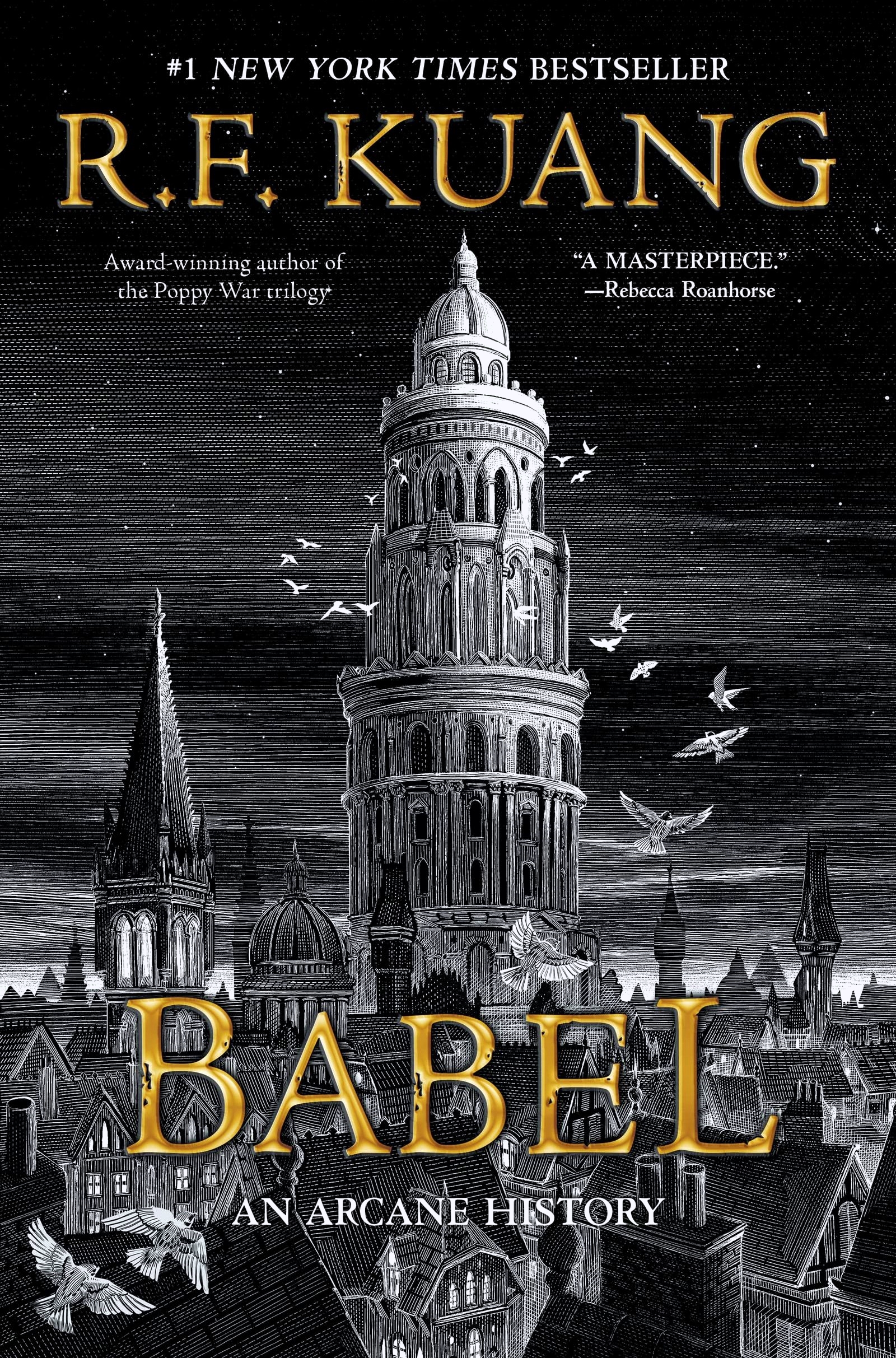
Some standouts to me included The Scholomance series by Naomi Novik, Leigh Bardugo’s Six of Crows and Alex Stern series, Babel by R.F. Kuang, and Elder Race by Adrian Tchaikovsky.

I’m currently reading Where the Crawdads Sing (physical book) by Delia Owens (not genre, I know) and The Fated Sky (audiobook) by Mary Robinette Kowal, the second book in the Lady Astronaut series.

Other books that I’m planning to read by the end of the year include The Adventures of Amina al-Sirafi by Shannon Chakraborty, Horse by Geraldine Brooks, Scorpica by G.R. Macallister, On Fragile Waves by E. Lily Yu, and The Road to Roswell by Connie Willis.

I also wanted to comment briefly on some series that I have been reading. It took me a LONG time to get through book 4 of The Wheel of Time by Robert Jordan. I’m planning to get back to that series, but I needed a break from it. I may start book 5, The Fires of Heaven, by the end of the year.

Another project that I have had was to read all of the original six Dune novels by Frank Herbert. I had finished the first three, but struggled to get into God Emperor of Dune. I’m going to try again, but also not until at least the end of the year.

The last ongoing series that I’ve been plodding through is the Demon Cycle by Peter V. Brett, but I can’t figure out why I keep putting this one off. I have really liked these books so far. I have the final two in the series, as well as another related work. Maybe I’m afraid to find out how it ends?

In 2023 we also got to see the release of Brandon Sanderson’s four “secret project” novels that he wrote during the lockdown portion of the pandemic. He broke the record for the most-funded Kickstarter in 2022, topping $41.7 million for the campaign.

I have mixed feelings about Sanderson’s writing (I liked one book but hated another series). But I appreciate his work ethic and his efforts to help other writers, so I contributed toward the Kickstarter and found myself with four more novels on my to-be-read list. I do intend to read them, but haven’t had time yet.

There are so many other books that I need to read and write about, but I’m going to stop now and get back to reading! How is your year of reading going? Let me know in the comments (above).

February Reading Wrap-Up

February was a tough reading month for me. I was busy with travel and work obligations, so I didn’t finish reading as many books as I had hoped. Looking back at the details, I only finished these two books below:

The Lady of the Lake is the 7th (publication order) book in The Witcher Saga and concluded the main plot of the series. You can read my review of this book here. The Forgotten Beasts of Eld by Patricia McKillip is a stand-alone novel that has a fairy-tale-like feel. I will be writing a full review of this one soon.

Despite only having finished these two books, I still managed a fair amount of reading. I just finished The Southern Book Club’s Guide to Slaying Vampires by Grady Hendrix today (technically in March). I’m also almost done with the second volume of The Sandman by Neil Gaiman and Season of Storms by Andrzej Sapkowski.

The Wheel of Time has become a slog, but I’m persisting on my read-through. I remember having this same experience when I read these books for the first time. The first three books were exciting and well-paced, and then The Shadow Rising (book 4) just drags. I am making progress though and I’m hoping to get a review done soon.

The only other book I’m reading is Perilous Times by Thomas D. Lee. This book is an advance copy that I received courtesy of Net Galley, but I have only just started this one.

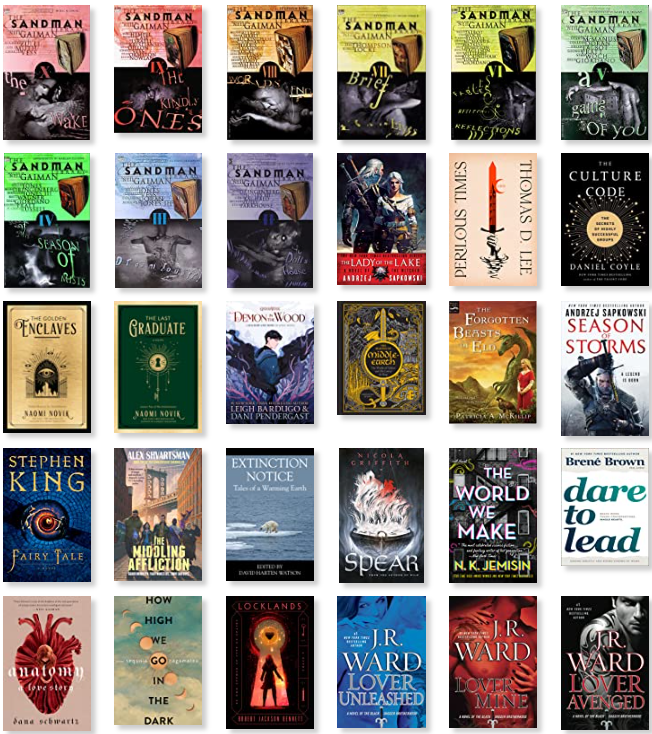
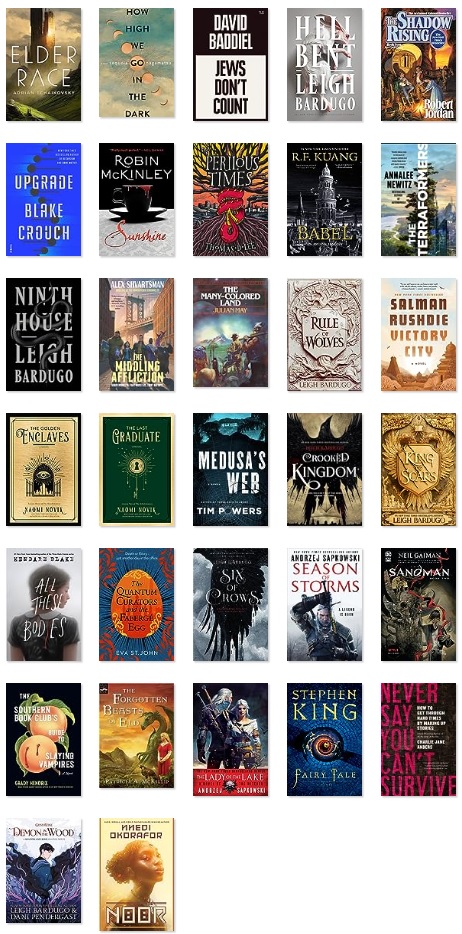
For March, I’m going to finish The Shadow Rising, Season of Storms, and Perilous Times. After that, I’m not exactly sure what will be next, but you can see some of the options in the graphic below.

That’s it! What are you planning to read for March? Let me know in the comments (above).

Previous Older Entries Next Newer Entries

Follow Blog via Email

Enter your email address to follow this blog and receive notifications of new posts by email.

Join 415 other subscribers