I recently received my ballot information for this year’s Nebula Awards and thought that I might be able to spend some time reading the nominated works. However, when I looked at the deadline and how much I would need to read, I don’t think I’ll be able to get through enough of them to make any fair decisions.
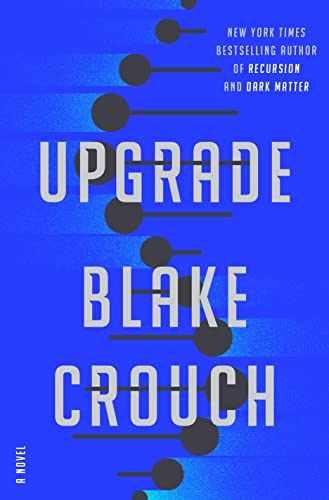
These are the novels that have been nominated.
Prior to the announcement, I had only read one of the novels and none of the works in the other categories. . I reviewed The Terraformers by Annalee Newitz recently and you can find my thoughts here (paid link). That leaves me with five novels and all the novellas, novelettes, and short stories to read (and that is without counting the award for Middle Grade and Young Adult fiction or the game writing category).
I think that my strategy will be to start with the short stories. Then I can move on to the longer categories. I don’t expect that I will get to the novels, but the process at least makes me more aware of some books that I hadn’t heard of prior to this.
You can find all of the nominations here. Voting closes on April 15th and the winners will be announced on June 8th at the 2024 Nebula Conference in Pasadena, CA.
March wasn’t a very good month for me in terms of reading. I was distracted by other things in my life and I didn’t have as much time to devote to books, unfortunately. What did I actually finish reading in March? Just these two books:
I am still in the process of reading a few others which you can see here:
I didn’t make any further progress on The Anatomy of Story by John Truby, but I still plan to get back to this one. My audiobook listening habit also struggled, so I haven’t finished the second book in the Outlander series, Dragonfly in Amber by Diana Gabaldon. As of the time I’m writing this, I have a little under seven hours left to go. I started reading the Utopia Science Fiction anthology last week, but I was not in the right mood to read short stories and ended up finally starting The Skull Throne by Peter V. Brett, which is book 4 in The Demon Cycle (paid links).
What’s ahead for April? And how do I break out of my reading slump?
I rearranged what I originally had on my April list, since I didn’t get to most of what I had planned to read for March. Here are the books that I now have on for this month:
I put them roughly in the order I think I might read them. The Core is the fifth and final book in The Demon Cycle, so I expect I’ll want to finish that series once I get through book 4. I think I’ll probably get back to The Sandman series of graphic novels for a quick read and then move on to book 5 of The Wheel of Time – The Fires of Heaven. I expect Iron Flame to be a quick read, and after that I don’t know if I’ll actually get to the other books during April. I should be able to at least start Voyager, the 3rd book in the Outlander series, but since each one is longer than the last, I don’t know if I’ll finish it this month (paid links).
On top of those goals, I have been debating whether I should read some of the fiction nominated for the Nebula Awards. That will be the topic of a post later this week, so I’ll leave my thoughts on that until then.
As far as getting over my reading slump, that’s hard because I do have some travel plans this month. One trip involves a long flight, so that usually gives me some free time to read, but otherwise the logistics of packing and planning always takes time.
What are you reading in April? How are your reading goals for the year going so far? Let me know in the comments (above).
I don’t remember how I first came across this book, but I added it to my to-be-read list after listening to the author speak at a panel by Orbit Books. The Combat Codes by Alexander Darwin is the first book in The Combat Codes Saga (paid links).
I read the e-book edition.
Here is the blurb:
In a world long ago ravaged by war, the nations have sworn an armistice never to use weapons of mass destruction again. Instead, highly-skilled warriors known as Grievar Knights represent their nations’ interests in brutal hand-to-hand combat.
Murray Pearson was once a famed Knight until he suffered a loss that crippled his homeland — but now he’s on the hunt to discover the next champion.
In underground and ruthless combat rings, an orphaned boy called Cego is making a name for himself. Murray believes Cego has what it takes to thrive in the world’s most prestigious combat academy – but first, Cego must prove himself in the vicious arenas of the underworld. And survival isn’t guaranteed.
This book was definitely written with a lot of mixed martial arts (MMA) and Brazilian jiu-jitsu in mind. Fortunately, I have watched a good amount of those sports and even rolled with my husband at his local jiu-jitsu class once. The author uses the names for many of the positions in those sports, so I think that a reader who is familiar with them will get a better visual picture of the fights in this story.
At first I had trouble determining whether this book was fantasy or science fiction. After seeing a bit more of the world, it was clearly science fiction, but to the characters like Cego, some of the aspects like his own background and the presence of seemingly magical sprite-like creatures made it seem more like fantasy.
The story is told through two point-of-view perspectives: that of Cego – the up-and-coming kid who is stuck fighting in the slave rings, and Murray – the old fighter who retired after a devastating loss. While much of the plot is predictable as a coming-of-age story for Cego, a couple of intriguing twists occurred toward the end which have encouraged me to pick up the next book in the series.
Have you read any fantasy or science fiction novels that featured a specific fighting style like this book? Let me know in the comments (above).
I picked up The Road to Roswell after having an opportunity to listen to Connie Willis talk to my local science fiction club about her writing (paid links). This is her most recent novel and is a humorous stand-alone story. I listened to the audiobook edition, narrated by Jesse Vilinsky.
Connie Willis isn’t a new author to me. I have read several books in her Oxford Time Travel series, starting with The Doomsday Book (paid links). I’m sure I’ve read some of her short stories in magazines, but I tend to lose track of which shorter works I have read.
When level-headed Francie arrives in Roswell, New Mexico, for her college roommate’s UFO-themed wedding—complete with a true-believer bridegroom—she can’t help but roll her eyes at all the wide-eyed talk of aliens, which obviously don’t exist. Imagine her surprise, then, when she is abducted by one.
Odder still, her abductor is far from what the popular media have led her to expect, with a body like a tumbleweed and a mass of lightning-fast tentacles. Nor is Francie the only victim of the alien’s abduction spree. Before long, he has acquired a charming con man named Wade, a sweet little old lady with a casino addiction, a retiree with a huge RV and a love for old Westerns, and a UFO-chasing nutjob who is thoroughly convinced the alien intends to probe them and/or take over the planet.
But the more Francie gets to know the alien, the more convinced she becomes that he’s not an invader. That he’s in trouble and she has to help him. Only she doesn’t know how—or even what the trouble is.
Part alien-abduction adventure, part road trip saga, part romantic comedy, The Road to Roswell is packed full of Men in Black, Elvis impersonators, tourist traps, rattlesnakes, chemtrails, and Close Encounters of the Third, Fourth, and Fifth kind. Can Francie, stuck in a neon green bridesmaid’s dress, save the world—and still make it back for the wedding?
This book was a lot of fun to read and played on UFO and alien-abduction tropes, both to move the story along, and to provide some great laughs. Francie is the perfect protagonist for this, starting out as a skeptic, but being unable to disbelieve what happens to her. The group that is swept along in the adventure is a wonderful assortment of characters and they all add their own unique personalities to the story.
The plot didn’t go where I expected it to, but that’s okay in the end. The story also features a touch of rom-com. The audiobook was easy to listen to and I was swept into the story immediately. This was a fun read and is definitely a stand-alone novel, so it won’t add to my massive list of series that I need to finish.
Have you read anything by Connie Willis? What is your favorite story? Let me know in the comments (above).
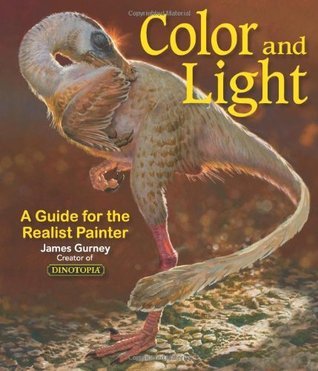
I love doing these end of the month/year types of posts and it’s time for another one – yay! However, February didn’t go as well for me in terms of reading. At the time that I’m writing this, I’ve only finished the first three books pictured below (Fourth Wing, God Emperor of Dune, Starling House). I still expect to get through Every Heart a Doorway and Color and Light by the end of the month (paid links).
Books that I read in February 2024
You can find my reviews for the ones that I’ve finished here:
I have been reading two other books that I don’t expect to finish by the end of the month. Those are The Anatomy of Story by John Truby, which is essentially a class on creating a blueprint of the plot and characters for your screenplay or novel. It is dense and I’m working through it slowly. The other book I’m partway through is the second in the Outlander series by Diana Gabaldon, Dragonfly in Amber (paid links). I’m listening to the audiobook and I still have over 18 hours to go.
Books I have started, but haven’t finished yet.
Looking back at my January 2024 Reading Wrap-Up post here, I had also planned to read these books pictured below. I didn’t start either The Foxglove King (481 pages) or The Combat Codes (484 pages) because they were longer works and I had other novels that I needed to finish within a time frame for book club discussions (paid links). I also would like to read the Utopia Science Fiction Magazine anthology where my story (Selection Error) appears, so all three of these books will be pushed to the top of my reading list for March.
Books I had planned to read in February, but didn’t start yet.
If I look at my original reading list for March 2024, it contains the following 8 books:
Books I’m planning to read in March 2024
These are all parts of series! Additionally, I don’t think any of them are ones I’m reading for book clubs. I have put them in order of priority, with the series that I’ve already started listed higher. The last three on here, Scorpica by G. R. Macallister, Empire of the Vampire by Jay Kristoff, and The Art of Prophecy by Wesley Chu are all by new authors to me, and are each the first books of a series (paid links).
I know that I won’t realistically get through all of these, but that never stops me from looking at more books and coveting them. I’ll continue to post reviews as I go, interspersed with reviews of books that I read last year.
How do you choose what to read next? Let me know in the comments (above).
A couple of years ago, I had decided to read all six of the books in the Dune series that were written by the original author, Frank Herbert. The first three tell the story of Paul Atreides, and you can find links to those books and my reviews of them here (paid links):
Dune (#1) – sorry, I lied. I didn’t actually review the first book.
The next book (#4), God Emperor of Dune is set about 3000 years after the events of the first three books (paid link). Read on below to see what I thought of this one.
I read the e-book edition.
Here is the blurb:
Millennia have passed on Arrakis, and the once-desert planet is green with life. Leto Atreides, the son of the world’s savior, the Emperor Paul Muad’Dib, is still alive but far from human. To preserve humanity’s future, he sacrificed his own by merging with a sandworm, granting him near immortality as God Emperor of Dune for the past thirty-five hundred years.
Leto’s rule is not a benevolent one. His transformation has made not only his appearance but his morality inhuman. A rebellion, led by Siona, a member of the Atreides family, has risen to oppose the despot’s rule. But Siona is unaware that Leto’s vision of a Golden Path for humanity requires her to fulfill a destiny she never wanted—or could possibly conceive….
This book was rather strange. Leto Atreides, son of Paul from the original book, has been transformed into a part-human, part-sandworm creature. He has the memories of all his ancestors, like Paul also had acquired. The planet of Arrakis has been transformed and very little desert remains. The surface is covered with forests and rivers, with remaining “museum” fremen present as a tourist attraction.
The other characters in this story are Moneo and Siona, both Atreides descendants, as well as Duncan Idaho, reborn yet again as a ghola. From the outset, Siona is a rebel, pledged to bring down Leto the God Emperor. I enjoyed her tale, but then the narrative drifted away from her for most of the book. The author is making a commentary on absolute power and leading through religious fervor and fear, but I’m not sure that I understood everything he intended to say.
Leto also has an odd fixation on arranging the breeding of his descendants. This has always been a factor in the series, but it felt more artificial and out of place in this book. The relationships that occurred felt sudden and awkward. In the end, I’m still not sure what The Golden Path is, but I’m going to keep reading the next two books.
Have you read any of the later Dune books? What did you think? Let me know in the comments (above).
The Terraformers is a stand-alone science fiction novel by Annalee Newitz. This is a book that I read last year. I have previously read and enjoyed one of this author’s other books, The Future of Another Timeline, but did not review it here (paid links). Read on below to see what I thought.
I read the e-book edition of this book.
Here is the blurb:
Destry is a top network analyst with the Environmental Rescue Team, an ancient organization devoted to preventing ecosystem collapse. On the planet Sask-E, her mission is to terraform an Earthlike world, with the help of her taciturn moose, Whistle. But then she discovers a city that isn’t supposed to exist, hidden inside a massive volcano. Torn between loyalty to the ERT and the truth of the planet’s history, Destry makes a decision that echoes down the generations.
Centuries later, Destry’s protege, Misha, is building a planetwide transit system when his worldview is turned upside-down by Sulfur, a brilliant engineer from the volcano city. Together, they uncover a dark secret about the real estate company that’s buying up huge swaths of the planet―a secret that could destroy the lives of everyone who isn’t Homo sapiens. Working with a team of robots, naked mole rats, and a very angry cyborg cow, they quietly sow seeds of subversion. But when they’re threatened with violent diaspora, Misha and Sulfur’s very unusual child faces a stark choice: deploy a planet-altering weapon, or watch their people lose everything they’ve built on Sask-E.
This book was structured as several interconnected stories, each one set further into the future on the planet of Sask-E. I definitely gravitated toward certain characters more than others and found that Destry in the opening section was my favorite.
The terraforming technology was used to make the planet hospitable and it was designed to mimic a paleolithic Earth. The main character at the beginning, Destry, is part of the Environmental Rescue Team, ironically tasked with protecting this artificial environment that humans have painstakingly created. She discovers a hidden society of the original terraformers, thought long dead as a result of the changes to the planet and deals with the crisis that arises as a result. However, when the book cuts to the next section, I was disappointed that I didn’t get to keep reading about Destry.
The novel looks at some interesting ideas – about what makes an organism sentient, how humans change the environment, and who gets to make the decisions about the world they live in. I also loved the idea of the sentient train in the later portion of this book. Overall though, this book was a bit of a let down and didn’t quite come together to me. I enjoyed The Future of Another Timeline more.
Have you read any of the author’s books? Let me know in the comments (above).
Titan by John Varley is a book that I read for a recent book club meeting. I had never read anything by this author until now. This is the first book in the Gaea trilogy. Read on to see what I thought (paid links).
I read an e-book edition of this.
I had a hard time finding a blurb for this one, but eventually located two short versions:
The first one: When Cirrocco Jones, captain of the spaceship Ringmaster, and her crew are captured by Gaea, a planet-sized creature that orbits around Saturn, they find themselves inside a bizarre world inhabited by centaurs, harpies, and constantly shifting environments.
And a second one: It begins with humankind’s exploration of a massive satellite orbiting Saturn. It culminates in a shocking discovery: the satellite is a giant alien being. Her name is Gaea. Her awesome interior is mind-boggling—because it is a mind. A mind that calls out to explorers, transforming all who enter.
Those blurbs don’t really explain much of what this book is about. In many ways, it reminded me of Ringworld by Larry Niven (which I didn’t like) (paid links). Like that book, the story in Titan follows a group of explorers as they travel across a toroid-shaped artificial world. In Titan, this party is all human, but they are scattered when they enter Gaea and have to search for each other while exploring the place.
I did like the characters in this book (definitely better than the ones in Ringworld) and was pleasantly surprised to find that the protagonist was a (mostly) well-drawn female character written by a male author in the 1970s. Not that there weren’t some missteps, but overall Cirrocco Jones was a daring, gutsy, and believable heroine.
The opening chapter with the emphasis on relating how all of the astronauts on the Ringmaster had all had sex with each other over the course of their journey to Saturn was a strange way to start the story, and I think this could have been worked in better in another way. The relationships were important to the story, but I didn’t need it spelled out up front.
This is the first book in a series, but did reach a satisfying conclusion and could be read as a stand-alone tale. The other books finish out a trilogy and are Wizard and Demon (paid links). I’m undecided about whether I’ll read them.
Have you read Titan or any other novels by John Varley? Which would you recommend? Let me know in the comments (above).
The first month of 2024 is nearly over and it’s time to look back at what I read, as well as what’s coming up next. Overall, January was a strong reading month for me, mostly because I was sick and stuck on the couch for more hours than usual which resulted in extra reading time. Here are the seven books that I finished in January:
I have already written reviews on some of these, which you can find here:
I had hoped to also finish Dragonfly in Amber by Diana Gabaldon, the second book in the Outlander series (paid links). However, it took me longer to finish the first book than I had thought it would, so the second one got pushed back to February.
I started the 4th book in the Dune series, God Emperor of Dune, in January, as well as The Anatomy of Story by John Truby, but these books were too dense to rush through and finish at the end of the month (paid links).
Looking ahead at February, here is what’s up next for my reading plans:
Hopefully I can read as much as I did in January (minus the illness though). What are you currently reading? Let me know in the comments (above).
I picked up the latest novel by John Scalzi for an upcoming book club discussion. Starter Villain is a stand-alone novel, and honestly, I was sold on this one by the cat on the cover (paid link). Read on to see what I thought of the story.
I read a physical copy of this book.
Here is the blurb:
Inheriting your uncle’s supervillain business is more complicated than you might think. Particularly when you discover who’s running the place.
Charlie’s life is going nowhere fast. A divorced substitute teacher living with his cat in a house his siblings want to sell, all he wants is to open a pub downtown, if only the bank will approve his loan.
Then his long-lost uncle Jake dies and leaves his supervillain business (complete with island volcano lair) to Charlie.
But becoming a supervillain isn’t all giant laser death rays and lava pits. Jake had enemies, and now they’re coming after Charlie. His uncle might have been a stand-up, old-fashioned kind of villain, but these are the real thing: rich, soulless predators backed by multinational corporations and venture capital.
It’s up to Charlie to win the war his uncle started against a league of supervillains. But with unionized dolphins, hyperintelligent talking spy cats, and a terrifying henchperson at his side, going bad is starting to look pretty good.
In a dog-eat-dog world…be a cat.
I have only read a couple of other books by John Scalzi prior to this (Old Man’s War and Redshirts, neither of which I reviewed here), and I have followed his blog. His writing style is generally light and humorous in the works I’ve read, and this novel follows that pattern.
Starter Villain was a lot of fun and was a quick and easy novel to read. The story is exactly as described in the blurb above and follows Charlie as he fumbles his way through his newfound responsibilities. The only disagreement that I had with the description in the blurb was that his henchperson didn’t terrify me at all, but she was a terribly competent woman which might be frightening to some people.
The intelligent spy cats were great and they gave plenty of opportunities for the author to insert some humor. Given the dangerous business that Charlie has entered, the humor throughout the story is essential to making this book enjoyable.
When I first read the blurb I had wondered how innocent Charlie was going to manage this transition into evil. However, the villainy that ensues pits him against the competing supervillains rather than against civilians. Much of their activity involves making threats and using their power to keep the others from calling their bluff. This keeps Charlie from doing anything truly evil in the book, which helped to keep him a likeable character.
Overall, I really enjoyed this book and will continue to pick up John Scalzi’s novels when I have a chance. Have you read any of this other books? Which one is your favorite? Let me know in the comments (above).