Book Review – King of Scars

King of Scars by Leigh Bardugo is the first book in another duology set in the Grishaverse (paid links). I listened to this as an audiobook, narrated by Lauren Fortgang. You can read my reviews on other books set in this world here:

I listened to the audiobook edition.

Here is the blurb:

The dashing young king, Nikolai Lantsov, has always had a gift for the impossible. No one knows what he endured in his country’s bloody civil war–and he intends to keep it that way. Now, as enemies gather at his weakened borders, Nikolai must find a way to refill Ravka’s coffers, forge new alliances, and stop a rising threat to the once-great Grisha Army.

Yet with every day a dark magic within him grows stronger, threatening to destroy all he has built. With the help of a young monk and a legendary Grisha general, Nikolai will journey to the places in Ravka where the deepest magic survives to vanquish the terrible legacy inside him. He will risk everything to save his country and himself. But some secrets aren’t meant to stay buried–and some wounds aren’t meant to heal.


I think that Nikolai’s character is a fan favorite, and he certainly is one of mine, so I was excited to find out more of his fate in this book. Even though the Darkling was defeated by Alina in the finale of the Shadow and Bone series, remnants of his evil magic still linger in the world. Ravka has been weakened by that recent struggle, leaving it vulnerable to those same enemies that the Darkling purportedly schemed to protect them from. And the grisha-enhancing/enslaving drug jurda parem is still out there, despite the efforts of the Crows to destroy it in the previous series.

This book is told through the viewpoints of three characters: Nikolai, Zoya, and Nina. The blurb above makes this out to be Nikolai’s story, but I think it is more of Zoya’s story, especially in the next book (but that will be my next review). At first I had mixed feelings about this, because Zoya was never a friendly person in the earlier books, but her character grew on me. By the end I understood why she had developed that personality and empathized with her.

Nina, one of the “six” from Six of Crows, is also a highlight in this novel (paid link). In that earlier series, Nina suffers some devastating changes and losses, so it makes sense to see her again in a new story, because her tale isn’t done. Her plot gives us a new look inside Fjerda where she tries to deal with her grief while staying true to her mission.

I was shocked by the ending of this book, but I can’t say anything else for fear of major spoilers. Have you read it? Let’s discuss that ending in the comments (above).

Find more of my reviews here.

Books to Read in 2024

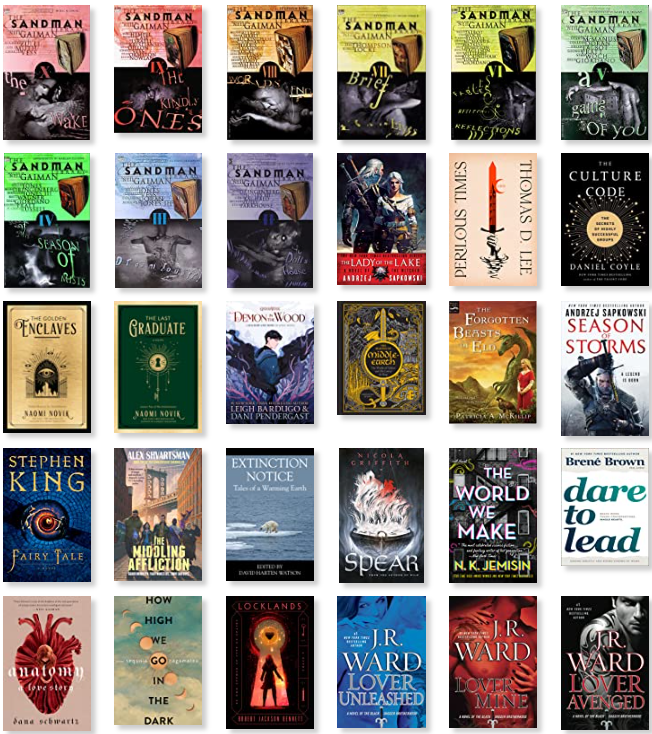
It is a little after midnight on New Year’s Day as I’m starting to write this post. I have been cramming books onto my 2024 to-be-read list in a mad rush, like there is some sort of rule that once the ball drops in Times Square, I won’t be allowed to add any more for the year. I mean, that’s not true at all, but part of me feels like I have to have a plan for the year finalized by January 1. Well, here is my (once again) very unrealistic list of 113 books I plan to read for 2024:


How did I come up with this list? There are several considerations that go into this (paid links below):

What else goes into my choices? Well, I am trying not to start any new series. But on the list above, I also have several new series… what can I say? I am inconsistent. To be fair, some of the series on here are ones where I read the first book many, many years ago but was unable to finish the series (because it hadn’t all been published yet or because I got distracted by other books).

In that vein, I’m going to continue on my read-through of Robert Jordan’s Wheel of Time series. I’m also going to read Dune #4-6, which I had put aside after reading #1-3 in 2022 (paid links).

As the year goes on, I’ll add even more books to this list, perpetuating my never-ending pile and pushing more of these off to 2025. I need more hours in the day.

Of all these books, which ones are up first for the year? Well right now, I’m already reading the first of Diana Gabaldon’s Outlander series in audiobook format. I’m also about a third of the way through Not Like Us by Doc Honour, a writing critique partner (paid links). After that, here is what I have planned:


Let me go back to the numbers now. I have 113 books on my list for 2024. Even given that some are shorter novellas or graphic novels, that still comes out to about 9.5 books per month, or more than 2 books per week. And some of these books aren’t short, so what is realistically going to happen?

I usually end up reading somewhere between 40 and 50 books each year. I tend to read several books at once, so one goal I’m making for this year is to try to minimize how often I start a new book without finishing others. I feel like I’ll be more engaged in a book if I’m not splitting my attention between several of them. (However, I will still have an audiobook going while reading something in print).

Off to do some reading now…

How do you choose which books you’re going to read? What books are you most excited about reading in 2024? Let me know in the comments (above)!

Book Review – Crooked Kingdom

I had meant to continue my review of this series sooner, but I have been struggling with an injury to my hand. I had to limit the amount of typing I did, and so unfortunately my blog suffered from this. However, I did finish reading several more books and I might get 50 books read for 2023 (I’ll let you know next week)!

For my final book review of 2023, I need to talk about Crooked Kingdom by Leigh Bardugo. This was probably my favorite book by the author (even including others I haven’t had a chance to review here yet). This is the concluding book in the Six of Crows duology (paid links).

I listened to the audiobook version of Crooked Kingdom, narrated by a cast of Jay Snyder, Brandon Rubin, Fred Berman, Lauren Fortgang, Roger Clark, Elizabeth Evans, and Tristan Morris.

You can find my reviews for other books by Leigh Bardugo here:

Paid links help to support this blog.

Here is the blurb:

Kaz Brekker and his crew of deadly outcasts have just pulled off a heist so daring even they didn’t think they’d survive. But instead of divvying up a fat reward, they’re right back to fighting for their lives.

Double-crossed and badly weakened, the crew is low on resources, allies, and hope. As powerful forces from around the world descend on Ketterdam to root out the secrets of the dangerous drug known as jurda parem, old rivals and new enemies emerge to challenge Kaz’s cunning and test the team’s fragile loyalties.

A war will be waged on the city’s dark and twisting streets – a battle for revenge and redemption that will decide the fate of the Grisha world.


So of course things didn’t go as planned at the end of book 1, Six of Crows… leaving us with this crazy caper as the Crows try to rescue Inej, prevent the spread of jurda parem, and destroy all of the enemies they have made.

While the plot felt less focused in this second book, compared to the first one with the specific goal of a heist, the twists kept coming. Even when I thought everything had been resolved, the author surprised me again. The characters continued to develop and their story arcs and banter were the best part of this series.

I don’t want to give any spoilers about the ending. All I can say is that it is both heartbreaking and satisfying, and I’m glad that some of these characters (Nina, especially) appear in the next series. However, I would LOVE to see the others again if the author decides to write more of their stories.

The audiobook production continues in the same format as Six of Crows, with each character’s chapter being voiced by a different actor. While I generally prefer only one or two narrators, by this point in the series, I’ve adjusted to it and liked this format.

Have you read any of Leigh Bardugo’s Grishaverse books? Which are your favorites? Let me know in the comments (above).

Find more of my reviews here.

Book Review – Six of Crows

I have been reading a lot over the past few weeks, but I wanted to step back to review some books that I read earlier in the year. I had really enjoyed the Shadow and Bone series by Leigh Bardugo and have since finished a read-through of her other novels. Most of them are set in her Grishaverse world, so I’m going to start with those. Next up in the reading order after the Shadow and Bone trilogy are the Six of Crows Duology books: Six of Crows and then Crooked Kingdom (paid links). I listened to the audiobook version of Six of Crows, narrated by a cast of Jay Snyder, Brandon Rubin, Fred Berman, Lauren Fortgang, Roger Clark, Elizabeth Evans, and Tristan Morris.

You can find my reviews for other books by Leigh Bardugo here:

I listened to the audiobook edition.

Here is the blurb:

Ketterdam: a bustling hub of international trade where anything can be had for the right price—and no one knows that better than criminal prodigy Kaz Brekker. Kaz is offered a chance at a deadly heist that could make him rich beyond his wildest dreams. But he can’t pull it off alone. . . .

A convict with a thirst for revenge

A sharpshooter who can’t walk away from a wager

A runaway with a privileged past

A spy known as the Wraith

A Heartrender using her magic to survive the slums

A thief with a gift for unlikely escapes

Six dangerous outcasts. One impossible heist. Kaz’s crew is the only thing that might stand between the world and destruction—if they don’t kill each other first.


It’s hard to even know where to begin with this book, but it was by far one of my favorite reads in the past few years. At it’s heart, it’s a heist story with the six characters in the blurb taking on a seemingly impossible task. Yet where this book shines is the characters. Each one has their own reasons for being there and secrets abound. While they are all criminals of some sort, it was easy to root for them and to understand the circumstances that brought them to this life.

While this book is set in the Grishaverse, it takes place in parts of the world that did not feature in the Shadow and Bone trilogy. Grisha magic is also less of a factor here, although the group still has a renegade grisha. There is romance woven through the plot as well, and it is torturously good. Just don’t expect a payoff from any of the characters’ relationships in this first book.

I think that you could also read Six of Crows without having read the Shadow and Bone books. The events of the earlier trilogy are mentioned, but none of that is directly relevant to this story. The grisha powers might be a little confusing, but since those play a smaller role here, it shouldn’t limit the enjoyment of the book.

The audiobook used a different narrator for each character’s chapters. This worked well and I was able to adjust to the different voices easily. One difference in my reading when I listen to an audio performance of a book is that I don’t always have a good sense of how much of the book is left. However in this story, I realized that I had too many minutes of the book left when I thought it was almost done. While that isn’t specifically a spoiler, I knew that something more was going to happen, which I think actually added to the tension at the end, making it tragically perfect.

Find more of my reviews here.

10 Authors I Haven’t Read Yet

I had the idea for this post from another book blog that I follow and I thought it would be an interesting topic in regard to my own reading. My goal in creating this list was to think of ten authors that I am dying to read, but haven’t had time to get to yet. I started with a longer list and then pared it down to just these ten:

  1. Iain M. Banks – I have read the blurb for the first book in this author’s Culture series (paid link) and I honestly can’t tell what it’s about other than something with a sprawling intergalactic story which is something I generally love. This is a series with 9 books so far.
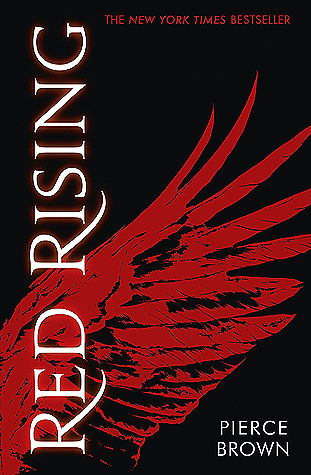
  1. Pierce Brown – this author is best known for the Red Rising Saga (paid link) which started out as a trilogy and has now grown to six books. Caste warfare on a dystopian Mars????? Yes, please!
  1. P. Djeli Clark is an author that I was not terribly aware of until I listened to him talk in a writing class sponsored by Orbit Books. He spoke about scene structure and sounds like an author who writes diverse and compelling stories (paid link).
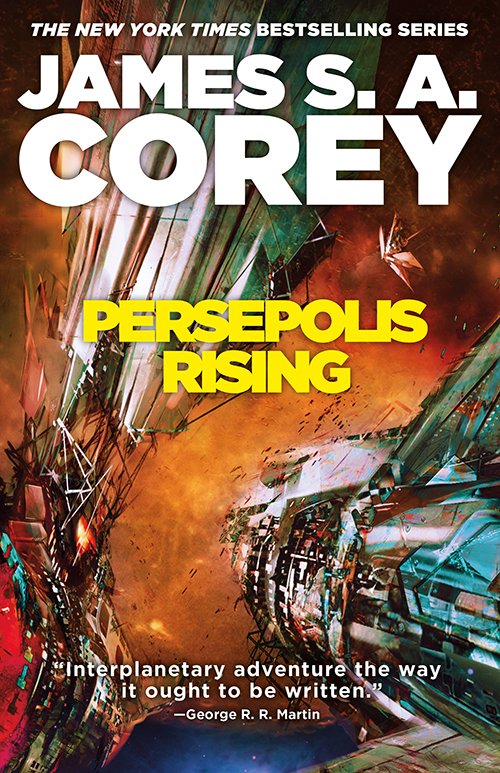
  1. James S. A. Corey is a pen name for authors Daniel Abraham and Ty Franck who are best known for The Expanse series (paid link). This science fiction epic was the basis for the television series on Amazon Prime of the same name which is currently in my queue to finish. I plan to read the books once I’ve finished the show.
  1. Diana Gabaldon is best known for writing the Outlander series of historical time-travel romance novels (paid link). I watched the first season of the television show and loved it (but then got distracted – I don’t stick with tv very well). My mother is a huge fan of both the books and the show and if I don’t read this series soon she’ll probably disown me. It currently sits at nine books and is supposed to be complete with the tenth volume.
  1. Ann Leckie wrote the Imperial Radch trilogy of science fiction novels (paid link) that won the Hugo, Nebula, and Arthur C. Clarke Awards and was also recommended to me by friends. I picked up the first book but haven’t had the time to start it yet. So many books, so little time…
  1. Sarah J. Maas – I’m torn on this one because I’ve heard mixed reviews of her writing. I first heard of her Throne of Glass series, and now the author’s more recent series (A Court of Thorns and Roses) (paid links) has been added to the list of banned books in some conservative parts of the country – which makes it crucial to read it, right?!?! These are fantasy romance with faeries and probably some magic and swords. As long as the writing isn’t too painful, I’ll probably at least have fun with these.
  1. Seanan McGuire has written a ton of books. Her series include the October Daye, Wayward Children, and Alchemical Journeys books (paid links). The good news is that I’m planning to read Every Heart a Doorway for a book club discussion in the next few months. This series involves children and portals.
  1. Silvia Moreno-Garcia has written several stand-alone novels. Many appear to have a more gothic flavor to them, which is something that I have not read a lot of. I don’t know if I’d like these, but she has received awards and acclaim, so I’m open to taking a look. I already picked up Gods of Jade and Shadow a few years ago and haven’t had time to read it (paid link).
  1. V.E. Schwab is the last author on my list. She has written the Shades of Magic trilogy which explores parallel Londons in a threatened multiverse. Her more recent book, The Invisible Life of Addie LaRue looks like a stand-alone novel about a woman who wins immortality but, in exchange, is forgotten by everyone she meets (paid links).

Have you read any of the authors on my list? Which one should I read first? What authors would be on your list? Let me know in the comments (above).

Book Review – Victory City

Victory City (paid link) by Salman Rushdie is one of the controversial author’s most recent novels. I had never read any of his works, but one of my book clubs chose this one and so I picked it up a few months ago.

I read the e-book edition.

Here is the blurb:

She will whisper an empire into existence – but all stories have a way of getting away from their creators . . .

In the wake of an insignificant battle between two long-forgotten kingdoms in fourteenth-century southern India, a nine-year-old girl has a divine encounter that will change the course of history. After witnessing the death of her mother, the grief-stricken Pampa Kampana becomes a vessel for a goddess, who tells her that she will be instrumental in the rise of a great city called Bisnaga – literally ‘victory city’ – the wonder of the world.

Over the next two hundred and fifty years, Pampa Kampana’s life becomes deeply interwoven with Bisnaga’s as she attempts to make good on the task that the goddess set for her: to give women equal agency in a patriarchal world. But all stories have a way of getting away from their creator, and as years pass, rulers come and go, battles are won and lost, and allegiances shift, Bisnaga is no exception.


The first thing that struck me about this novel was that it was a fantastical exploration of ancient history. Salman Rushdie had never been on my radar as an author who wrote fantasy, but after investigating his other works, it looks like much of his catalog is regarded as part of the magical realism genre. While that term originated in the German art world, it has been mostly used to describe writing by Latin American authors in which magical events are described in a realistic manner and the lines between reality and fantasy are blurred.

After reading Victory City, I don’t think that I would categorize this book as magical realism because the events of myth and magic are overt and clearly magical. This book read more like a mythical exploration of history, similar to some of the retellings of Greek mythology that have become prevalent recently (Circe, Ariadne, A Thousand Ships [paid links]).

I struggled to get into this book, and I think that was because the narrative style was comprised of too much telling and not enough showing for me. It was also hard to identify with the narrator. While some of the individual stories and conflicts had interesting aspects, I never felt engaged with the outcome of Pampa Kampana and her city. It also seemed that the author tried to create a story that gave women agency and power, but didn’t quite get there in the execution of that idea.

This book might appeal more to other readers and I think some of my reaction to it is that the style didn’t work for me. The prose itself was well-done, and I would consider reading another book by the author at some point.

Have you read anything by Salman Rushdie? What did you think? Let me know in the comments (above).

Find more of my reviews here.

Book Review – The Golden Enclaves

This is it – the third and final book of Naomi Novik’s Scholomance series! The Golden Enclaves (paid link) picks up immediately after that heart-stopping conclusion to book 2. You can find my other reviews for this series here:

I read this as an e-book.

Here is the blurb:

The one thing you never talk about while you’re in the Scholomance is what you’ll do when you get out. Not even the richest enclaver would tempt fate that way. But it’s all we dream about, the hideously slim chance we’ll survive to make it out the gates and improbably find ourselves with a life ahead of us, a life outside the Scholomance halls.

And now the impossible dream has come true. I’m out, we’re all out–and I didn’t even have to turn into a monstrous dark witch to make it happen. So much for my great-grandmother’s prophecy of doom and destruction. I didn’t kill enclavers, I saved them. Me, and Orion, and our allies. Our graduation plan worked to perfection: we saved everyone and made the world safe for all wizards and brought peace and harmony to all the enclaves of the world.

Ha, only joking! Actually it’s gone all wrong. Someone else has picked up the project of destroying enclaves in my stead, and probably everyone we saved is about to get killed in the brewing enclave war on the horizon. And the first thing I’ve got to do now, having miraculously got out of the Scholomance, is turn straight around and find a way back in.


I did enjoy this final book in the Scholomance series overall. However, I felt like it wasn’t quite what I had hoped for in the conclusion to this series. Beware, there may be some spoilers below.

While it was interesting to see what the rest of the magical world looked like outside of the Scholomance, it also lacked the same feel as the earlier books. I enjoyed seeing how the students of magic went about their days with classes interspersed with danger. This story was bigger than the Scholomance, though. But then I also felt like it changed the relationship between El and Orion and made it less satisfying than it had been in book 2.

The revelation about the price that must be paid to create an enclave was one of the best parts of this book. The magicians knew they must keep the terrible truth secret, but at the same time, many of them knew and were willing to force someone to pay that price.

I felt that the final conclusion scenes of this series were rather anti-climactic. Both sides postured and threatened, and then nothing happened. They figured out a solution and then that was it. The tension that the prophecy and the danger had built fizzled for me. Still, I mostly enjoyed the series and will definitely be looking for Naomi Novik’s next book.

Have you read the Scholomance series (paid link)? What did you think about that ending? Let me know in the comments (above).

Find more of my reviews here.

Book Review – The Last Graduate

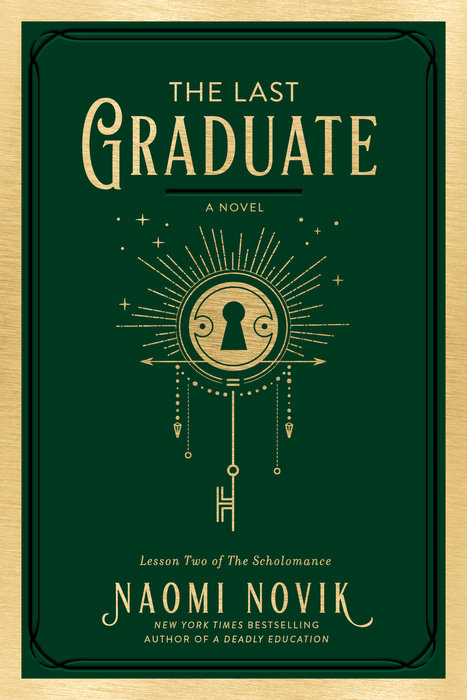
The Last Graduate (paid link) is the second book in Naomi Novik’s Scholomance series. I had to continue with this series because I had enjoyed the first book so much. You can find my review of that one (A Deadly Education) here.

I read this as an e-book.

Here is the blurb:

A budding dark sorceress determined not to use her formidable powers uncovers yet more secrets about the workings of her world in the stunning sequel to A Deadly Education, the start of Naomi Novik’s groundbreaking crossover series.

At the Scholomance, El, Orion, and the other students are faced with their final year—and the looming specter of graduation, a deadly ritual that leaves few students alive in its wake. El is determined that her chosen group will survive, but it is a prospect that is looking harder by the day as the savagery of the school ramps up. Until El realizes that sometimes winning the game means throwing out all the rules . . .


Another school year starts in this book and we follow El, Orion, and their friends as they try to study and survive it. In that respect it is similar to the first book, but this time El is less isolated while at the same time reluctantly put into a position of greater responsibility. The characters continued to shine in this volume as they navigate their way through the dangers of the Scholomance.

El is still haunted by the prophecy that claims she will become a danger to the enclaves, causing her to believe that she is destined to turn to dark magic. This was an intriguing part of the book to me since she has been clearly resisting the prophecy and I couldn’t see anything forcing her to make that change yet. However, I often distrust prophecies in fantasy fiction (thanks, Tad Williams).

This is definitely part of a series and would be difficult to pick up without reading A Deadly Education (paid link) first. The ending also ends on a devastating cliff-hanger, so be ready to start the last book, The Golden Enclaves (paid link), once you’re done.

Have you read any of the books in this series? Do you have a favorite series featuring a magic school? Let me know in the comments (above).

Find more of my reviews here.

What to Read Next?

As the year approaches its end, I find myself looking back at the books I’ve read in 2023 and wondering how I became so distracted from my plan for the year.

Actually–this happens every year.

I start out with a shiny perfect to-be-read list that, while it might be overly ambitious, is orderly and logical. Then sometime around February I add books to the list. These might be a novel for one of my book clubs, a new release by a favorite author, or a book that was gifted to me. Other times I might read a description of a book that really grabs me and–wham! That’s another addition to the list.

A portion of the books I had planned to read for 2023.

Thinking about my book chaos made me wonder how I decide which book I’m going to read next. Sometimes it’s a deadline – like for book club or a review that I want to coincide with a particular date. Often I’m just excited about delving into a particular story. Or I’ve been staring at a book that I left out on a table or desk.

I also have a dilemma when it comes to what format to read. I’m usually reading a physical book, an e-book, and an audiobook all at once. If I finish the audiobook, then I need another audiobook after that. And if I already have that book in another format, I’m not going to also buy it as an audiobook. Or for books that are part of a series, I try to keep with the same format for the whole thing, especially if I started it as an audiobook and really liked the narrator.

Books on my October to-be-read list.

I will try to control the chaos by breaking my gigantic to-be-read list down into smaller pieces by each month. Above is an example of those books sitting on my October list, none of which I have started and it is nearly the end of October. I do have to start On Fragile Waves for a book club meeting so that one will have priority over the others. Oh – and I should go back to look at the four books from my September list that I didn’t start yet.

As an aside, I did some work updating this blog last week and now you can see what I’m currently reading in the Goodreads widget in the sidebar on the right (scroll up from here).

How do you decide what to read next? Do you have an organized list? Do you stick to that? Let me know in the comments (above).

Book Review: Babel

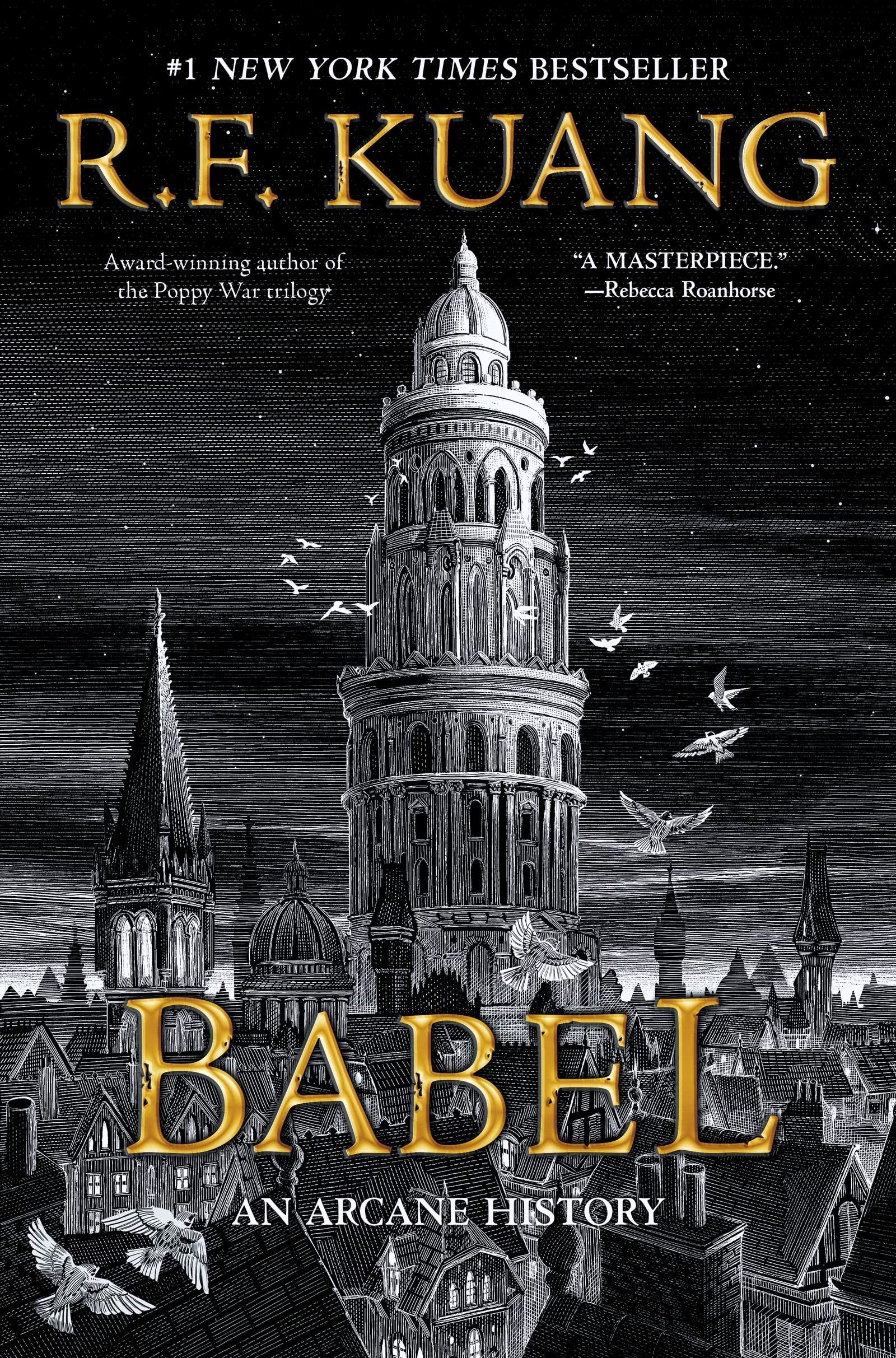
I have had The Poppy War (paid link) by R.F. Kuang sitting in my to-be-read pile for quite a while. But when one of my book clubs wanted to read the authors newest book, Babel (paid link), this ended up being my introduction to R.F. Kuang’s work. This novel has a longer version of the title, fully – Babel: or the Necessity of Violence: An Arcane History of the Oxford Translators’ Revolution. Babel won the Nebula award in 2022 for Best Novel.

I read this in hardcover.

Here is the blurb:

Traduttore, traditore: An act of translation is always an act of betrayal.

1828. Robin Swift, orphaned by cholera in Canton, is brought to London by the mysterious Professor Lovell. There, he trains for years in Latin, Ancient Greek, and Chinese, all in preparation for the day he’ll enroll in Oxford University’s prestigious Royal Institute of Translation—also known as Babel. The tower and its students are the world’s center for translation and, more importantly, magic. Silver-working—the art of manifesting the meaning lost in translation using enchanted silver bars—has made the British unparalleled in power, as the arcane craft serves the Empire’s quest for colonization.

For Robin, Oxford is a utopia dedicated to the pursuit of knowledge. But knowledge obeys power, and as a Chinese boy raised in Britain, Robin realizes serving Babel means betraying his motherland. As his studies progress, Robin finds himself caught between Babel and the shadowy Hermes Society, an organization dedicated to stopping imperial expansion. When Britain pursues an unjust war with China over silver and opium, Robin must decide . . .

Can powerful institutions be changed from within, or does revolution always require violence?


This book was quite long, but I despite the time they take to read, I often become enthralled with epic fantasy series and other stories with intricate details that require an intimidating number of pages to tell. Robin’s story in Babel develops slowly as he comes to live in England and starts his studies at Oxford. Yet it never became dull for me. The historical setting and the novel magic that combines precious metal with linguistics and translation were fresh and engaging.

The characters were diverse and well-drawn and didn’t always get along, leading to conflicts that helped to drive the book into darker places. This isn’t ultimately a happy story, but it does reach a resolution by the end and is a stand-alone novel.

The most interesting parts of this book for me were how it expanded upon the wrongs of colonialism and then used the story to make a point hinted at in the full title and specifically stated in the blurb — is violence ultimately necessary to enact revolutionary changes in society? Will peaceful campaigns always fail if the changes they seek are too divisive to the current culture? I read this book over the summer and have still been thinking about the questions it posed and examples from real history. So far, this is one of the best books I’ve read in 2023.

Have you read Babel or one of R.F. Kuang’s other books (paid link)? Let me know in the comments (above)!

Find more of my reviews here.

Previous Older Entries Next Newer Entries

Follow Blog via Email

Enter your email address to follow this blog and receive notifications of new posts by email.

Join 415 other subscribers