Book Review – A Sorceress Comes to Call

I need to do a better job keeping up with book reviews, so I’ll start by looking at a recent stand-along novel I read, A Sorceress Comes to Call by T. Kingfisher. This is a fantasy novel that is a retelling of a Grimm’s fairy tale.

I have read and enjoyed a couple of other books by this author, but have not had a chance to review them yet. She is someone who my husband met many years ago through his work in online gaming and first came to my attention as Ursula Vernon with her “weird fruit” art that you can still see at her DeviantArt page.

These are the other books by the author that I’ve read:

Book cover for 'A Sorceress Comes to Call' by T. Kingfisher featuring stylized trees and celestial elements on a dark background.
I read the e-book edition.

Here is the blurb:

A dark retelling of the Brothers Grimm’s Goose Girl, rife with secrets, murder, and forbidden magic

Cordelia knows her mother is unusual. Their house doesn’t have any doors between rooms, and her mother doesn’t allow Cordelia to have a single friend—unless you count Falada, her mother’s beautiful white horse. The only time Cordelia feels truly free is on her daily rides with him. But more than simple eccentricity sets her mother apart. Other mothers don’t force their daughters to be silent and motionless for hours, sometimes days, on end. Other mothers aren’t sorcerers.

After a suspicious death in their small town, Cordelia’s mother insists they leave in the middle of the night, riding away on Falada’s sturdy back, leaving behind all Cordelia has ever known. They arrive at the remote country manor of a wealthy older man, the Squire, and his unwed sister, Hester. Cordelia’s mother intends to lure the Squire into marriage, and Cordelia knows this can only be bad news for the bumbling gentleman and his kind, intelligent sister.

Hester sees the way Cordelia shrinks away from her mother, how the young girl sits eerily still at dinner every night. Hester knows that to save her brother from bewitchment and to rescue the terrified Cordelia, she will have to face down a wicked witch of the worst kind.


One of the things that I enjoyed most about this book was that I was not familiar with the fairy tale it was based upon. In the first few chapters, I didn’t know if I should be rooting for Cordelia or her mother, Evangeline, and I had no expectations about where this tale would go. It was set in a generic medievalesque fantasy world which didn’t take anything away from the story because that vaguely European feudal setting is what I’d expect by default for Grimm’s fairy tales.

I enjoyed seeing the character of Cordelia grow as the story unfolded. She was initially meek and defeated (but for good reason as we see after the first few chapters), and her reluctance to act was believable in the first half of the book, rather than frustrating.

Evangeline was a fitting villain and her power to make others “obedient” was a terrifying ability. I did wonder why she hadn’t made better use of her powers, and how she ended up in her current circumstances when it seemed like she could have done so much more with her abilities. Yet there were hints about the limits on her power and how much magic she was capable of working at once.

I loved Hester as a secondary protagonist, particularly since Evangeline discounted her as a threat and wrote her off due to her age and disability. Hester looks out for her brother and immediately saw Evangeline’s ingratiation with their family for what it is, even if she didn’t appreciate the sorcery at work to start with. When events became deadly it was too late for anyone to escape the situation.

I liked the idea that the author planted in regard to sorcery and the perception of magic in this society. People generally saw sorcerers as fraudsters and cheats, rather than serious threats. In the past, those capable of powerful sorcery were hunted down so that those few who remained now keep their powers secret. This explained why little was known about the power of sorcery to the characters in the novel.

I read about the original fairy tale before writing this review, and I would say that this book is only loosely based on that material. Sorcery does not play a role in the fairy tale and the courtship aspect is not featured. Only the character of the horse, Falada, took its name from the fairy tale and followed some of that original plot. The geese made an appearance in this book, but were not central to the story.

While I initially thought of this book as a light read, I think I mean more that it was an easy read. The prose was straight-forward and none of the worldbuilding or setting were complicated, with only a few characters who were central to the story. The plot took a gruesome turn near the end which didn’t bother me, but it might upset some people (animal death, but not really). To be fair, that part of the novel took more direct inspiration from the source material.

I definitely plan to pick up more books by this author. Have you read any that you really liked? Let me know in the comments!

You can find more of my reviews here.
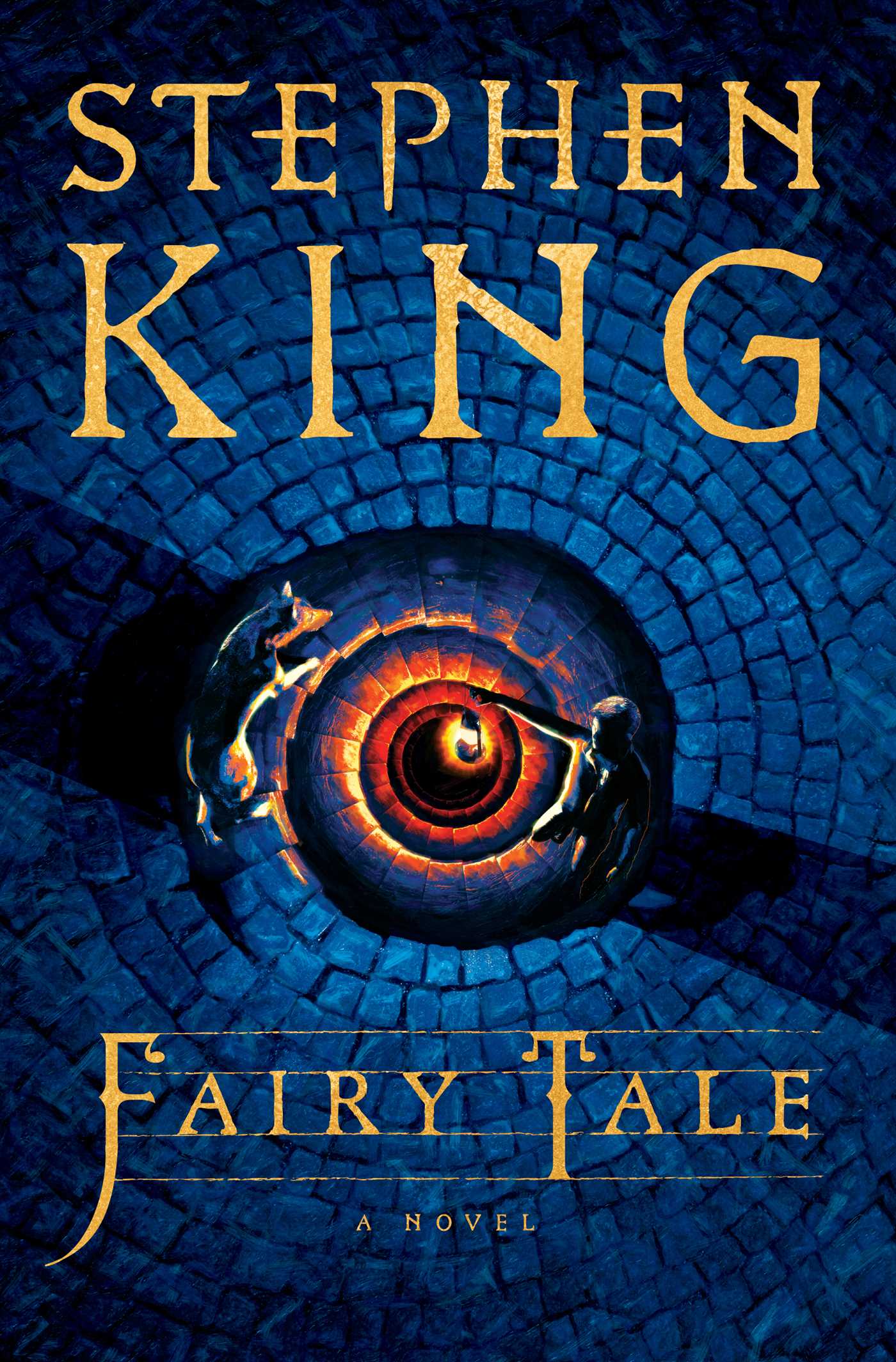
Book Review – Fairy Tale

I started to read Stephen King’s books at least 15 years ago when I picked up The Dark Tower series. I guess that after delving into many more of his works, I now consider myself a fan, although I still don’t read everything that he writes. When I saw that he had a book titled Fairy Tale, though, I knew that this was one I’d need to read.

Paid links help to support this blog.

Here is the blurb:

Charlie Reade looks like a regular high school kid, great at baseball and football, a decent student. But he carries a heavy load. His mom was killed in a hit-and-run accident when he was ten, and grief drove his dad to drink. Charlie learned how to take care of himself—and his dad. Then, when Charlie is seventeen, he meets Howard Bowditch, a recluse with a big dog in a big house at the top of a big hill. In the backyard is a locked shed from which strange sounds emerge, as if some creature is trying to escape. When Mr. Bowditch dies, he leaves Charlie the house, a massive amount of gold, a cassette tape telling a story that is impossible to believe, and a responsibility far too massive for a boy to shoulder.

Because within the shed is a portal to another world—one whose denizens are in peril and whose monstrous leaders may destroy their own world, and ours. In this parallel universe, where two moons race across the sky, and the grand towers of a sprawling palace pierce the clouds, there are exiled princesses and princes who suffer horrific punishments; there are dungeons; there are games in which men and women must fight each other to the death for the amusement of the “Fair One.” And there is a magic sundial that can turn back time.

A story as old as myth, and as startling and iconic as the rest of King’s work, Fairy Tale is about an ordinary guy forced into the hero’s role by circumstance, and it is both spectacularly suspenseful and satisfying.


I truly enjoyed this book! The opening is very relatable and takes place in our world. There’s a mysterious old man with secrets, a sympathetic protagonist in Charlie, and a wonderful dog. You KNOW that this story is going to go somewhere fantastical though from the title.

The first half provides a lot of character background and is essentially about saving a dog. The focus then shifts to an unpredictable story about heroes, quests, and doing the right thing. King references traditional fairy tales that you know, but in a way that isn’t obvious at first. But he also brings in more modern stories that have developed their own cultural following: everything from Cthulhu and Disney characters, to his own lines from The Dark Tower series. He even trolls George R. R. Martin with his own take on “the prince who was promised.”

Like the original versions of classic fairy tales, this story has its dark aspects. However, it is much more of a fantasy story than something from the horror genre. The ending was satisfying and I might even have shed a tear on the final page. I expect that Fairy Tale will end up being one of my top books of 2023 and I’m finding it hard to even offer any criticism of it right now, so go read it!

Find more of my reviews here.

Computer Woes

I had hoped to get another book review up earlier this week, but unfortunately my PC decided it wasn’t going to cooperate. My system is an MSI laptop, and it is several years old. I returned home from a trip late on Sunday night and then when I had a chance to sit at my computer last night, there were problems.

First, the Wi-Fi didn’t work. And since my desk is in a room with no Ethernet cable, I usually run on the Wi-Fi. I tried to fix this, but then when I attempted to reinstall drivers, there were bigger problems.

Bear with me, as I’m not good at computer hardware/software issues, but something happened where the system would no longer boot and also couldn’t repair. Eventually my husband (the computer person) stepped in and was able to boot the computer from a USB drive and then reinstall Windows. Five hours later, he sort of had it running.

Today, many hours were spent installing stuff and continuing to troubleshoot. But in the end, I’m only sitting back down to survey the extent of the damage just now. I expect it is time to buy a new system, but this temporary solution will at least let me carry on in some capacity.

Hopefully by Friday I’ll have a review for Fairy Tale by Stephen King.

Book Review – Uprooted

I had first read one of Naomi Novik’s books when I started the Temeraire series several years ago. I struggled to finish Tongues of Serpents and put that series down for some time. Then I kept hearing things about Novik’s two newer books (Uprooted, Spinning Silver) and I thought I’d give one a try.

Uprooted is a unique fairy tale story and I found it to be an enthralling read. I listened to the audiobook version, narrated by Julia Emelin. At first I had a hard time adjusting to the narrator’s accent, but once I became more involved in the story, it became easier to follow and fit the main character well.

Uprooted follows Agnieszka, a young woman in a small village near to the dread forest, where evil things live and sometimes emerge to bring magical blights and steal away the unwary. The Dragon, a mysterious wizard, protects the valley’s villages from the depredations of the wood, but every ten years, he takes a young woman away to his tower. While she is returned at the end of her service, seemingly unharmed, these women never stay in their former homes and leave for pursuits in distant lands.

This time, everyone knows that the Dragon will choose Agnieszka’s best friend, Kasia. She is beautiful, kind, and talented, and he always chooses the “best” the village has to offer. Despite this knowledge, Agnieszka cannot come to terms with Kasia’s fate, so she grasps her friend’s hand as the Dragon examines the girls on offer. The Dragon’s attention turns back to Agnieszka, and for reasons known only to the mage, he chooses her instead of Kasia.

Seemingly imprisoned at the top of the Dragon’s tower, Agnieszka tries to adjust to her new fate. Her days are filled with strange lessons and the Dragon is hardly hospitable. Yet her journey in this book is mesmerizing as she learns of her own powers. Kasia remains an important character through the book, and Agnieszka plays a careful game with the Dragon, princes, other wizards, and the dangers of the wood.

The entire novel felt like a fairy tale, but moved from a smaller story of a girl and a wizard to one that involved a greater struggle between good and evil and the entire kingdom. The character of Agnieszka makes a wonderfully stubborn and willful protagonist who values her friend Kasia and her village over rules and proper behavior. At the same time, the evil in this book was terrifying, but also with an undercurrent of melancholy.

Uprooted was one of the best books I’ve read this year, and so far is my favorite of Novik’s work.

Find more of my book reviews here.

Follow Blog via Email

Enter your email address to follow this blog and receive notifications of new posts by email.

Join 412 other subscribers