Resuming a Blog

Well, I’ve been away from the world of writing, reviewing, and blogging for some time, and I’m hoping to be able to return to that now. I had been spending most of my time over the last 2 years completing a process to become board certified as a Canine/Feline specialist. I took my exams this past week in San Antonio and I’ll find out whether I passed in about 45 days.

alamo

My last post here mentioned my application to NASA’s astronaut program. While I did make it as far as the highly-qualified group, I don’t know that I’m going to get an interview. It looks like the last few weeks of interviews are filling up, and no one from the astronaut office has called me (yet).

I have started participating in triathlons just in time to improve my cardio for my first year fencing in the Veteran’s age category. I have been looking forward to the Veteran’s age group for a long time, and my first national-level competition will be in Richmond in December, although I’m hoping to sneak in a local tournament before that. I plan to do more triathlons also, but not until the spring. Despite the rumors, I have no immediate plans to do anything near Ironman length!

As far as my fiction goes, the greatest problem I have right now is figuring out which project to pick up first. Should I revise the two short stories that I absolutely love, but no one has yet wanted to publish? Perhaps I should pick up an old rough draft and finish that (there is one in particular that keeps calling to me). Or do I plunge right back into a novel? And which one – space opera, epic fantasy, or alternate history?


Random updates:

Reading now: Contact by Carl Sagan

Writing now: just blog posts

Workout focus: running – I have a 10 mile race in 2 weeks

Eating: unhealthy as I’m traveling this week

Looking for a Few Reviewers

Is anyone out there interested in becoming a book reviewer? I’m looking for a handful of new reviewers over at Book Spot Central for genre novels. The site covers mainly fantasy and science fiction, but books with some mystery or romance elements are fine. You can also review graphic novels.

Benefits include the ability to get a Net Galley account where you can find e-book advance review copies of the latest books. If you may be interested, fill out the form below explaining why you want to write book reviews and a link to anything similar that you’ve written (or paste it into the other box if it isn’t available online).

← Back

Thank you for your response. ✨

New Fantasy Short Fiction

I have a new short story that just came out at the end of October! It takes place in one of my favorite settings, the City in the Tower. A mysterious Master rules over the population while an ancient battle rages in the snow fields outside. Seretia is a windsinger, a practice forbidden in the City, but one that is valuable to the Master. When faced with a crippling decision, she has no alternative but to seek out the truth behind the Master’s war.

Find Winter Into Spring in the October 2014 issue of Outposts of Beyond from Alban Lake Publishing.

Outposts-of-Beyond-October-2014-200x300

Asymmetry in Fencing

With the fencing season in full swing, I thought it would be a good time to return to the topic here. Today I’m going to point out how strange fencers’ bodies are, how that may lead to injuries, and how it may influence any fictional fencers you are writing about.

For a beginner, fencing presents some unique challenges that can be encountered before one even picks up a blade. The en garde stance, the movements forward and back, and the lunges are not a movement that most people would encounter in day-to-day life. Compare this to a sport such as soccer, where anyone can start play on a basic level because you already know how to run. There are certainly rules to learn and techniques to practice, but even a newbie can run across the field. Many beginning fencers that I have watched over the years have a lingering level of awkwardness that will persist for a month, six months, even longer, depending on their development.

Lunging fencer. (c) Sylvain Sechet, reposted under Creative Commons license

Lunging fencer. (c) Sylvain Sechet, reposted under Creative Commons license

Fencing is also asymmetrical. It might be fun to swing one sword in each hand, but for now that isn’t in the rules for the sport. This will lead to more muscle development in the dominant arm, although fencers don’t typically grow “big” arms from their sport. The weapons are all lightweight, but the repetition will eventually lead to some disparity between your limbs.

This asymmetry extends well beyond the weapon arm. All that footwork practice builds muscle in the quads, hamstrings, gluteals, calves… really the entire lower body. Most fencers will find that as their footwork improves, their front leg grows larger than their rear one. Even the muscle on the front of my right shin is larger than that on the left. If you are writing about a character who is new to fencing, that person will be SORE when they are learning the footwork. I remember feeling this mostly in the quads. Nowadays, if I return to practice after a break, I will feel it more in my hamstrings and gluteals.

In my own experience, I have found that I can lunge all day with my right leg forward. After so many years, it feels like a natural movement to me. However, switch to the left and I nearly fall over if I try to lunge with any sudden force. (I also run into walls at home, though.) Switching from the use of your dominant hand to the opposite one will also require that your footwork reverses itself. This is more challenging than it sounds.

A few years ago, I strained a muscle in my side. I stood in front of a mirror and tried to figure out what exactly I had done. I raised my shoulder, poked at my ribs, and in the process, I discovered that I had weird muscles on one side of my body that weren’t present on the other side! Okay, that’s not completely accurate. The muscles existed on both sides, but on my right side (I’m right-handed), they were more developed, and thus more visible because of the nature of my fencing movements. Fencing requires a lot of strength and coordination in the core muscles – the abs and back. The legs propel a fencer, but the core muscles allow the fencer to remain upright and coordinated when changing the direction of movement suddenly.

Even more experienced fencers may struggle with long hours of footwork practice. That lunge is never quite good enough, and there are patterns of footwork that must be repeated in practice so that they become second nature in a bout. Most fencers would rather fence practice bouts than drill footwork, but good footwork translates to good distance, which is critical to putting all your skills together to score the touch. For more about the importance of distance, read my earlier post here.

Graphic by Jen Christiansen, Illustrations by MCKIBILLO; Source: Lars Engebretsen, University of Oslo

Graphic by Jen Christiansen, Illustrations by MCKIBILLO; Source: Lars Engebretsen, University of Oslo

In terms of injuries, fencers will be more likely to have bruises on the side that faces their opponent. For example, a right-handed fencer will tend to get more bruises on the front of the right leg, the right elbow (ow!), and the right shoulder. I have over-exerted myself and developed a minor strain in my right hamstring more times than I can count. I have jammed my toe into the front of my shoe on my front foot and had my toe nail fall off months later (also multiple times). I’ve had tendinitis in the elbow of my weapon-arm. I’ve had blisters on my right hand and thumb (and not my left). I don’t know that anyone has studied the incidence of front-leg versus rear-leg injuries when looking at more serious incidents. I have torn ligaments in both ankles. Overall, fencing is still an extremely safe sport. For those interested though, I go into more detail about other types of injuries here.

Has anyone seen a truly ambidextrous fencer? I have, and there are rules about how often you can change which hand you use. What other sports share the same type of asymmetry? Does anyone else have any experiences or injuries that might be related to this asymmetry?


New Fiction (mine, yay!)

I had mentioned before that I have a new story coming out soon. Well, that is now available in Space and Time Magazine. The story is “A Big Stabbity Bang” which is about a high school student, her physics homework, and a ninja problem, all told in an unconventional style. There’s a NINJA! You can pick up a copy over at Weightless Books.

In other news, I just had another story accepted for publication. “Winter Into Spring” will appear in the October 2014 issue of Outposts of Beyond. This is a fantasy tale set in the City in the Tower, where magic is carried in a song and an eternal war rages outside. This is a story that I wrote a looong time ago, and I’m looking forward to seeing it in print.

If you happen to review any of the issues containing one of my stories, please let me know and I’ll try to link to it or repost your review here.

Now I have to get back to some writing…

New Year, New Things – YAY!

Well, it’s a new year and I’m only a month behind in pointing that out. I’ve been quite busy for the last six or eight months, and I’m sorry to say that my blog here has suffered from that inattention. It’s partly due to a new job and the demands on my time that came with that, and partly from adjusting to the way my sleep patterns have changed with the new job. I’ve worked nights for several years, but the hours are a bit different and I’m having to regiment my sleep better. Add some stress to that, along with holidays and some other things, and my writing has suffered all around.

I’d like to think that I’m back on track now, but we’ll see how it goes.

I’m back to reading more regularly, participating in my online critique group, and I have two stories that I’m actively working on. One is an older story that I never finished. It needed to be reworked and it still needs an ending. The other story… I think it wants to be a novel, but that’s the last thing I need. I have so many unfinished novels in my files that if I managed to finish them all, I would never have time to write anything else.

On the reviewing front, I’ve had a change there as well. The site that I used to write reviews for has changed its focus and will no longer be featuring book reviews. I still like reviewing (and hey, I get some free books), so I’m in the process of setting up some alternatives in that area. I might even post an occasional review here, rather than link to them elsewhere.

In other endeavors, I’m helping out with a new online magazine – Fantasy Scroll Mag. The first issue is in the works and the magazine is open to submissions, paying 1c/word.

And sometime soon, I should have a new story appearing in print. YAY! It was accepted a year ago, so this isn’t really new news, but I’ll be happy to see it finally published. I’ll post more details when it happens though.

That’s it for today! Back to writing…

When Stories Have a Mind of Their Own

The past few weeks have been taken over with holiday recovery, that icky sinus crud that has attacked everyone in the area, and this one persistent story that seems to have a mind of its own.

First, a little news. I have two short stories that will be available in the near future. “Those Magnificent Stars” will appear on February 12 in Perihelion SF. This is an online magazine and is free to read. It focuses on hard sci-fi, so there’s no fantasy to be found here. My piece is a story about a teenage girl whose only birthday wish is to take an excursion outside the dome to see the stars.

Image Credit: NASA, ESA, and the Hubble Heritage Team (STScI/AURA) - ESA/Hubble Collaboration

NGC 602 and Beyond. Image Credit: NASA, ESA, and the Hubble Heritage Team (STScI/AURA) – ESA/Hubble Collaboration

The second story to be published is “Princess Thirty-Nine”. This is a fantasy tale and will appear in the Universe Horribilis anthology from Third Flatiron Publishing. This is a themed anthology about an uncaring or hostile universe. My story follows a captive princess and her struggle to understand the world from her limited perspective.

Now back to that story. It started out as a fun exercise. I wanted to take a break from trying to craft a “more serious” story. I decided to write a short adventure tale about space pirates. Somehow a plot device involving nuclear physics crept in. It never managed to get beyond the opening pages, but it was fun. I put it away and went back to other tasks.

A couple of months ago I resurfaced from a writing hiatus after Hurricane Sandy swept across our area. My husband and I were lucky that we only sustained minimal damage with a few downed branches and buckled siding. I rewrote a fantasy story and kicked it out the door (submitted it to an online magazine). I needed a fun project again, and that silly space pirate story called to me. It needed to be written from a different point-of-view, perhaps with an added complication to the plot and more depth to the characters. Maybe it would end up at novelette or novella length. I started typing.

Last week I found myself floundering as the plot branched into avenues that I had not fully considered. I decided to outline the plot threads to help extricate myself from this mess.

Now I have a novel synopsis.

I don’t need another novel idea, but there it is. All laid out in pretty synopsis format. Half the science behind the fiction is physics, half is biomedical. The main character is clear in my head and the secondary ones are lining up to tell me about themselves. So I guess I’m writing a novel. Maybe I’ll finish this one since it seems to have developed a mind of its own.

For any writers out there, do you ever find that one of your stories takes off like this? Do you ever have the opposite experience in which a novel turns into a short story?

Many well-known novels began as short stories (Anne McCaffrey with Weyr Search/Dragonflight; Orson Scott Card with Ender’s Game). Do you ever read a novel and wish that you had only read a short section of it? Is there a particular short story that you would love to see extended into a novel?

Goals – Do You Set Them?

It’s a new year, and also a time at which many of us think about goals and accomplishments. This may be retrospective – thinking about your activities over the past year. Or if you look forward, then it’s more about making new goals for the future. It can also be both.

DSC_0724


For myself, I had several different goals that I had set for 2012. I’m not sure that I met any of them. BUT – I worked at these goals. For one example, I decided that I would participate in a 2012 reading challenge over at Goodreads. I set a goal of 50 books. I think I read 28. I blame George R.R. Martin and his long, long books for slowing me down on this one. But you know what? I still read a lot of books. More than I probably did for 2011. I’m trying it again in 2013 and I have a better idea of what it will take to read all 5o.

One of the larger goals that I had set was to write the first draft of a historical fantasy novel. I did manage to start much of the research, outline characters and some of the plot, and write a few chapters. I took a break from it, but instead of halting all my writing, I went back to short stories. I wrote at least eight of those through the year. So while I finished other tasks that weren’t my original goals, I still feel like I’m making progress on my writing.

I also try to constantly fling rejected stories back out to other potential markets. I had done pretty well with this in 2011, but mid-2012 I slacked off. My rejected stories would linger in my files for weeks before I would research the markets and send them off again. I regained my focus around August, and now I have two stories that have been accepted for publication and will be out in 2013.

So, as a writer, do you set goals for the upcoming year, next month, daily? Do you go back and assess how you did? What are your plans for 2013?

Fencing Travel and Fiction Research

This past weekend, I had the fortunate opportunity to combine both fencing and fiction research together in one trip. I traveled to St. Louis, Missouri for a North American Cup (NAC) event. This is a series of tournaments run by the United States Fencing Association (USFA), held all over the United States, and on occasion elsewhere in North America. From October through April, these events are held once a month. Each NAC is comprised of different levels of events and age groups. This year’s schedule can be found here. The final event of the season is a combination of Division I National Championships and Summer National Championships. This is held over about a ten day time span from the end of June through the first week in July. It is a massive affair, with events for every age group and level.

St. Louis – Gateway to the West.

The October event was a Division I, Division II, and Cadet event. Division I is the highest level of national competition. If a fencer finishes in the top 32 of a Division I event, he earns points that go toward a national ranking. The Cadet event is for fencers under sixteen years of age and is also a point event, but with a separate tally for national rankings. I fenced in just the Division II event. This level restricts entrants to those with a C, D, E, or U rating (leaving out A and B fencers). If you missed my earlier post on ratings and rankings, you can find more of an explanation here. The Division II event awards no points, but rather awards new letter ratings depending on how high you finish.

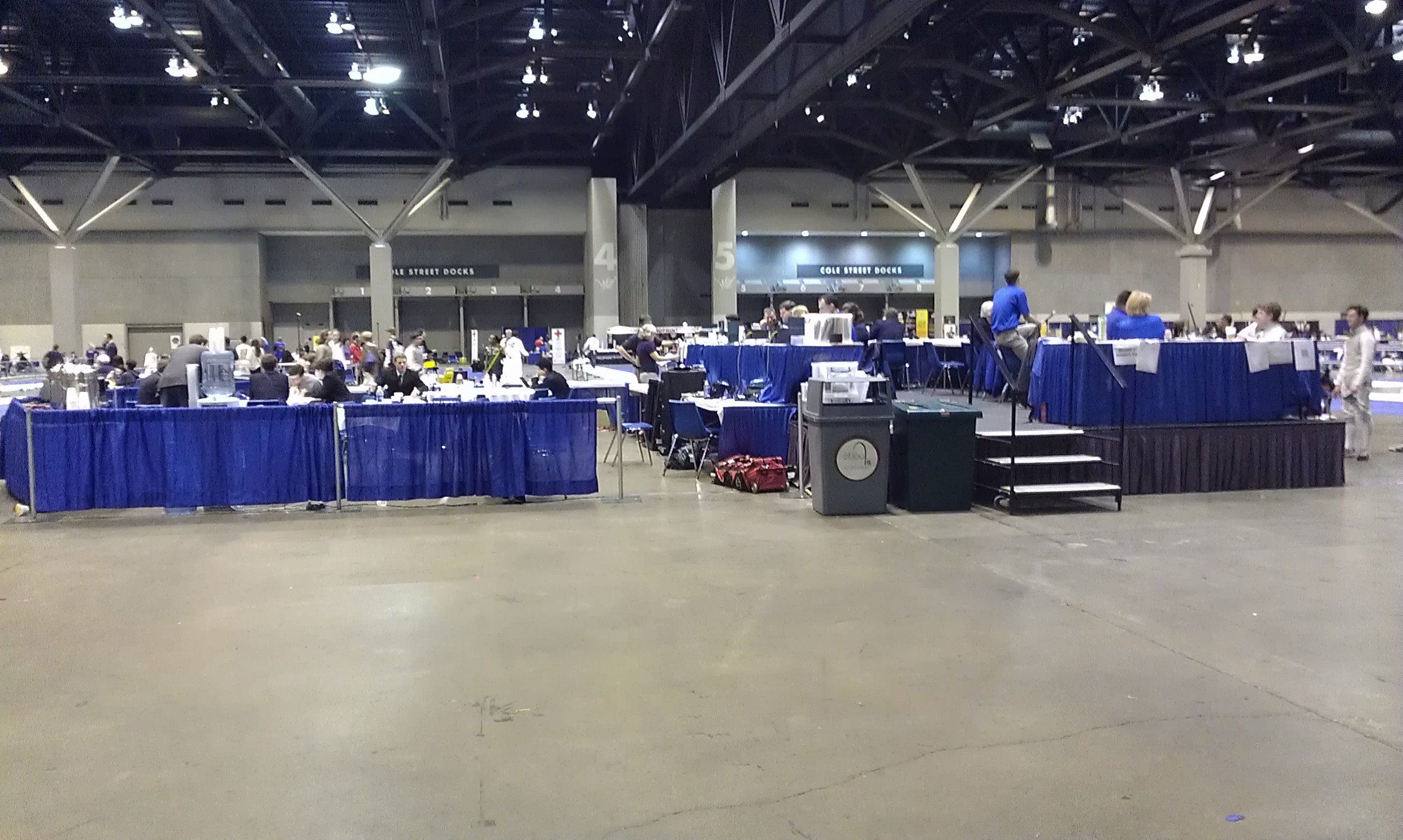
Fencing venue. For most of the day, these strips were full of fencers. But earlier in the day, I was busy fencing so this was taken toward the end of the day’s events.

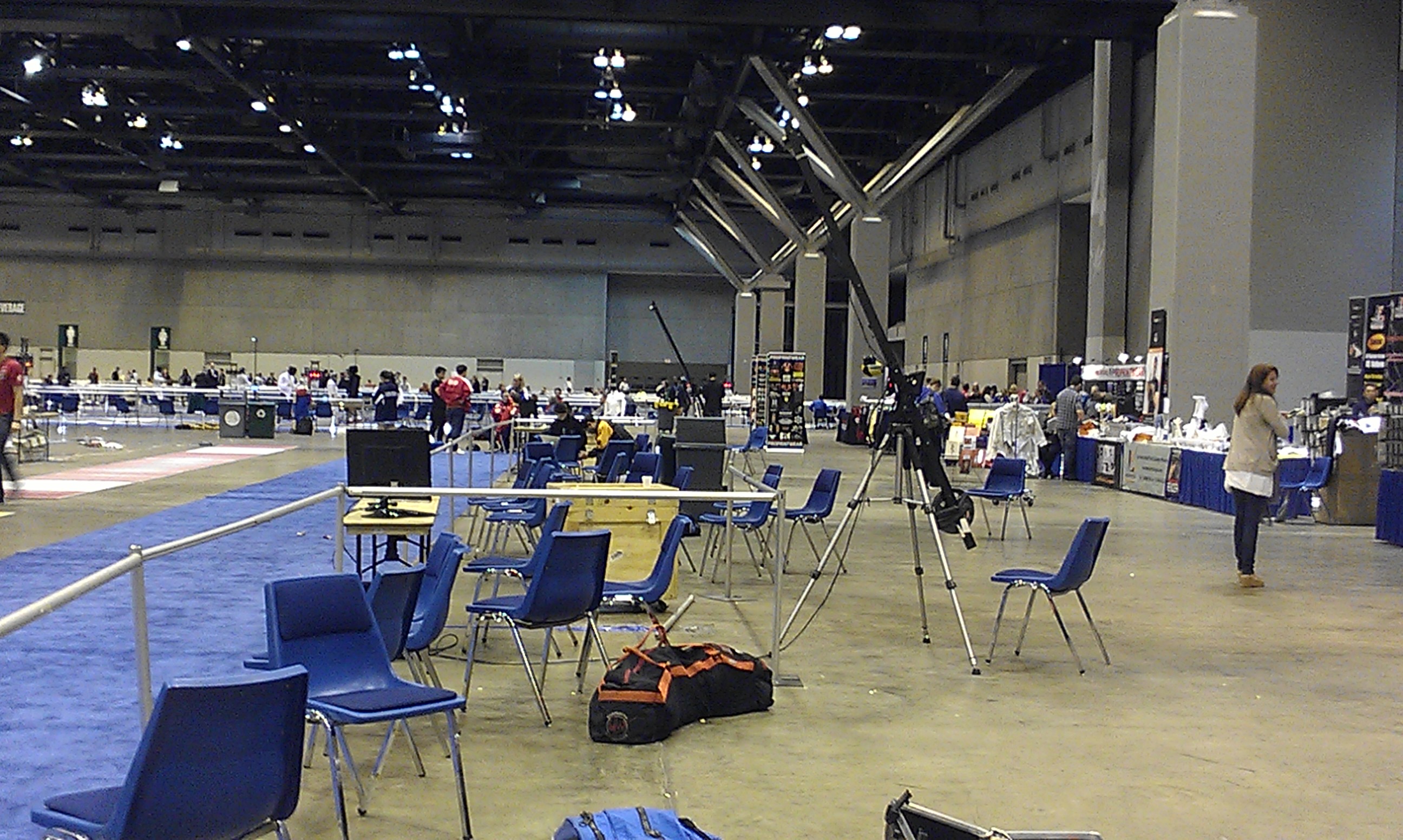
A NAC is an immense and overwhelming thing to a first-time competitor. The venue is usually a large convention center exhibit hall. Fencing strips stretch as far as the eye can see. Scoring machines buzz and beep, fencers scream and shout, and blades clash together on all sides. The bout committee runs the event and is sequestered on an elevated platform in some central location. Equipment vendors, merchandisers, equipment check-in, equipment repair services, and stenciling services can be found around the periphery of the hall.

The bout committee. The section to the left is for referees to gather and rest.

When I first arrived at the event, I had to check in. Everyone has to pre-register for a NAC event. Walk-in competitors are not allowed. At the posted time, the competitors for a given event line up at a booth which is usually in the hall outside the venue. They scan your USFA membership card and then you’re confirmed for the event.

Instant replay station.

The next step is the equipment check. This is within the venue and the line can vary from non-existent to a 45 minute wait. This is where your mask is checked for safety, and the conductive pieces of equipment are verified to be working.

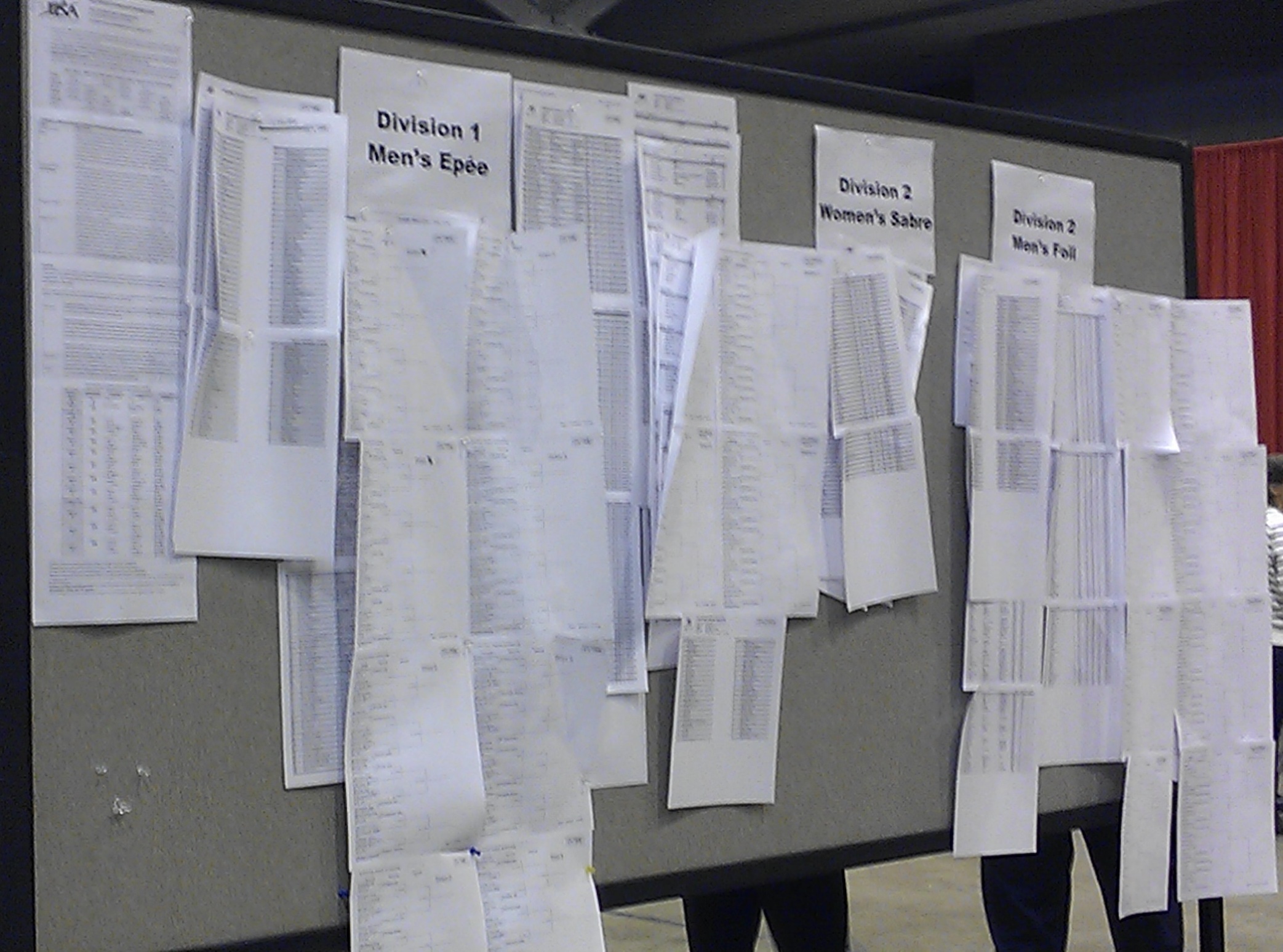
This tournament had several instant replay stations, more than I’ve ever seen before at an event. But despite all the technology, each fencer has to cluster around a simple bulletin board to find out which strip her bouts will be fenced on.

One of several bulletin boards around the venue where important details are posted.

Overall, it appeared to be a well-run event. If you knew where to look, you could even glimpse some of the recent Olympians in action.

At the end of the day, I did not fence as well as I had wanted to, but after my injury and surgeries I was happy to be able to even compete again. I’ll likely enter the Division II NAC in the spring.

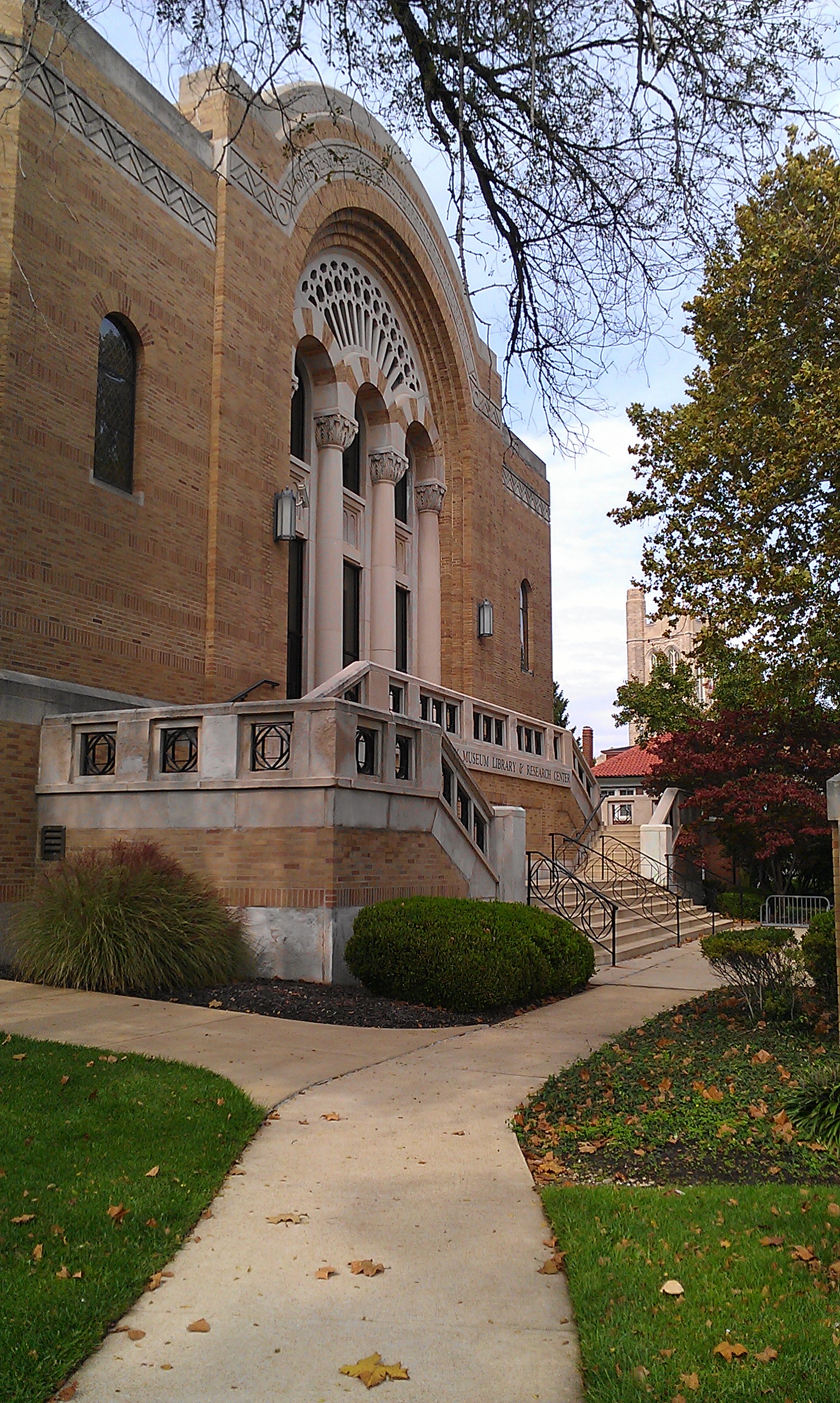
The Missouri Historical Society Research Library.

The rest of my trip was spent working on research for my novel, Badge of the Black Dragon. Since this story is set in St. Louis, I figured that this would be a great opportunity to explore the city’s history. The first day of research was spent at the Missouri Historical Society’s research library. I delved through old photographs and books, taking notes on a variety of topics.

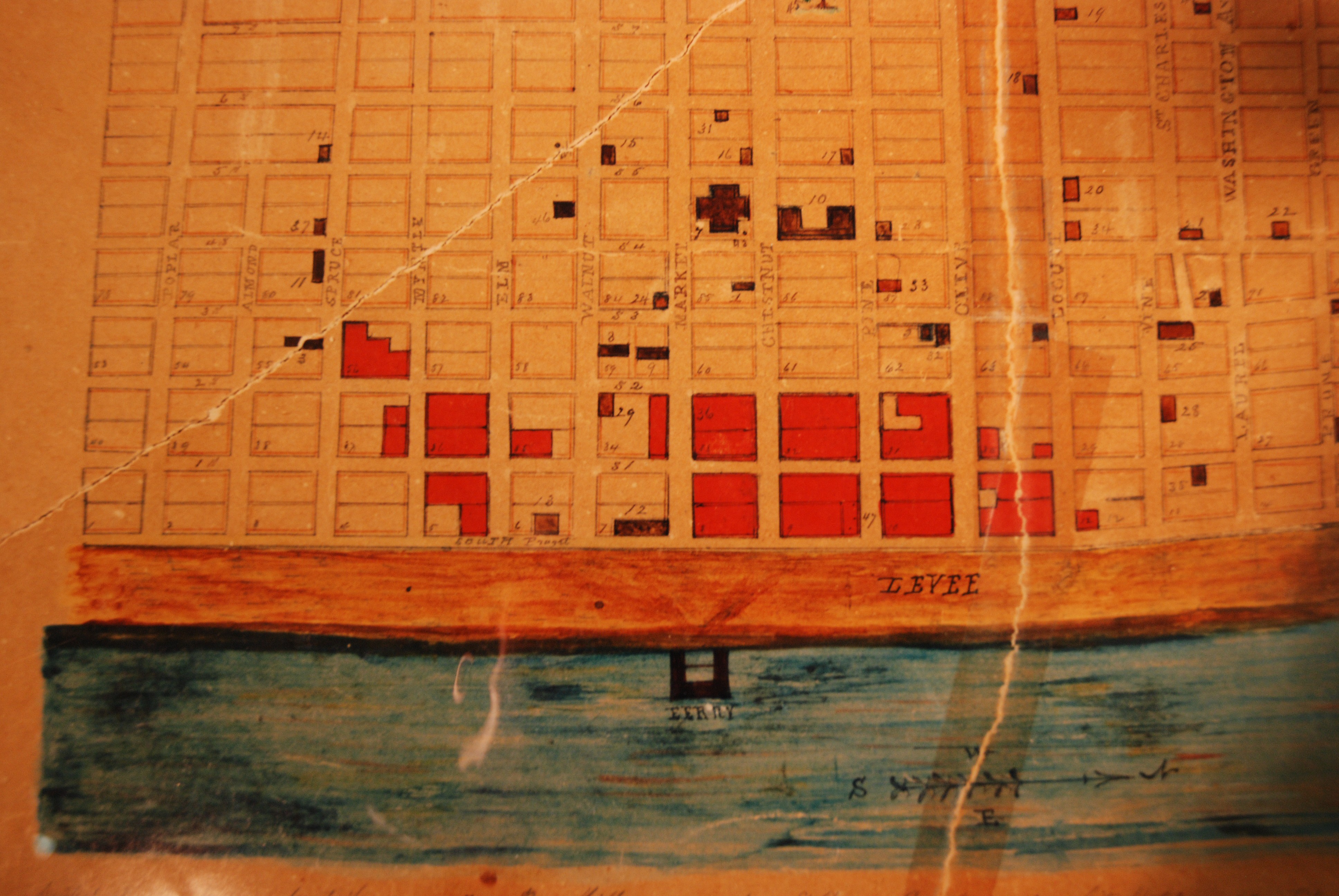
This was the type of library where you need to come in with a specific area of interest. I had to request specific files of photographs, and a little research about this ahead of time had at least prepared me as to what was available. The librarians were very helpful when it came to my other topics. They suggested several approaches to search for what I was looking for and brought me about a dozen books. My favorite item was a reproduction of a map of St. Louis showing which blocks were destroyed in the fire of 1849. The library also had newspapers from the mid-1800’s which were filled with fascinating headlines and advertisements.

A section of the map showing the extent of the fire’s destruction in 1849.

On the last day of my trip, I traveled to a local cave system and then returned to the city to explore the St. Louis arch and the Missouri History Museum. These excursions were less specific for my novel research, but sparked some ideas that I hope will add to the depth of my worldbuilding.

I finally returned home with some additional books for study. My favorite is The Prairie Traveler: A Hand-book for Overland Expeditions – a reprint of a guide to pioneers that was originally published in 1859. I’m not sure that I would have found this small publication if I hadn’t investigated the local museums.

Also this week, I was interviewed by Michelle Carraway over at Reality Skimming about my writing process, ideas, and influences. Please go check out her page here. I’ll even tell you a little more about Badge of the Black Dragon in the interview.

Are there any readers out there who are thinking about taking a trip to research for a novel or story? Have you already done this? If you could do it again, would you prepare any differently?

Fictional Fencers – Conditioning and Athletics and Zombies

Oh hey, it’s time to return to a post about fencing! Today, I’m going to talk about what types of athletic activities a fencer might participate in outside of regular practice. Or another way to look at it would be – what athletic feats might your character be good at if he has done some fencing? What would he struggle with? And most importantly, would he be able to effectively run from zombies?

First off, any character has motivations and goals. How often is she fencing and why? If your character is obsessed with swords and uses every opportunity to train at fencing or other martial arts, this person will have a different physique and abilities than one who runs daily, trains for marathons, or perhaps picks up a fencing weapon only once a month. Maybe your character used to fence ten years ago, but hasn’t picked up a blade or made a lunge since then? What skills would this character retain?

What other types of exercise would a fencer do?

I think it’s easiest to group our fencers into three types. First off, you would have the novices. This group would include those beginners that may have aspirations for competition, but are still trying to figure out the footwork, rules, and proper blade positions. You could also put those who fence more as a hobby than a sport in this group. These fencers would have some degree of fencing skill, but since they either have not been working at it for long, or perhaps pick up a blade once a week or less, their physical condition can vary greatly. Fencing alone at this novice level is unlikely to give this character much additional strength or endurance for other sports, running from zombies, or trying to fight off a serious threat.

The second group of fencers will be those who have the basics down and attend practice regularly (or at least seasonally). This type of character will have more muscle development in the legs and the weapon arm. She will also have some degree of cardiovascular conditioning from footwork drills or bouting practice. However, since fencing uses a lot of fast-twitch muscle fibers, this character may have limited endurance for a long day of competition or running further than a few miles from those zombies.

The last type of fencer is the elite athlete. This fencer will be attending regular practices, but will also work out in other arenas. Weight-training and conditioning are critical to a fencer who wishes to compete and win in anything other than a local tournament. This article gives a great overview of the types of exercises that are helpful. Some competitive fencers may work with a trainer to maximize the benefits of training and to minimize the risk of injury. This type of fencer may be able to lift heavy objects, run several miles, or sprint short distances faster than an average person. Any athlete that has done cross-training in multiple types of activities will be more coordinated and could tackle unexpected obstacles with more success than the average person. One caveat to this would be that the elite athlete would be more likely to have sustained injuries due to the intensity of the training. So while your athlete may have the cardiovascular fitness, coordination, or mental toughness to survive that run from zombies, at the end of the day, she may also have caused an old knee injury to flare up to limit her activity the next day.

The elite athlete cannot be good at everything, and fencing is still more similar to a boxing match than a marathon. If you need your character to be able to run a marathon for your story, then the training associated with fencing will contribute less to this and he had better be doing a lot more running than fencing.

An additional category of fencer that could be involved in a story would be the character that used to fence, but has not done so much as a lunge or a parry in several years. I have seen many high school and collegiate fencers that stop training and competing once they have graduated. What if one of these fencers picked up a sword after a long absence from the sport? What would he remember and what would be tough?

Unless this former fencer was physically active in other sports, his footwork would be awkward and clumsy after such a break. He might remember how to do a lunge, but his legs and core would not cooperate in the same way that they used to. The bladework would be more easily remembered. The muscle groups there are more localized to the fingers, wrist, and elbow, and there is less overall balance and muscular strength needed for these motions. Of course, if he fences for very long at all, he will certainly have muscle soreness afterward. This would be most pronounced in the legs, but could also involve the forearm or back.

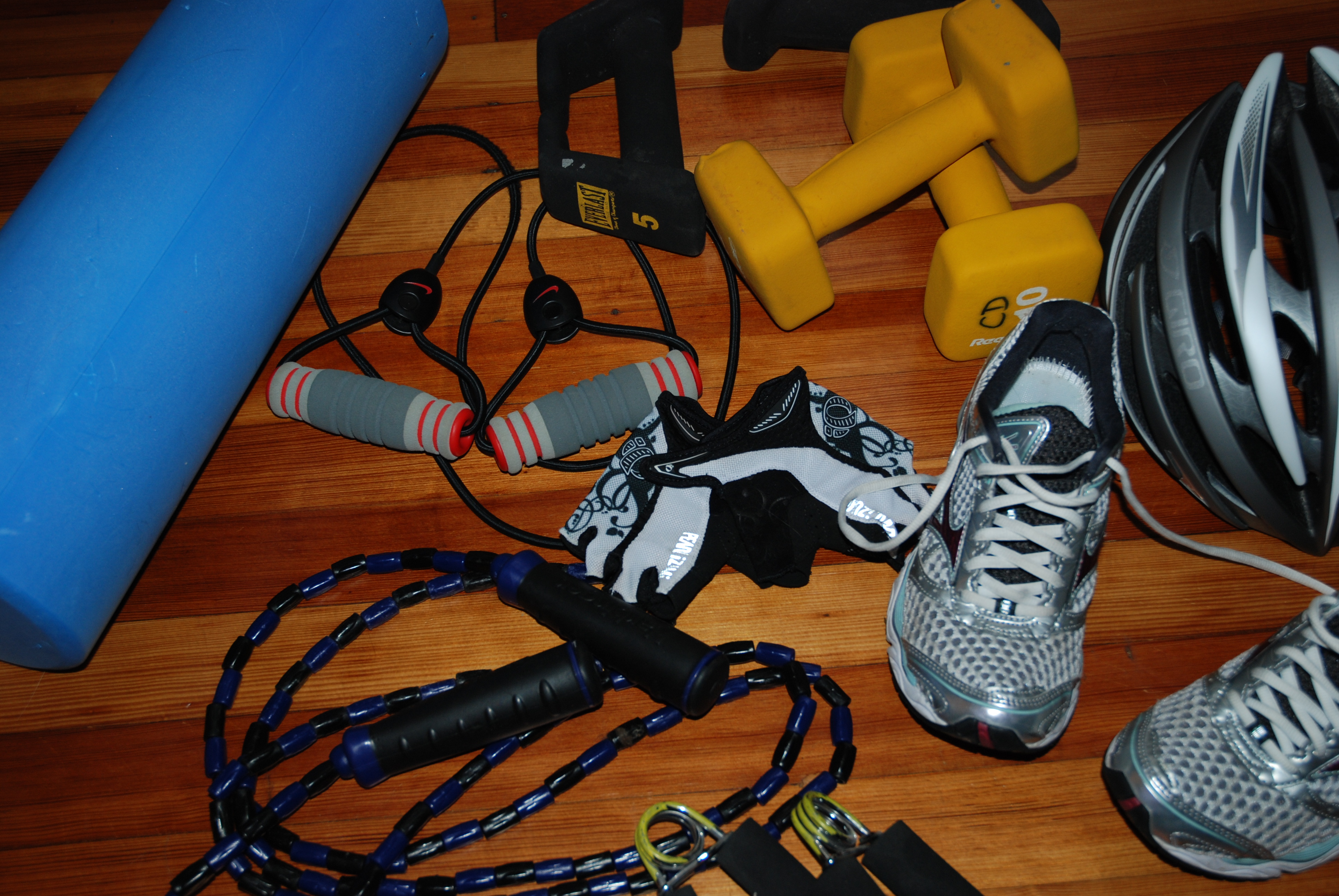
Lastly, for a specific example. What do I do for my training and conditioning? I practice specifically fencing three times a week, for an average of two hours each practice. I lift weights at the gym at least twice a week, although on occasion I manage it three times. Cardiovascular conditioning is split between short runs (1 – 3 miles) and cycling (5-11 miles). I throw in interval training and sprints, yoga classes, other cardio (elliptical machine, rowing machine, etc), jumping rope, and footwork drills, depending on my energy level, schedule, and any soreness or injuries.

Could I outrun the zombies? I don’t want to find out, but I think I’d have a better chance than others.

So, what type of feats have your characters performed when forced to it? Have you written a zombie chase scene? You don’t have to outrun the zombies, right? You just have to outrun everyone else.

Previous Older Entries Next Newer Entries

Follow Blog via Email

Enter your email address to follow this blog and receive notifications of new posts by email.

Join 415 other subscribers