Sooo… my reading goals for 2022 are probably not very realistic, judging by my current progress. For my 2022 Goodreads reading challenge, I have set a goal to read 89 books. So far, I’ve finished 12 of them, putting me 14 books behind that pace.
Paid links help to support this blog.
This graphic above shows those I’ve read. I’m not sure how I can read at any faster pace unless I quit my job, sleep even less than I do, or figure out how to bend time and space. I’m already listening to audiobooks to help make use of my otherwise useless driving time. At the end of the day, it isn’t truly about the numbers. It’s about the enjoyment of reading. But I agonize over my list of books and how there are so many that I feel like I will never get to, thus the attempt to set reading goals.
So what am I currently reading? I have started onChildren of Dune by Frank Herbert but haven’t made it very far on this one yet. I’m about halfway through The Witch’s Heart by Genivieve Gornichec which I bought on a whim, and I’m a short way into Light by John M. Harrison in audiobook format for an upcoming book club discussion.
I’m enjoying Children of Dune and The Witch’s Heart but I’m struggling to get into Light. I haven’t found the characters very compelling and the futuristic cyperpunk-type of world is difficult to understand.
Hopefully I’ll get a review up by the end of the week for The Witch’s Heart. I have some travel planned and a 2-hour flight can help to create some uninterrupted reading time.
What are you reading? Have you read any of these books? What did you think? Let me know in the comments above.
I have too many books that I want to read and not enough time. But with certain books, I will make a special effort to carve out time to read them, and that is the case with The New Jim Crow: Mass Incarceration in the Age of Colorblindness by Michelle Alexander. I had wanted to read this for the past couple of years and I picked up the audiobook edition, narrated by Karen Chilton.
Paid links help to support this blog.
Here is the blurb:
“Jarvious Cotton’s great-great-grandfather could not vote as a slave. His great-grandfather was beaten to death by the Klu Klux Klan for attempting to vote. His grandfather was prevented from voting by Klan intimidation; his father was barred by poll taxes and literacy tests. Today, Cotton cannot vote because he, like many black men in the United States, has been labeled a felon and is currently on parole.”
As the United States celebrates the nation’s “triumph over race” with the election of Barack Obama, the majority of young black men in major American cities are locked behind bars or have been labeled felons for life. Although Jim Crow laws have been wiped off the books, an astounding percentage of the African American community remains trapped in a subordinate status–much like their grandparents before them.
In this incisive critique, former litigator-turned-legal-scholar Michelle Alexander provocatively argues that we have not ended racial caste in America: we have simply redesigned it. Alexander shows that, by targeting black men and decimating communities of color, the U.S. criminal justice system functions as a contemporary system of racial control, even as it formally adheres to the principle of color blindness. The New Jim Crow challenges the civil rights community–and all of us–to place mass incarceration at the forefront of a new movement for racial justice in America.
I remember learning about the “War on Drugs” since I grew up primarily in the 1980’s. Living near Washington, D.C., I saw local news coverage of the crack epidemic there, and I remember how it was all portrayed in a rather sensationalized manner. In The New Jim Crow, the author relates the history of drug policy and how the creation of laws that were not inherently racist allowed police and prosecutors to use them in a biased fashion that ultimately led to the mass incarceration of disproportionate numbers of black men in America.
The author makes many valid points and it was easy to follow the logic of her argument. However, I feel like the book belabors the point and that some of her conclusions could have been made more concisely. Overall, for a book on a similar topic, I found Caste: The Origins of Our Discontents by Isabel Wilkerson to be a better read.
The audiobook narration was effective. I often turn to audiobooks when I read non-fiction because I have an easier time keeping up my reading momentum in this genre. The recording was clear and I listened to it at a normal speed.
Have you read The New Jim Crow? Let me know in the comments above. Do you have any suggestions for what should I read next on this subject?
I haven’t quite finished another book in time to get a review up today, so I’m going to give an update on the status of my writing instead.
Paid links help to support this blog.
For last week, I made steady progress on my current novel, East of the Sun, finishing about 2500 words. This is a hard science fiction novel set on a space station orbiting Enceladus. Here is the current blurb I’m using for the book and you can see some artwork I created that I felt captured the feel of a possible cover.
After her laboratory is destroyed and her career is threatened, a damaged scientist must investigate a new life form that has infiltrated Etna Station; but when crew members begin vanishing and life support fails, she must put her past aside and embrace a new existence if there is hope for any of them to survive.
I’m experimenting with using the Save the Cat! technique for novel writing that I found in the book Save the Cat! Writes a Novel by Jessica Brody. I have a lot of the plot outlined but I have to fill in many of the details as I go.
When writers talk about their technique for writing, we usually break it into two subcategories: plotters and pantsers. Plotters are writers who map out most of the book ahead of time and then write off of extensive outlines. Pantsers are writers who fly the the seat of their pants. These writers come up with a story idea and/or character and then just write to see where it takes them.
I am some awkward hybrid of both types of writers. This makes learning the process of how to create a coherent plot an exercise in frustration and a lot of rewriting.
I have a couple of short stories making the rounds at markets. I need to find some time to rewrite or revise some of my other short fiction because I don’t have enough ready to submit to magazines. Before I do that, I want to gain more momentum on East of the Sun though.
For the writers out there, are you a plotter or a plantser? Let me know in the comments above.
I wanted to write about this change because I only happened to discover it when one friend made brief mention of it on Facebook and I thought other writers might not be aware of it. In any case, SFWA is the Science Fiction and Fantasy Writers of America, the professional organization for fiction writers in these genres. For many aspiring writers, membership is an early career goal. Former requirements for full membership were either publication of one novel or two short stories in approved “pro-level” markets.
With changes in publishing models, the requirements for SFWA membership have changed a few times in recent years. This latest update changes the requirements for both full membership and associate membership to be based around a writer’s total income from their writing, setting the bar for full membership at $1000 and associate membership at $100.
You can find the full details at the SFWA site here.
With this change, I was eligible to join. So as of last week, I’m an associate member of SFWA! You can find the benefits of membership listed here. I’ve been browsing the forums and have already received an issue of the newsletter.
If I want to upgrade to full membership I’ll have to publish additional short stories or a novel. But that has always been the goal, memberships and associations aside.
Who else is new member of SFWA? Let me know in the comments above.
I picked this book up at a signing at New York Comic-Con a couple of years ago but hadn’t had a chance to read it until now. Dark Matter by Blake Crouch is the first book I’ve read by this author and is a blend of science fiction, thriller, and romance.
Paid links help to support this blog.
Here is the blurb:
Jason Dessen is walking home through the chilly Chicago streets one night, looking forward to a quiet evening in front of the fireplace with his wife, Daniela, and their son, Charlie—when his reality shatters.
– – –
‘Are you happy in your life?’
Those are the last words Jason Dessen hears before the masked abductor knocks him unconscious. Before he awakes to find himself strapped to a gurney, surrounded by strangers in hazmat suits. Before the man he’s never met smiles down at him and says, ‘Welcome back.’
In this world he’s woken up to, Jason’s life is not the one he knows. His wife is not his wife. His son was never born. And Jason is not an ordinary college physics professor, but a celebrated genius who has achieved something remarkable. Something impossible.
Is it this world or the other that’s the dream?
And even if the home he remembers is real, how can Jason possibly make it back to the family he loves? The answers lie in a journey more wondrous and horrifying than anything he could’ve imagined—one that will force him to confront the darkest parts of himself even as he battles a terrifying, seemingly unbeatable foe.
I enjoyed this book a lot and finished it in less than a week, which is pretty fast for me. Despite the theoretical physics behind the science fiction premise, the concept is explained just enough to be understandable for the purposes of the plot.
Jason Dessen is quite a sympathetic protagonist, and we see him go through some horrific experiences as he struggles to find his way home. By the end, everything is resolved in a satisfactory although not completely happy way. This was a fun stand-alone novel and I’ll look out for more books by this author in the future.
Have you read Dark Matter or anything else by Blake Crouch? Let me know in the comments above.
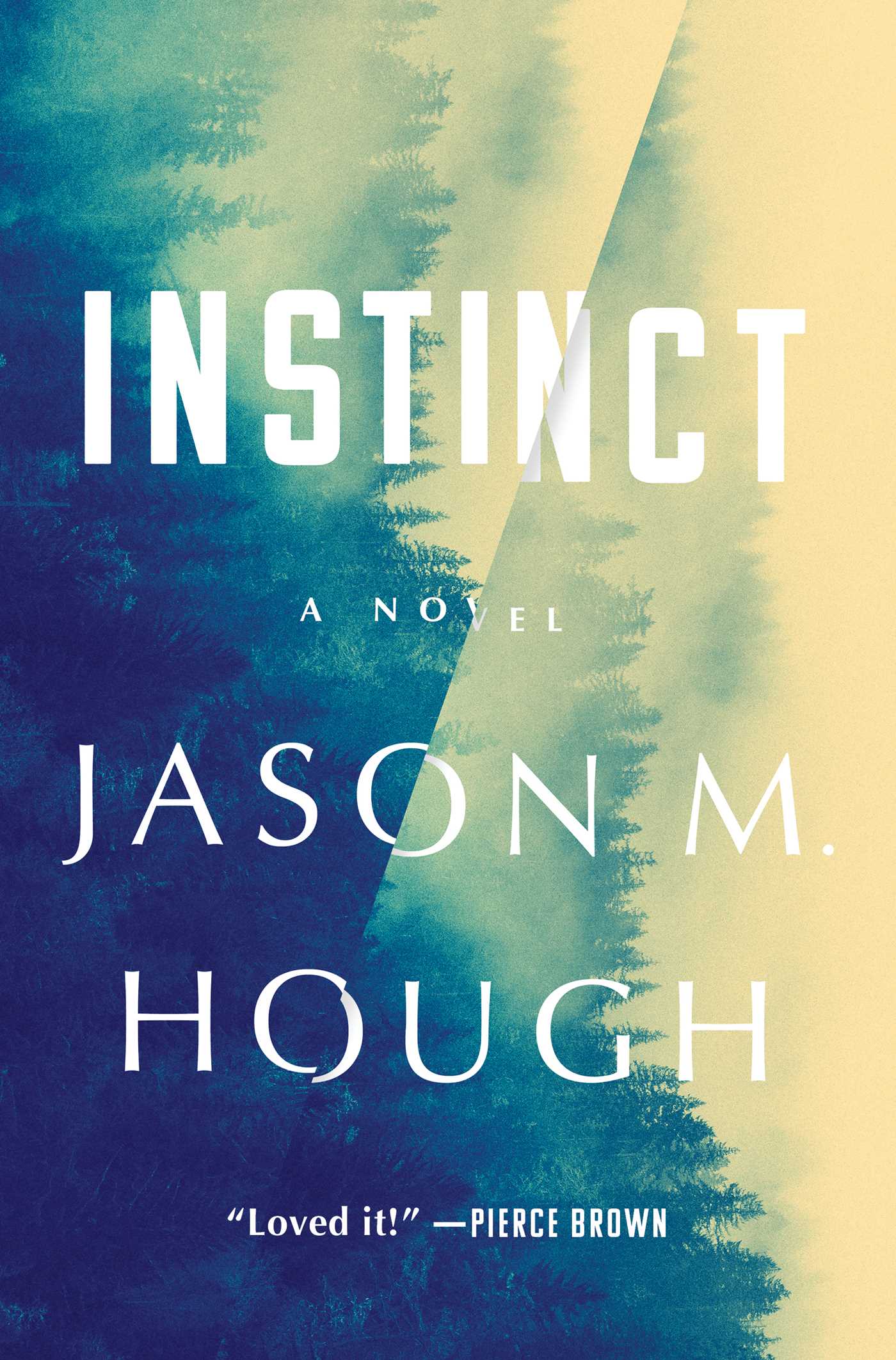
I picked up Instinct by Jason M. Hough because I met the author many years ago and a con and I’ve enjoyed his other books. This one was a bit of a departure from his earlier novels because it isn’t science fiction, but more of a straight-forward thriller. I listed to this as an audiobook, narrated by Nancy Wu and George Newbern.
Welcome to Silvertown, Washington. Population 602 (for now).
Despite its small size, the small mountain town is home to more conspiracy theories than any other place in America. Officer Mary Whittaker is slowly acclimating to the daily weirdness of life here, but when the chief of police takes a leave of absence, she is left alone to confront a series of abnormal incidents—strange even by Silvertown standards.
An “indoor kid” who abhors nature dies on a random midnight walkabout with no explanation.
A hiker is found dead on a trail, smiling serenely after being mauled by a bear.
A woman known for being a helicopter parent abandons her toddler twins without a second thought.
It’s almost as if the townsfolk are losing their survival instinct, one by one…
As Whittaker digs deeper into her investigation, she uncovers a larger conspiracy with more twists and turns than a mountain road, and danger around every corner. To save Silvertown, she must distinguish the truth from paranoia-fueled lies before she ends up losing her own instincts…and her life!
This book kept me enthralled throughout and was a quick listen. Mary Whittaker is a sympathetic and competent protagonist and her actions are believable as she tries to figure out what has afflicted Silvertown. The action ramps up and places Mary and the entire town into life-threatening danger.
The mystery behind the strange incidents kept me guessing up until the end. I did figure out a few aspects of the plot before Mary herself solved them, but I think that added to the tension. And while this is a stand-alone novel, a few loose ends to the plot leave an opening for a sequel.
Have you read any of Jason Hough’s other novels? Let me know in the comments above.
I’ve been a bit slower to complete my reading over the past few weeks, but maybe choosing books that are over 600 pages long is part of the reason why. The Dragon Reborn is the third book (of 14) in Robert Jordan’s Wheel of Time series. I read this as an e-book.
For my reviews of earlier books in the series, look here:
Book 1 – The Eye of the World (oh, I skipped reviewing this one, might do it later)
The Dragon Reborn—the leader long prophesied who will save the world, but in the saving destroy it; the savior who will run mad and kill all those dearest to him—is on the run from his destiny.
Able to touch the One Power, but unable to control it, and with no one to teach him how—for no man has done it in three thousand years—Rand al’Thor knows only that he must face the Dark One. But how?
Winter has stopped the war—almost—yet men are dying, calling out for the Dragon. But where is he?
Perrin Aybara is in pursuit with Moiraine Sedai, her Warder Lan, and Loial the Ogier. Bedeviled by dreams, Perrin is grappling with another deadly problem—how is he to escape the loss of his own humanity?
Egwene, Elayne and Nynaeve are approaching Tar Valon, where Mat will be healed—if he lives until they arrive. But who will tell the Amyrlin their news—that the Black Ajah, long thought only a hideous rumor, is all too real? They cannot know that in Tar Valon far worse awaits…
Ahead, for all of them, in the Heart of the Stone, lies the next great test of the Dragon reborn….
Even though this book’s title implies that it will be about Rand, it follows a lot more of the other characters’ stories. With the storyline split through several point-of-view characters, it makes the overall action move more slowly as well.
So while I enjoyed this book, it felt more simple than I remember. We do get to see some new important characters introduced and seeing ancient powers (like balefire) return and an expansion of Egwene’s dreamer powers add to the mythic character of this story.
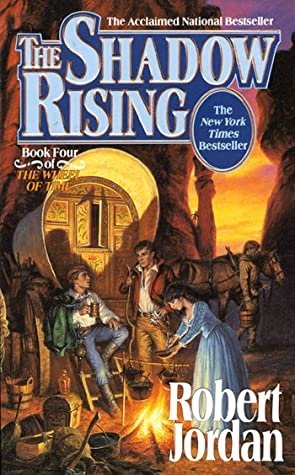
I’ll probably take a week or two off from The Wheel of Time before I jump into book 4, The Shadow Rising, next month.
She arrived with her arts, her wits, and her only friend.
In victory, her world has turned to ash.
After rocking the cosmos with her deathly debut, Tamsyn Muir continues the story of the penumbral Ninth House in Harrow the Ninth, a mind-twisting puzzle box of mystery, murder, magic, and mayhem. Nothing is as it seems in the halls of the Emperor, and the fate of the galaxy rests on one woman’s shoulders.
Harrowhark Nonagesimus, last necromancer of the Ninth House, has been drafted by her Emperor to fight an unwinnable war. Side-by-side with a detested rival, Harrow must perfect her skills and become an angel of undeath — but her health is failing, her sword makes her nauseous, and even her mind is threatening to betray her.
Sealed in the gothic gloom of the Emperor’s Mithraeum with three unfriendly teachers, hunted by the mad ghost of a murdered planet, Harrow must confront two unwelcome questions: is somebody trying to kill her? And if they succeeded, would the universe be better off?
I really wanted to like this book, but it was hard to follow and I found myself confused for much of it. The story is told in the present day, written in second person, and also has flashbacks that appear to be an alternate version of the events of Gideon the Ninth. The characters are superbly drawn and their interactions are fascinating, even if I didn’t understand the relevance of much of it.
The unique portrayal of necromancy continues in this volume with wonderfully creative descriptions of bone and blood magic. The narrator provides each character with a slightly different manner of speech and subtle differences in accent which helps to follow more complicated conversations.
I just wish more was cleared up by the end of this book. The confusion was the worst at the very beginning and then in the end. Don’t expect any resolution or explanations in this series yet. It looks like two more books are planned, with the next one (Nona the Ninth) releasing later this year.
Have you read anything by Tamsyn Muir? What did you think? Let me know in the comments above.
Today I want to continue my post about fencing around injuries. If you didn’t see Part I – go find it here. For this second part, I want to continue with more specific tips on competing through injuries.
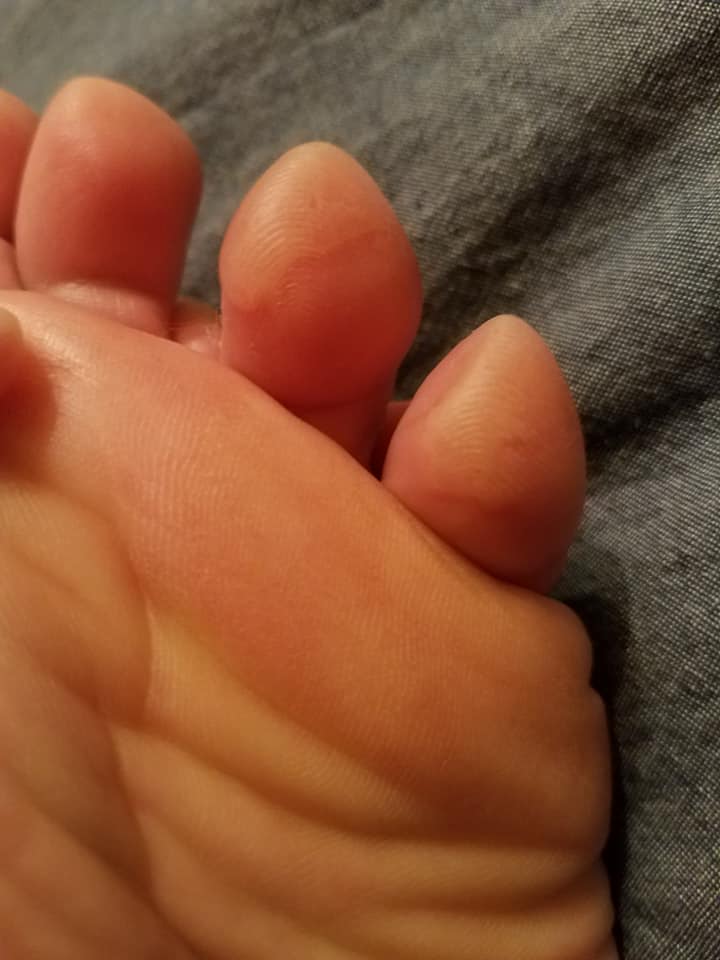
These are blisters that resulted from taking a different approach with my socks on race day for a half marathon.
When it comes time to compete, I want to go back to triathlon to mention one of the mantras of that sport. Nothing new on race day! While this isn’t always something I stick to in fencing, there is value in thinking about it. In triathlon, the idea is that you should be familiar with all of your kit and have trialed it in your training so that you know if it works for you. You don’t want to discover that the new top you bought for the race chafes at the beginning of a 13.1-mile run, or that the new nutrition you found at the pre-race expo is not agreeing with your stomach halfway through a 112-mile bike course. Or look at my toes to the left for a painful example.
In last weekend’s tournament I wore a new pair of fencing shoes. I had been wearing them in practice and they were the same brand, style, and size as my old shoes. But due to my elbow and shoulder problems, I hadn’t been practicing much, and after the first day of competition I found the shoe on my back foot was painfully pressing into a ligament on the inside of my foot. I couldn’t advance without pain in my warmup on the second day. Fortunately, I still had my old shoes in my bag and switching out the back foot shoe made movement tolerable.
When you know you have an injury, how can you go about fencing? If your injury is severe enough, you shouldn’t. My doctor told me to not do anything strenuous with my right arm for 1 – 3 weeks after the PRP injection I just had. I took two weeks off from fencing, and when I went back to practice, I took it very cautiously. So try to be a good patient!
Paid links help to support this blog.
If you have a chronic injury or are recovering from something, here are some ideas that might help you get through a competition:
Be prepared – have everything you might need with you.
Warm up well and then stretch (but again, nothing new on race day, so aim for your normal warm up within the limitations of your injury).
Consider taping or braces (trial these in practice first).
Ice after the event.
Don’t be afraid to get help. Visit the trainers, take your injury break if something happens in the bout.
Don’t be afraid to withdraw if you have overestimated your readiness and might injure yourself more.
Get your mental game in shape. If you have been injured or unable to practice as much as you normally would, don’t hold yourself to the same expectations you would have if you were completely healthy. Accept your fencing for what it is that day and try to learn from the experience.
Photo by Esther Simpson, shared under Creative Commons license.
The last comment I wanted to make here was to add in another idea from triathlon – rest days and rest weeks. The idea is that you cycle through hard training days (usually Tuesday through Sunday) and then take a day off completely (often Mondays). Or if you get to a point where you feel very run down, take a rest day because it’s okay to skip a workout. Many triathlon training plans also run in blocks of 4 weeks where the first three weeks ramp up in intensity and distance, followed by a fourth week of comparatively easier workouts on the rest week. Right before a race, the workouts also become easier (the taper) so that your body has enough time to recover and reach peak performance by the race. Again, some of this may not directly transfer from an endurance sport to fencing, but the idea of rest days/weeks isn’t a bad one.
I hope this helps my fellow Veteran fencers and those soon to age in. Let me know any tips that have worked for you by chatting in the comments (above).
I just returned from fencing at the March NAC (North American Cup) last week and I wanted to take some time to write about fencing injuries since that has been a popular topic in the past. As someone fencing the Veteran age groups (40+), it is also apparent that almost all of my fellow competitors have injuries. We are all taped up, icing, and limping, just to different degrees.
Paid links help to support this blog.
So this isn’t intended as medical advice about specific injuries, but is more of a general guide to what I have found works for me to keep myself healthy enough to keep fencing so that I will still be around when I age into the Vet-80 category.
First off, I want to just list the variety of injuries that I’ve dealt with so anyone out there can compare notes if you’d like. Roughly in order of occurrence:
Ligament injury (back foot) caused by Morton’s toe
Subluxating tendons and osteochondral lesion of the talus (back foot/ankle), a consequence of the severe ankle sprain, required 3 surgeries to repair (Brostrom procedure, fibular osteotomy, bone graft, PRP injection for tendonitis, 9 weeks on crutches
Neck injury – fell on my head while snowboarding, required months of PT
Tendonitis right elbow – required rest and PT
Back injury – possibly herniated disc, ongoing problem
Severe ankle sprain (front foot) – 1 surgery to repair (Brostrom procedure) and another 3 weeks on crutches
Minor sprain (front foot) – during recovery from surgery
Plantar fasciitis
Tendinitis (front foot) – resolved with rest, shockwave therapy
Tendonitis right elbow – currently recovering with PT and a PRP injection
Left shoulder pain – presumed impingement syndrome, currently recovering with PT
That big black spot? Not supposed to be there. That is dead bone.Post-op x-raysAll fixed and in a cast!
On any given day, I may also have muscle soreness, bruises, or a toenail that is about to fall off. At this point, the right elbow tendinitis and the back pain are only ongoing issues I have, but as I increase my training, I’m always on alert for new problems to start. (And note, through all of this, I haven’t actually been stabbed by a blade.)
So through all of these setbacks, how have I managed to pull through and return to fencing? Some of it has to be luck. I mean with the back ankle, I’m extremely fortunate that my body healed well and I was able to regain full mobility in the joint. At one point before surgery, the topic of an ankle replacement had come up, so yeah, it was bad. What else have I learned about injury prevention and continuing to train and practice between injuries?
One thing that I had to learn as I went through my 20’s was that I had to listen to my body. Mental toughness can carry you through pain, but as your joints, tendons, and ligaments age, they don’t heal as quickly. I had to learn to identify different types of pain. Muscle soreness is one thing and is part of being an athlete. The sharp pain of an aggravated tendon is a warning sign and something that should not be ignored. There are many days at practice now where I would love to keep bouting, but I know that I need to step away so that I will be well enough to return the next day.
Another important way to avoid injuries is to maintain consistency in your practice. It is easier on my body to practice at a moderate level three days a week than to go as hard as I can one day a week. I also have to take it easy on my first day back to practice after some time away. I also see this problem when former fencers try to return to practice after a break from the sport. Take it slowly and don’t overdo it! You will be sore enough just from using muscles in a way they haven’t been in years. When getting back into a practice routine, gradually increase the amount of time you practice instead of jumping into hard training.
One other thing that is helpful if you have the time is to do it is cross-training in a more symmetrical sport. This is also valuable for general fitness and to improve your cardiovascular endurance. I took up triathlon a few years back (swimming, cycling, running) and this helped me a lot with fencing. Strength training is also valuable to help to avoid injury. It can lead to increased bone and muscle strength, decrease the risk of lower back injuries, and can help with balance in people as we age.
Coming up in my next post – more specific tips on fencing around injuries!











 Salvage – a flash fiction science fiction story with a winter holiday theme