Book Review – Detour

Detour is a science fiction novel by co-authors Jeff Rake and Rob Hart. I received a copy courtesy of Net Galley and the publisher (Random House Worlds) in return for an honest review (paid link). You can read what I thought below.
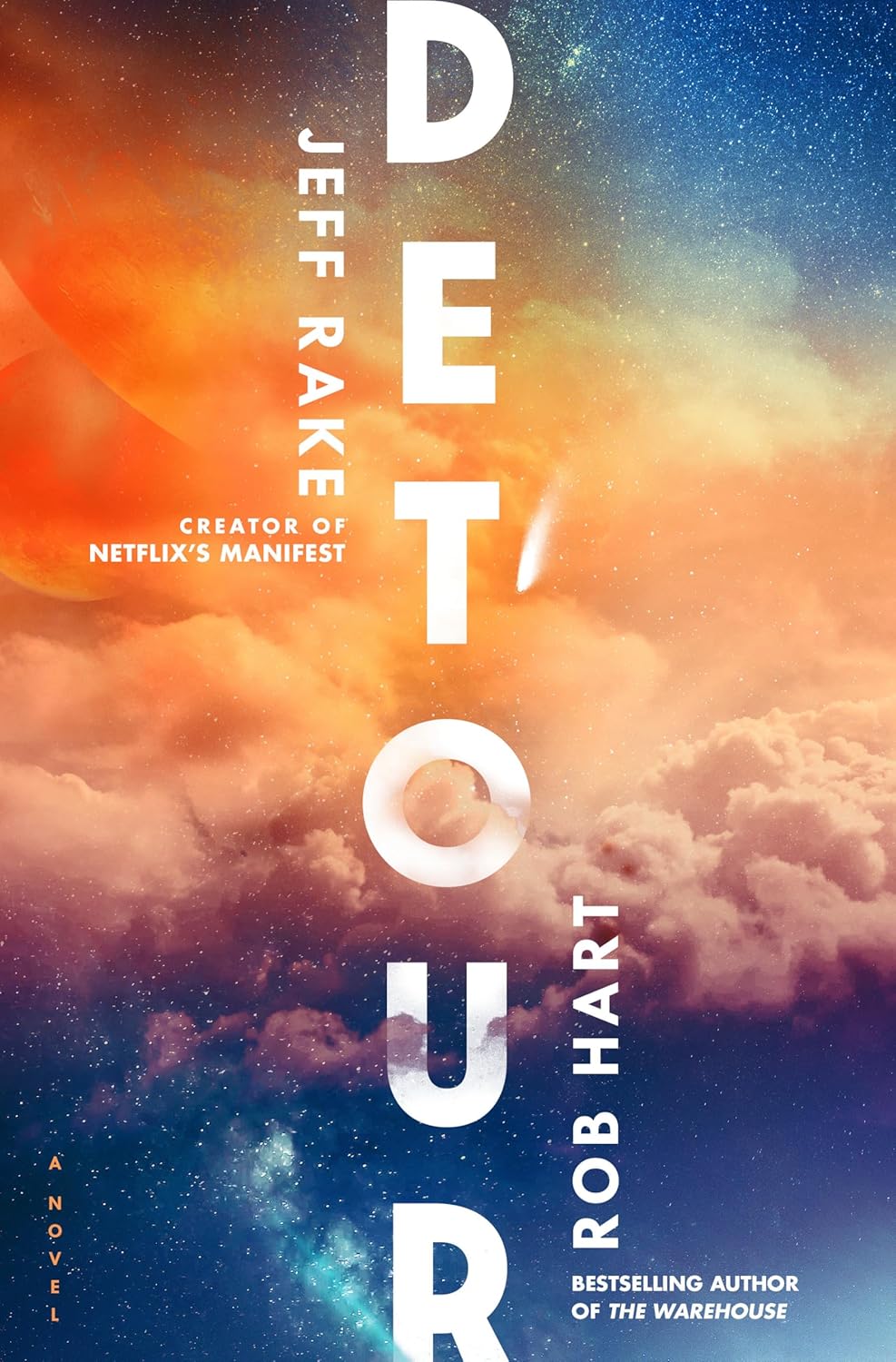
I read the e-book edition.

Here is the blurb:

Ryan Crane wasn’t looking for trouble—just a cup of coffee. But when this cop spots a gunman emerging from an unmarked van, he leaps into action and unknowingly saves John Ward, a billionaire with presidential aspirations, from an assassination attempt.

As thanks for Ryan’s quick thinking, Ward offers him the chance of a lifetime: to join a group of lucky civilians chosen to accompany three veteran astronauts on the first manned mission to Saturn’s moon Titan.

A devoted family man, Ryan is reluctant to leave on this two-year expedition, yet with the encouragement of his loving wife—and an exorbitant paycheck guaranteeing lifetime care for their disabled son—he crews up and ventures into a new frontier.

But as the ship is circling Titan, it is rocked by an unexplained series of explosions. The crew works together to get back on course, and they return to Earth as heroes.

When the fanfare dies down, Ryan and his fellow astronauts notice that things are different. Some changes are good, such as lavish upgrades to their homes, but others are more disconcerting. Before the group can connect, mysterious figures start tailing them, and their communications are scrambled.

Separated and suspicious, the crew must uncover the truth and decide how far they’re willing to go to return to their normal lives. Just when their space adventure seemingly ends, it shockingly begins.


Rating: ★★☆☆☆

This book initially caught my attention because it featured a crew of astronauts as the main characters. However, this was a large part of why this story didn’t work for me. The professional NASA astronauts on the crew had previous spaceflight experience, but their training for the mission to fly around Titan on a new spacecraft was minimal to non-existent. Three civilians were also selected, but no screening for medical conditions or psychiatric testing was shown. These would have been particularly important aspects to consider for a mission that was expected to last two years.

The commander of the mission turns out to be a known alcoholic, and his colleagues at NASA cover for him constantly, even when he tries to distill alcohol from mouthwash in the middle of the mission after drinking all the alcohol that NASA sent along with them (LOL). One of the civilians is socially awkward and claustrophobic, which is also not a great combination aboard a spacecraft. Another one gets into a fistfight with another crewmember before they even leave Earth.

I found the pacing odd, with roughly the first half of the book being taken up by introductions of the characters. Once they finally arrive near Titan, the ship circles the moon and then comes home. No direct input from any of the astronauts was performed, bringing up the question of why a manned mission was even necessary. Of course there is a strange explosion on the ship when they are at Titan and they lose most (but not all) of their communication ability after that point. Unfortunately the nature of that explosion isn’t really investigated and by the end of the book it is clear that this is going to be the first of a series. The book ends on a cliffhanger and gives no answers to their situation.

The action that opened the novel was exciting and hooked me on the book enough to finish it despite the flaws in characterization and mission logic. The best part of the book occurs in the last third, when more action happens. The prose was also easy to read and I liked the cover.

While the premise of this book held potential for an exciting and intriguing story, I don’t plan to be reading more in this series.

Have you read any books lately that were disappointing? Let me know in the comments.

You can find more of my book reviews here.

Book Review: Moon Shot – The Inside Story of America’s Race to the Moon

I’ve read a handful of books that detail the history of the U.S. space program, and this was one that I picked up on sale some time ago. Moon Shot by Alan Shepard and Deke Slayton (with Jay Barbree) follows the story of these two astronauts through the Mercury, Gemini, and Apollo programs, and a little beyond (paid link). Read on below to see what I thought.

I read the e-book edition.

Here is the blurb:

On October 4, 1957, the Soviet Union launched Sputnik I, and the space race was born. Desperate to beat the Russians into space, NASA put together a crew of the nation’s most daring test pilots: the seven men who were to lead America to the moon. The first into space was Alan Shepard; the last was Deke Slayton, whose irregular heartbeat kept him grounded until 1975. They spent the 1960s at the forefront of NASA’s effort to conquer space, and Moon Shot is their inside account of what many call the twentieth century’s greatest feat—landing humans on another world. Collaborating with NBC’s veteran space reporter Jay Barbree, Shepard and Slayton narrate in gripping detail the story of America’s space exploration from the time of Shepard’s first flight until he and eleven others had walked on the moon.


The focus of this book was more narrow than some other ones that I’ve read on the history and experiences of the early U.S. space program. While it does outline the larger political environment and events of the 1950s and 1960s that were instrumental in the creation of NASA and the public support of the space race to some extent, someone who isn’t already familiar with the history might not get the full picture from this book. The story follows the two astronaut authors and details their personal challenges as they trained to fly their missions. Other important events are included, but without as many details as might be found elsewhere.

Overall I enjoyed this book because it provided a more personal perspective on that time and even extended into the Skylab and the Apollo-Soyuz projects. The only part that I didn’t like was how the ending cut suddenly to a political rant about the NASA budget and goals from near the time this book was published. The tone of this section was different, and as it turns out, SpaceX and other private companies have made many of these complaints irrelevant now.

If you search for this book, you may find a similarly titled one by astronaut Mike Massimo that is more about what he learned about himself and how to live based on his experiences in space.

Have you read any other books about the history of the space program that you would recommend? Let me know in the comments (above).

Find more of my reviews here.

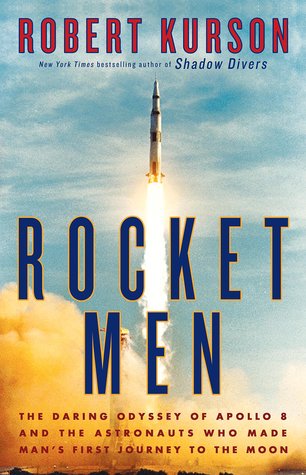
Book Review – Rocket Men

My brother recommended this book to me a couple of months ago and since I have a special interest in astronauts and the space program, I picked it up. Rocket Men by Robert Kurson tells the story of Apollo 8, the first manned mission to reach the moon (not land on it, but to orbit it).

Kurson also wrote Shadow Divers which I had ready many years ago while doing some wreck diving off the Jersey shore. I didn’t review that book, but it is a well-researched story of the discovery and identification of a sunken U-boat off the coast of New Jersey that inspired the television show Deep Sea Detectives.

Paid links help to support this blog.

Here is the blurb:

By August 1968, the American space program was in danger of failing in its two most important objectives: to land a man on the Moon by President Kennedy’s end-of-decade deadline, and to triumph over the Soviets in space. With its back against the wall, NASA made an almost unimaginable leap: It would scrap its usual methodical approach and risk everything on a sudden launch, sending the first men in history to the Moon—in just four months. And it would all happen at Christmas.

In a year of historic violence and discord—the Tet Offensive, the assassinations of Martin Luther King, Jr., and Robert Kennedy, the riots at the Democratic National Convention in Chicago—the Apollo 8 mission would be the boldest, riskiest test of America’s greatness under pressure. In this gripping insider account, Robert Kurson puts the focus on the three astronauts and their families: the commander, Frank Borman, a conflicted man on his final mission; idealistic Jim Lovell, who’d dreamed since boyhood of riding a rocket to the Moon; and Bill Anders, a young nuclear engineer and hotshot fighter pilot making his first space flight.

Drawn from hundreds of hours of one-on-one interviews with the astronauts, their loved ones, NASA personnel, and myriad experts, and filled with vivid and unforgettable detail, Rocket Men is the definitive account of one of America’s finest hours. In this real-life thriller, Kurson reveals the epic dangers involved, and the singular bravery it took, for mankind to leave Earth for the first time—and arrive at a new world.

This book told both the stories of the astronauts and their families, which was an approach I hadn’t seen before in similar non-fiction. The narrative jumps around a lot historically, weaving the imminent mission with the background of each astronaut. But this approach worked, and I never had trouble following the story.

While it would probably help to have some basic knowledge of the early space program before reading this book, it isn’t essential. I already knew the background of the Mercury, Gemini, and Apollo missions. Many of the names tossed around in the book were also already familiar to me, but maybe to someone less knowledgeable of the history, it might be confusing.

I enjoyed this book and found that it gave me a new appreciation for Apollo 8. I hadn’t realized how many obstacles had to be overcome to launch this flight and how it really was the mission that won the Russia/US space race more than the actual moon landing.

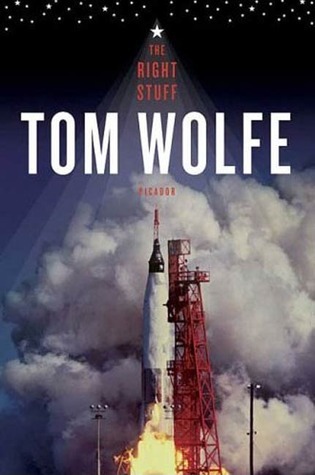
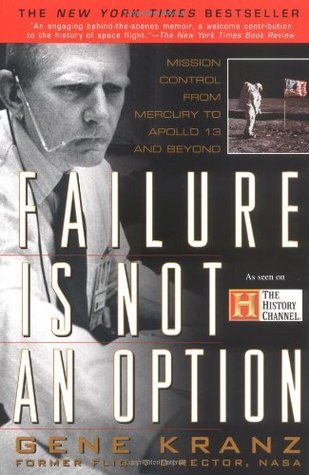
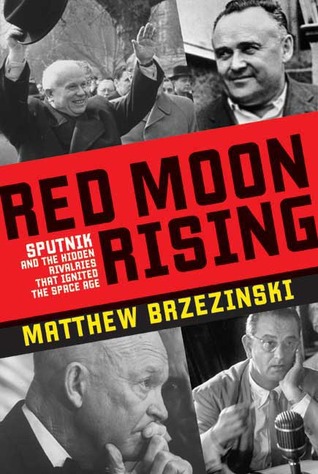
Have you read much non-fiction about the space program? Let me know in the comments above. Here are a couple of other books that I would recommend on the topic if you want to learn more: The Right Stuff by Tom Wolfe, Failure is Not an Option by Gene Kranz, and Red Moon Rising by Matthew Brzezinski.

Find more of my reviews here.

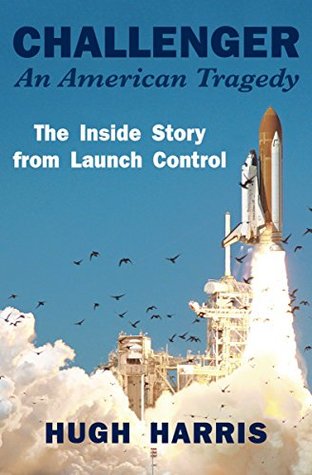
Book Review – Challenger: An American Tragedy: The Inside Story From Launch Control

I have trying to get back to my stack of space-themed non-fiction books recently. This one was a short read that I picked up on sale last year and I read it on my Kindle. Challenger: An American Tragedy: The Inside Story From Launch Control is written by Hugh Harris, a journalist who worked as “the voice of launch control” for NASA.

Paid links help support this blog.

Here is the blurb:

On January 28, 1986, the space shuttle Challenger launched from the Kennedy Space Center in Florida. Seventy-three seconds after launch, the fiery breach of a solid motor joint caused a rupture of the propellant tanks, and a stunned nation watched as flames engulfed the craft, killing all seven crew members on board. It was Hugh Harris, “the voice of launch control,” whom audiences across the country heard counting down to lift-off on that fateful day.

With over fifty years of experience with NASA’s missions, Harris presents the story of the Challenger tragedy as only an insider can. With by-the-second accounts of the spacecraft’s launch and a comprehensive overview of the ensuing investigation, Harris gives readers a behind-the-scenes look at the devastating accident that grounded the shuttle fleet for over two years. This book tells the whole story of the Challenger’s tragic legacy.

While this book was short, it was also hard to read. I was one of many school children watching the launch live in my classroom when the tragedy unfolded. Up until that day I had wanted to be an astronaut when I grew up. At only eight years old, I didn’t understand the risks of exploration and spaceflight. After the accident, I abandoned that dream (until later, but that’s a different tale).

The author gives a good overview of the events around the disaster and the investigations that followed. He doesn’t go into exhaustive detail, but just enough to relate the relevant information. The author focuses more on the dry details and less on the emotional side of the tragedy, so while those human aspects are all included, the way it was written made it easier to read than it might have been.

Next up in my space-themed non-fiction, Rocket Men: The Daring Odyssey of Apollo 8 and the Astronauts Who Made Man’s First Journey to the Moon by Robert Kurson. What other non-fiction books about space exploration have you read? Let me know in the comments!

Read more of my reviews here.

A Quick Update

I’ve been rather inactive on updating this page, but I’ve had a lot going on lately. I should have a little more time now to catch up and to get back to posting here. In no particular order, here is what I’m going to be working on:

I should be back to posting some reviews for books, comics, and television shows.

I’m getting back to writing some fiction, so I may have an occasional update on that.

I’ll be back at fencing practice next week, preparing for competitions as the spring nears. I’m also training for my first triathlon, which will be easier when the weather warms up.

converted PNM file

Mars – Photo courtesy of NASA

Lastly, my main focus for the next few weeks is to work on submitting my application to NASA for the upcoming astronaut selection. The requirements to apply are straightforward, but the odds are very long. I may post an update on that process here if I hear anything more than the standard “thank you for applying, but no” postcard.

Follow Blog via Email

Enter your email address to follow this blog and receive notifications of new posts by email.

Join 415 other subscribers