

Today I want to continue my post about fencing around injuries. If you didn’t see Part I – go find it here. For this second part, I want to continue with more specific tips on competing through injuries.
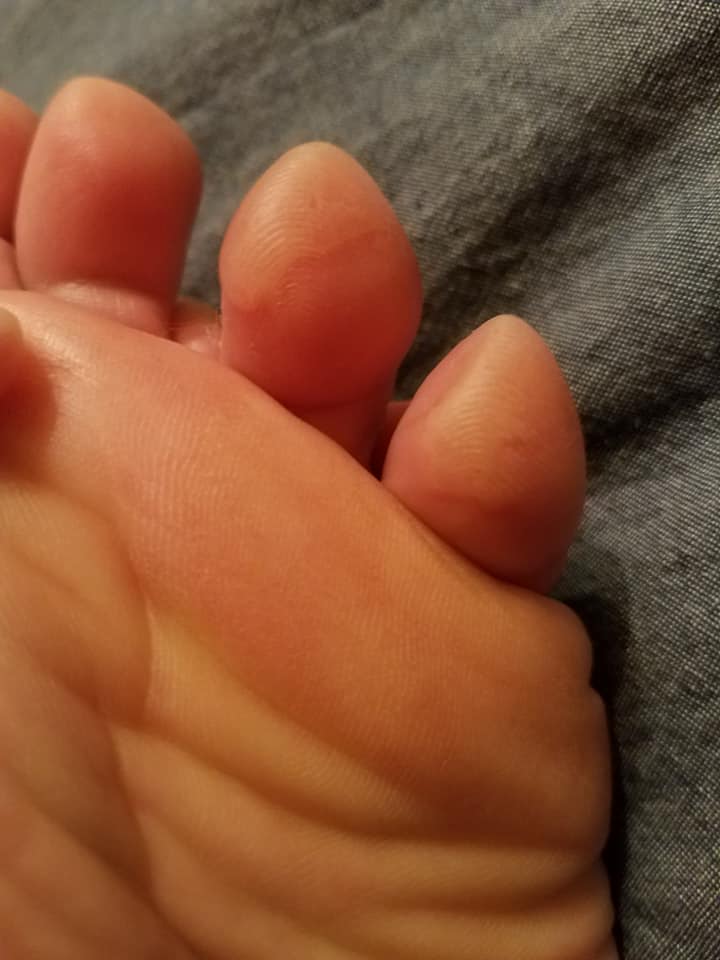
When it comes time to compete, I want to go back to triathlon to mention one of the mantras of that sport. Nothing new on race day! While this isn’t always something I stick to in fencing, there is value in thinking about it. In triathlon, the idea is that you should be familiar with all of your kit and have trialed it in your training so that you know if it works for you. You don’t want to discover that the new top you bought for the race chafes at the beginning of a 13.1-mile run, or that the new nutrition you found at the pre-race expo is not agreeing with your stomach halfway through a 112-mile bike course. Or look at my toes to the left for a painful example.
In last weekend’s tournament I wore a new pair of fencing shoes. I had been wearing them in practice and they were the same brand, style, and size as my old shoes. But due to my elbow and shoulder problems, I hadn’t been practicing much, and after the first day of competition I found the shoe on my back foot was painfully pressing into a ligament on the inside of my foot. I couldn’t advance without pain in my warmup on the second day. Fortunately, I still had my old shoes in my bag and switching out the back foot shoe made movement tolerable.
When you know you have an injury, how can you go about fencing? If your injury is severe enough, you shouldn’t. My doctor told me to not do anything strenuous with my right arm for 1 – 3 weeks after the PRP injection I just had. I took two weeks off from fencing, and when I went back to practice, I took it very cautiously. So try to be a good patient!

If you have a chronic injury or are recovering from something, here are some ideas that might help you get through a competition:
- Be prepared – have everything you might need with you.
- Warm up well and then stretch (but again, nothing new on race day, so aim for your normal warm up within the limitations of your injury).
- Consider taping or braces (trial these in practice first).
- Ice after the event.
- Don’t be afraid to get help. Visit the trainers, take your injury break if something happens in the bout.
- Don’t be afraid to withdraw if you have overestimated your readiness and might injure yourself more.
- Get your mental game in shape. If you have been injured or unable to practice as much as you normally would, don’t hold yourself to the same expectations you would have if you were completely healthy. Accept your fencing for what it is that day and try to learn from the experience.

The last comment I wanted to make here was to add in another idea from triathlon – rest days and rest weeks. The idea is that you cycle through hard training days (usually Tuesday through Sunday) and then take a day off completely (often Mondays). Or if you get to a point where you feel very run down, take a rest day because it’s okay to skip a workout. Many triathlon training plans also run in blocks of 4 weeks where the first three weeks ramp up in intensity and distance, followed by a fourth week of comparatively easier workouts on the rest week. Right before a race, the workouts also become easier (the taper) so that your body has enough time to recover and reach peak performance by the race. Again, some of this may not directly transfer from an endurance sport to fencing, but the idea of rest days/weeks isn’t a bad one.
I hope this helps my fellow Veteran fencers and those soon to age in. Let me know any tips that have worked for you by chatting in the comments (above).
Find more of my writing about fencing here.